
Rare is the occasion when a person chooses their own name.
In most cases we use the names our parents gave us. Mine puts me in the interesting position of having an intriguing name in Canada, but one that’s common and easy to pronounce in Poland. Its meaning (from the Latin agnus, meaning lamb), coupled with the fact that it is both unique and ordinary, has carried me through 30-some years with certain thoughts about what it says about me.
My husband and I have named three children. As I’ve pondered the meanings and significance of each one, I’ve thought of my hopes and prayers for each child and wondered how their names will influence their perceptions of themselves as they grow.
But every once in a while, we get to choose our own names. I recently learned how significant it can be for grandparents to choose what their grandchildren call them. Not everyone identifies with “grandma” or “grandpa.” Some prefer Oma and Opa, Nana and Papa, or Yaya, or Gramps, or Pops …
The names we choose are always in the context of relationship, providing clarity and flavour to what we call each other, and they say something about our identities and hopes.
The shift in name signifies that something bigger is happening. A new chapter is opening. New lines are being added to the web of our relationships.
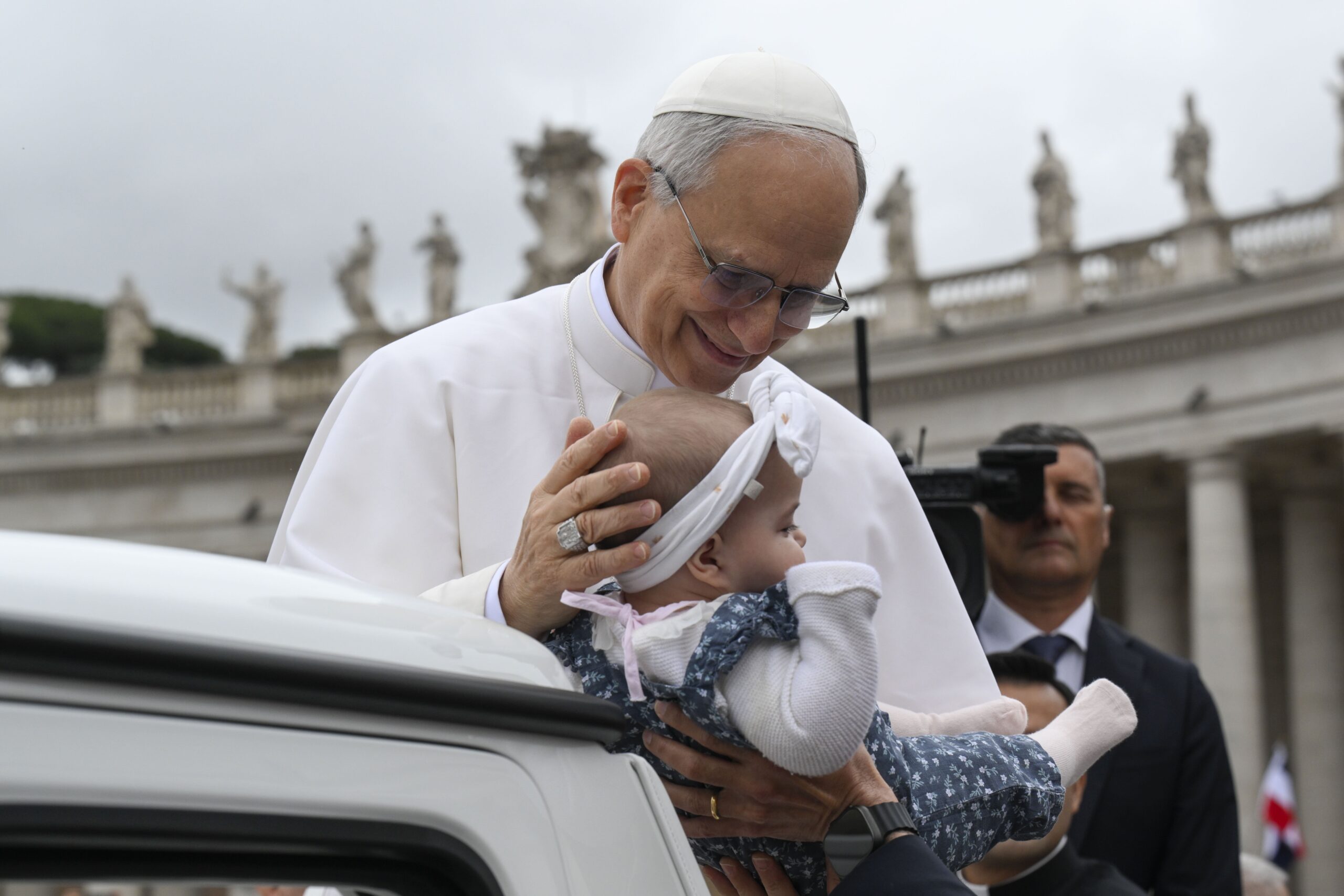
The newly elected Holy Father has called himself Pope Leo XIV, signifying something about his identity, dreams, plans, and relationship with all of us. He explained that it marks a connection to Pope Leo XIII and a commitment to an emphasis on Catholic social teaching, justice, and human rights.
It may be surprising that there is no official rule about what a Pope’s name can be. It doesn’t have to be the name of a saint, for example. Pope Innocent I (401–417) just continued using his birth name. (He was later canonized, so all Innocents after him are named after a saint.)
The name choice is completely at the discretion of the Pope. The first Pontiff to choose a name change was Pope John II (532–535). Before he was elected, his name was Mercurius, a name inspired by the pagan deity Mercury – and presumably, he saw that as inappropriate for a Pope.
Not one Pope has dared to choose the name Peter II, out of reverence for St. Peter.
Intriguingly, the name change does date all the way back to Peter – though he did not choose it himself. Jesus told a fisherman named Simon, “you are Peter (Petros), and on this rock (petra) I will build my church.” The rest is history.
I reached out to Vancouver’s Father Paul Goo, who is currently assigned to Rome and was present when the white smoke appeared and Cardinal Robert Francis Prevost appeared above St. Peter’s Square. Pope Leo’s name reflects “spiritual renewal and identity,” he said.
“Taking a new name reflects the transformation and responsibility of assuming the role of Bishop of Rome and universal shepherd of the Church,” said Father Goo. Pope Leo is still Robert Francis Prevost, but he is also much more than that now.
Name changes can pay homage to predecessors or saints, signalling “continuity or a desire to emulate certain virtues or historical significance.” Pope Leo XIV is telling us of his affinity for Pope Leo XIII.
As such, the name can signal “the direction or tone of the new pontificate – whether reform, unity, tradition, peace, or evangelization.” Think of Pope Francis, who named himself after St. Francis of Assisi (who was nicknamed il Poverello, or “the little poor one”) and placed constant emphasis on the poor throughout his pontificate.
As a grandparent chooses how to be called by grandchildren, or as a parent names a child, so too the name of a Pope signifies immediate change, but slow growth. We grow into our names, we become them, we allow our relationships to take on new meaning with them.
Let’s see how we, as a Church, grow with our new Holy Father, or Holy Grandfather, Pope Leo.
Your voice matters! Join the conversation by submitting a Letter to the Editor here.