
Father Richard Zanotti couldn’t help noting the parallel between the torrential rain that hit the Fraser Valley last weekend and the apocalyptic Mass readings that same pre-Advent weekend.
“Kind of apocalyptic” was his description of the downpour and the flooding that has devastated so many people.
“Certainly the farm owners and their livestock and their fields … their livelihood is gone,” said the Scalabrinian pastor of St. Ann’s in Abbotsford.
“People who live in that area, especially in the Sumas Prairie, were very much hit by the flooding. And then the farmworkers, they had to evacuate.”
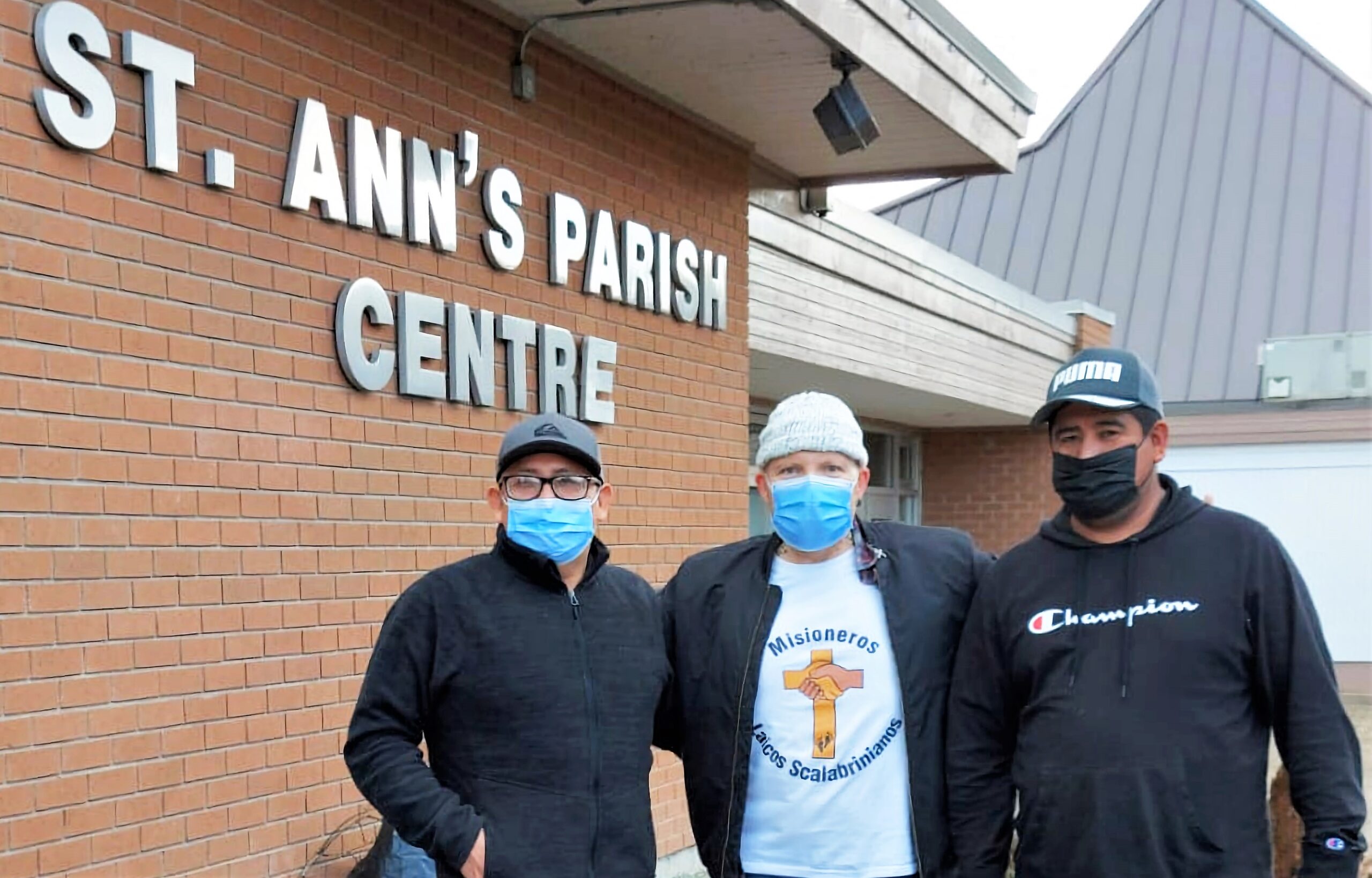
The farmworkers are the hundreds of migrant workers who labour in the agricultural sector across the Lower Mainland. Supporting them is a vigorous farm work ministry through six parishes – St. Ann’s, Sacred Heart in Ladner, St. Luke’s in Maple Ridge, Precious Blood in Cloverdale, St. Mary’s in Chilliwack, and St. Joseph’s in Langley – as well as lay Scalabrinian volunteers from Our Lady of Sorrows in Vancouver who bring the migrants food.
The Archdiocese of Vancouver provides a Teresian Carmelite, Sister Karina Farias Torres, to work full-time with the farmworkers, while parishes, benefactors, and the St. Vincent de Paul Society fund the rest of the migrants ministry.

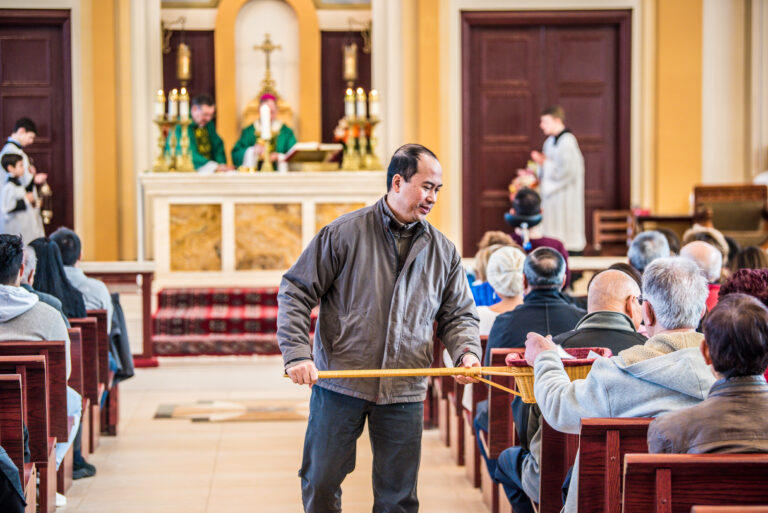
The parishes offer Spanish Mass for the workers as well as volunteer support, said Father Zanotti, who is director of migrant ministry for the Archdiocese of Vancouver.
“I was able to network with all of these folks, and they were the ones who reached out to the migrant workers, supporting them in whatever way needed. It’s great the way it all worked.”
Through the Hispanic and migrants ministry at St. Ann’s, volunteers from Chilliwack to Abbotsford quickly came to the aid of the local displaced workers.
“We’ve been helping them the best that we could, with coats and blankets,” said Father Zanotti. “They were being pretty well taken care of at the (Tradex) centre in terms of food; they had cots to sleep on and a roof over their heads.”
Additional aid is coming from a flood relief fund launched for the migrant workers and their families by the Archdiocese of Vancouver this week. Father Zanotti said the fund will help the farm workers with immediate needs such as medication. Workers who return to Mexico may also need financial help since employers only pay their way to Mexico City. The parish is trying to see if the Mexican government can provide them with assistance.
“We’re very grateful for anything the archdiocese can provide, and we assure [donors] that those monies will be used, certainly for those who have been affected by the floods –the farmworkers, of course – but (their families) as well.”
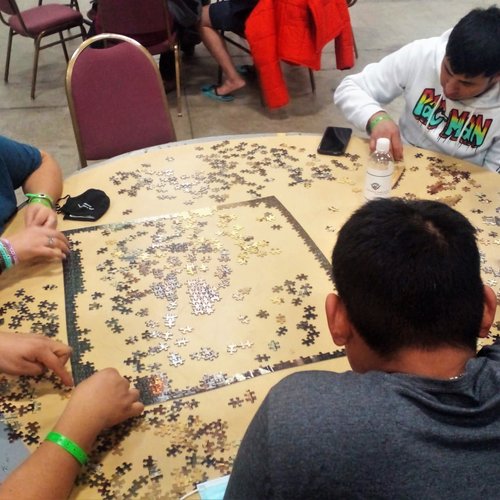
In addition to material requirements the workers are also in desperate need of moral support, said Father Zanotti, particularly since no one knows the conditions of the farms that used to employ the workers. “They don’t know what’s going to happen. Are they going to be able to continue working? Are they going to be sent back to their own country? They were expecting to have a salary to go back and support their family. All of that is unknown right now, and so that caused a lot of anxiety.”
Several farmworkers have already left Canada, and more are scheduled to fly from Vancouver International Airport Thursday, so the parish found them host accommodations close to the airport in anticipation of another downpour forecast for Wednesday and Thursday that could result in more flooding.
Father Zanotti said it’s important that the parishes provide the workers with social opportunities so they avoid isolation. “They’re kind of in the shadows in that sense.”
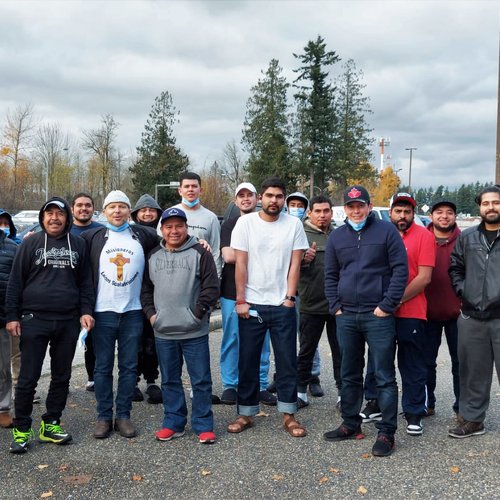
The death of a relative back home is an example of the painful challenges farmworkers face, especially those who must remain in Canada while grieving.
Father Zanotti recalled three brothers who employed as migrant workers in Abbotsford. When their father back home became gravely ill, the brothers came to the church to pray. Assistant pastor Father Marcos Lopez offered to celebrate Mass with the men, and their mother was able to join them on a video call. The father passed away just as Mass ended, and the brothers were greatly comforted by the experience.
Many people have noted the human kindness evident during the response to last week’s devastation as people came to the aid of strangers. Father Zanotti personally saw it in the generosity of the volunteers who met every need. “People have a really big heart, and they are very supportive.”
What also made an impression on him is the gratitude of the farmworkers. Each of the displaced migrants at the Tradex and in Chilliwack were given $100 to help them with any urgent needs, “and they were just so, so thankful,” he said.
“The money maybe wasn’t a lot, but just the thought that somebody was reaching out to them, that somebody was concerned about them … they really appreciate that.”
Catholics, Evangelicals, and Salvation Army team up to help flooding victims
At St. Mary’s in Chilliwack, Lise Tetreault has been kept busy with the parish’s eight-person Migrant Ministry team as it launched a GoFundMe page titled Sumas Prairie Migrant Workers in B.C. Canada. Working with Muller Ojeda, a Mexican who now lives in Canada, the ministry had reached nearly half its goal of $20,000 by Wednesday.
The effort is on top of an archdiocesan fund launched to support the workers and their families. About 150 temporary foreign workers have been stranded due to the flooding in Sumas Prairie, and the donations will them meet basic needs, find new accommodation, and replace what they lost in the flooding.
“We have been in contact with both the Mexican and Guatemalan consulates who are aware of what we are trying to accomplish,” said Tetreault, who is receiving offers of support from farms that have reached out through the Migrant Ministry network offering housing for the displaced workers.
St. Mary’s secretary Lori Lollar said the parish has been collecting clothing and suitcases for migrants as well as dipping into the parish foodbank to send non-perishables with the help of parish youth to the Salvation Army in Chilliwack, which is providing food for flood-struck residents.
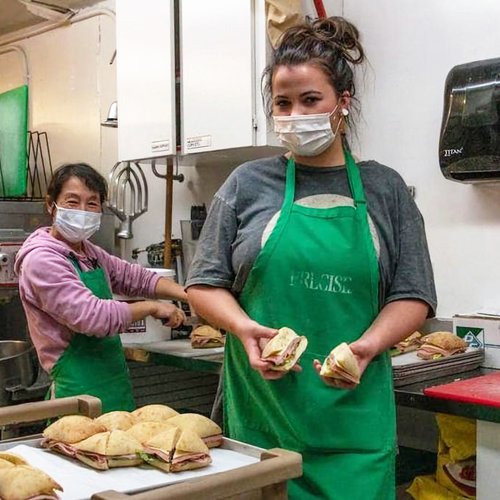
The plight of the displaced workers is particularly poignant, said Lollar, because the floodwaters took all they had. “They shop for their families the whole time they are here. All of that goes back home with them. But they’ve lost all that now … all of it’s gone; it’s just so sad.”
The migrant ministry also helped send 11 workers home to Guatemala Nov. 25, providing them with clothing, suitcases, and “a little pocket money.”
Tetreault was amazed at the success of a weekend drive for suitcases, clothes, and money, raising $1,800. “People were walking up to me and handing me money. It was astonishing.”
Migrants helped load a truck, including half the cab area, with goods that were then taken to Camp Charis, run by the Evangelical Missionary Church of Canada in eastern Chilliwack. The camp has been housing displaced migrants and others since the flood hit.
“They have been phenomenal,” Tetreault said. “They have been taking in people – they’re feeding, housing, and helping, and all at their own expense.”
Camp Charis site director Brian Piccioni said about 50 displaced workers were staying at the camp, as well as a local family of five. At its peak early this week the camp was housing and feeding about 60 people and providing food for an additional 40 people off site. “We heard that people were starting to get evacuated, and right away we knew that we had to make space.”
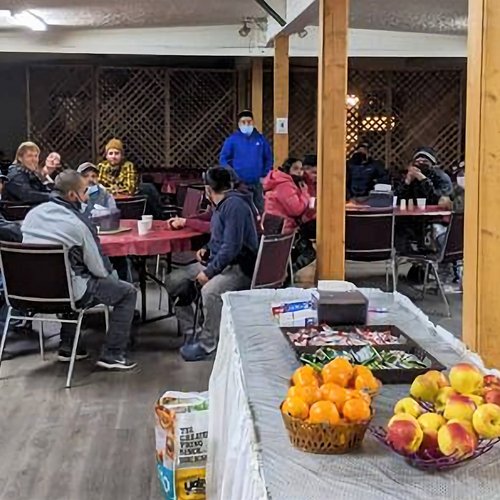
He is pleased to be working closely with the Catholic Migrant Ministry. “In a time like this we are just happy to work with liked-minded people, to come together to help those in need.” The camp is regularly used by St. John Brebeuf Secondary in Abbotsord and as a retreat site by Blessed Sacrament Parish in Vancouver.
He is overjoyed at the support the camp is receiving in terms of volunteers and donations. “It’s been really awesome and encouraging to see how God is working,” he said.
He’s also been delighted to see the displaced workers become more comfortable as they adjust to their temporary home. “When the migrant workers were first arriving, everyone was uncertain. Over the past week, we’ve seen them relax, and start to laugh and enjoy themselves. Just yesterday, I was watching them in the gym playing soccer, and I thought, ‘Yes, we are giving someone a place where they can feel safe, and that’s just awesome.’”