
For many young people who struggle with mental illness, the road to self-knowledge can take a lifetime. And even when they begin to understand what they are experiencing, there is no easy path back to what might be called normal. Some find a cure; others learn to live with their struggles and even thrive.
For Celine Diaz, a parishioner at St. Peter’s Parish in New Westminster, that journey began in childhood. Therapy and professional help have been important to her healing, but so have the continued presence of family and friends, and a faith that has changed the way she understands her suffering.
Today, she volunteers with St. Peter’s Mental Health Ministry, hoping to help others find the kind of understanding and support that made a difference in her own life.
Diaz’s difficulties began when she was three or four years old, following a traumatic experience with a babysitter. She struggled to feel safe around other people, and her anxiety eventually became so severe that she developed selective mutism.
“I essentially became mute in certain situations,” she told The B.C. Catholic. “It’s kind of like when your nervous system is in fight, flight, freeze response. For me, it was like a freeze response where it was like paralysis – I was aware it was happening, but I had no control to stop it.”
In elementary school, her inability to speak in certain social situations made it difficult to form friendships, and she became a target for bullying. By the age of eight or nine, had developed an intense sense of self-hatred.

“I felt like there was something inherently wrong with me as a human being,” she said. “I didn’t have the language to express what I was going through at the time because I was so young.”
Although she eventually outgrew selective mutism in high school, the social anxiety remained. Sometimes she still experiences the same freezing response in adulthood. Knowing intellectually that she is safe does not necessarily make the reaction stop.
“No amount of rational thinking can actually stop the situation,” she said. “Even though I know on a rational level that I am safe, my nervous system still has a mind of its own,” she said.
Mindset doesn’t always make the difference, she says. She sometimes wishes people would understand that well meaning advice, like “just be positive”, won’t fix every mental health problem.
“If it was as simple as simply changing my mindset, I would have gotten rid of this issue a long time ago.”
This all came to a head at 19 when Diaz experienced her deepest bout of depression. She lost interest in her hobbies, had little energy, withdrew from friends and rarely left the house. She often found herself crying without understanding why.
She eventually realized she needed help and opened up to her mother. Although the two have very different temperaments – she says her mom is a very upbeat, happy person – her mother believed her and helped her find professional support.
“She could not personally relate to what I was going through,” Diaz said. “But the beautiful thing is that she still supported me. She still believed me.”
The experience taught her that supporting someone does not require fully understanding what they are going through. With help from her family doctor, Diaz received a diagnosis of depression and began therapy. She has pursued treatment on and off since then, including cognitive behavioural therapy, talk therapy and EMDR [Eye Movement Desensitization and Reprocessing] therapy.
Support groups for people with mood disorders were helpful. Hearing others speak openly about their experiences helped her realize she was not alone. Reading descriptions of depression that reflected her own experience was similarly freeing: someone else had found the words for what she had struggled to explain.
Her faith offered another important source of support. During her depression, she became involved in a church youth group, whose members regularly invited her to help with activities. The invitations gave her a reason to leave the house and helped her recognize that she still had something valuable to offer.
A priest’s talk about suffering also changed her perspective. Reflecting on St. Thomas the Apostle encountering the wounds of the risen Christ, Diaz began to see that suffering need not be a barrier to a relationship with God.
She later found a similar lesson in the Book of Job and was struck by his raw expression of grief and frustration. She began praying more honestly about her own doubts and feelings of inadequacy.
“I was very honest with God about it, and I felt like that led to greater intimacy with God rather than just telling him what I think he wants to hear,” she said.

Diaz doesn’t think she has been healed of every difficulty, and she has come to accept that managing her mental health may be a lifelong process.
“Trauma is complex and it takes a lot of professional help and a lot of personal effort to slowly untangle over the years,” she said.
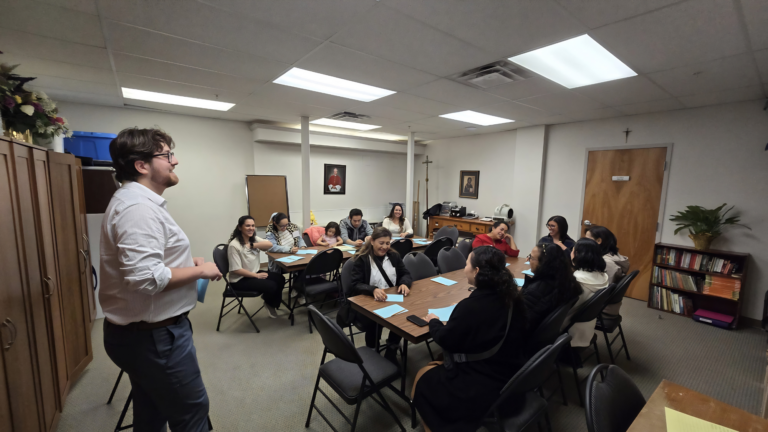
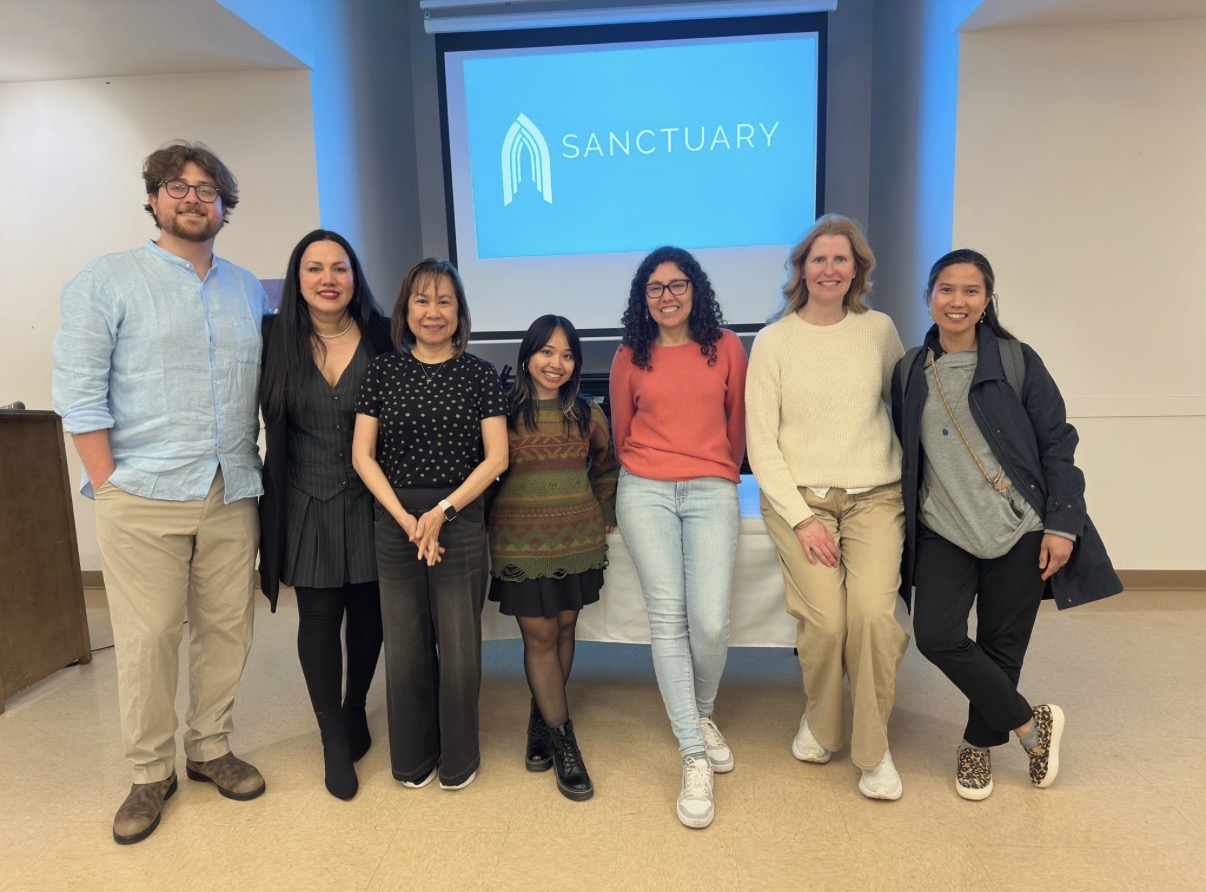
That understanding informs her volunteer work at St. Peter’s, where the Mental Health Ministry offers parishioners opportunities to discuss mental health from psychological and faith perspectives. Through initiatives such as The Sanctuary Course for Catholics, participants can share their experiences in a setting where vulnerability is welcomed.
Diaz has been touched by how open people are. The ministry gives them a space to talk things through which they might not have anywhere else. The ministry is not intended to replace professional treatment, she said. Its role is accompaniment: being present to people as they navigate their struggles.
“Even if I’m still in the midst of my struggles, God is with me, and that is profoundly comforting for me,” she said.
Diaz hopes that by speaking about her own experience, she can help others recognize that mental illness is neither a measure of character nor a reflection of faith. People may need professional help, time and personal effort to work through their difficulties. They also need others willing to walk alongside them, supporting them in their moments of greatest need.