
Out of the depths I cry to you, O Lord … My soul waits for the Lord more than the watchmen for the morning.
(Psalm 130)
I have prayed this psalm more times than I can count. For most of my life, I have lived with anxiety, and at times depression, and for much of that time I had no words for what was happening to me.
A dread with no name
I grew up in a practicing Catholic home. We went to Mass, prayed together and read Scripture as a family. My parents taught me that God loved me and that I was his child, and they did their best to show me that love.
Then came junior high. For two years I was bullied: in class, on the bus, in the hallways. Something shifted in me. The world no longer felt safe, and I began to believe there was something wrong with me. A quiet dread took root, a dread of myself and of the future.
It reached my faith too. I remember kneeling on my bed in Grade 7, crying: “God, I don’t know if I believe in you anymore. But if you are real, please show me.” I felt utterly alone in the universe. That feeling would return many times.
On the outside I looked fine, if a bit intense. Inside, I was convinced that if anyone knew what was really going on, they would reject me. So, I said nothing.
Naming it
In university, sitting in a doctor’s waiting room, I watched a video of students describing how they had lost their motivation, their hope, their sense of themselves. They called it depression. Something clicked: that’s what I’m feeling, and it has a name.

Naming it didn’t fix it, but it gave me permission to seek help. When I finally told a few friends, I learned that one of my closest friends – someone who was well liked, from a good family, on the golf team – had been on antidepressants for years. He had seen a counsellor and sensed God with him in the middle of it. For the first time I saw that mental illness was not a failure of my faith. It was something I needed to bring into the light.
A few years later, while interning in ministry at my home church, I had my first panic attack. I was driving around town, not knowing where to go, sure my life was ending, when that same friend called out of the blue. After describing what was going on he told me I shouldn’t be alone. An hour later I was sitting with the pastor I worked for, telling him everything.
He wasn’t shocked. He didn’t hand me a Bible verse and send me on my way. He listened, told me he respected me for sharing, and said he would walk with me. He also taught me a different way to pray: less like handing God a list, more like resting in his presence and letting God be God.
The diagnosis
In my late thirties, while working at the Archdiocesan Pastoral Centre, I had a major anxiety episode. It became so overwhelming that I could barely think without physical pain. A compassionate HR director encouraged me to take a leave and get help.
The psychologist I saw listened to my story and explained that I was living with generalized anxiety disorder, a condition marked by persistent, excessive worry about everyday things – and especially about things that matter most deeply to the person suffering, like relationships, work, faith.
That diagnosis wasn’t discouraging, it was liberating. For the first time, someone could explain the confusion and torment I had lived with for years and help me find a way forward.
However, it also unsettled my faith. I had to face the uncomfortable truth that my own thoughts weren’t always trustworthy and that anxiety could disguise itself as conscience, even as holiness. At times it felt like my own history was being taken apart. But it deepened my hunger for a faith that was real.
How the Church has helped
The Church has helped me most when it has proclaimed God’s mercy not as a prize for good behaviour, but as a rescuing hand for the broken. Whenever the Gospel and the sacraments have been offered as the Father’s healing rather than a reward for performance, they have drawn me closer to Christ.
I have been helped by fellow Christians willing to tell their own stories of suffering and hope, through the Sanctuary course and through Masses offered for those living with mental illness. I have been helped by wise spiritual directors who gently named my distortions and helped me tell true consolation from anxious scrupulosity. And at a time when I had very little money, a Christian community I belonged to paid for me to see a therapist for more than two years. That gift removed two barriers at once: the cost, and the shame I felt about needing help at all.
I have been helped by my wife, who has never been frightened off by my affliction, and who has loved me through some very dark moments.
And yes, therapy and medication have been lifelines. Some people of faith see medication as a crutch, as if enough faith would make it unnecessary. I think that’s like telling someone that with enough faith they wouldn’t need a wheelchair. For me, medication brings my anxiety down from overwhelming to manageable, so I can face what is driving it. Without therapy and medication, I honestly doubt I would be married, a father, or working full time today.
Waiting
My story isn’t finished. Anxiety may be a lifelong companion. I am learning that faith doesn’t mean always having peace or clarity. Often, it means waiting on God as patiently as I can, even when his consolation feels far away.
If you are struggling, please know that you are not alone, and that asking for help is not a failure of faith. And I ask you to pray with me that, amid mental illness and affliction, we can keep saying with the Psalmist: I wait for you, Lord, more than the watchmen wait for the morning.
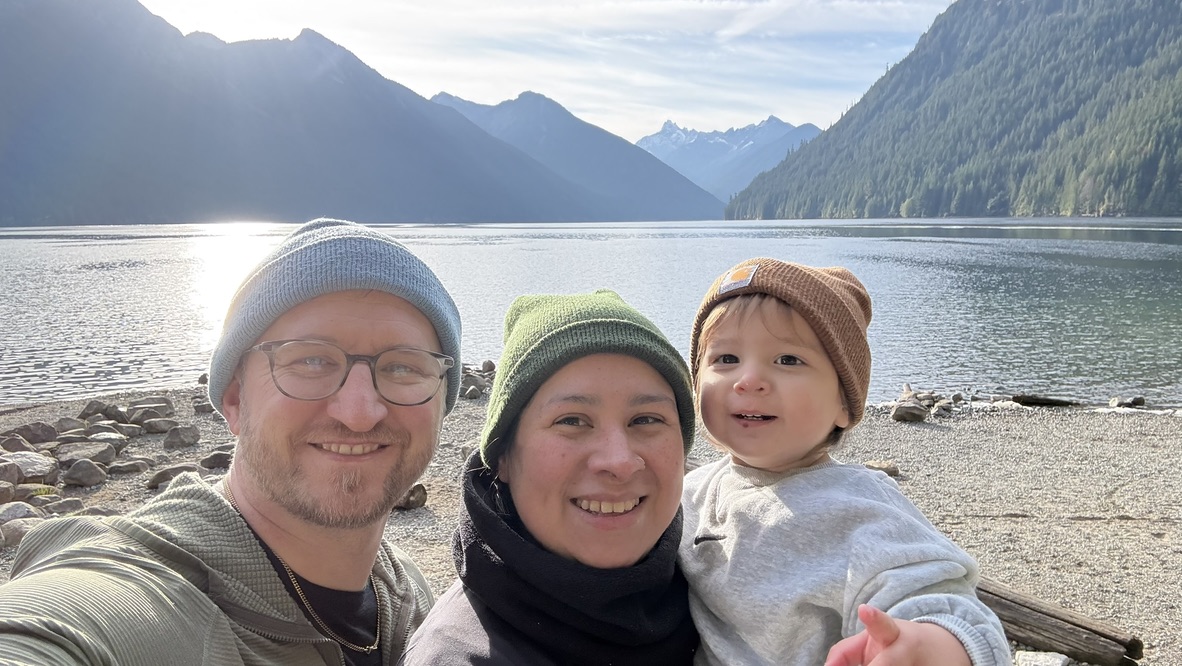
Matt Martin lives in Vancouver, BC with his wife, Berenice, and their 1-year old son, Gabe. He leads delivery at Meribah Flow Consultants, which builds technology for Catholic dioceses and parishes.