
It is no secret in the Christian world that Protestants have a reputation for strong community building. “They have better coffee,” people will tell you. The hospitality volunteers at St. Anthony of Padua have taken up the a challenge and are doing their best to quash the persistent stereotype.
Whether it is true or not, it is hard to argue with their results. After Mass, at one of their monthly hospitality events, it is not unusual to see a significant portion of that Sunday’s Mass-goers socializing, squashed into the allegedly inadequate spaces outside the front of the church and in the foyer.
Over the last decade, many parishes have adopted a hospitality ministry. At St. Anthony’s, this was done to ensure the parish was taking seriously one of its pillars of Parish Renewal: hospitality. The name is a bit on the nose, but it gets the point across. And if the number of people socializing after one of the bi-monthly Name Tag Sundays is any indication, it is having a positive impact on the community and parishioner engagement.
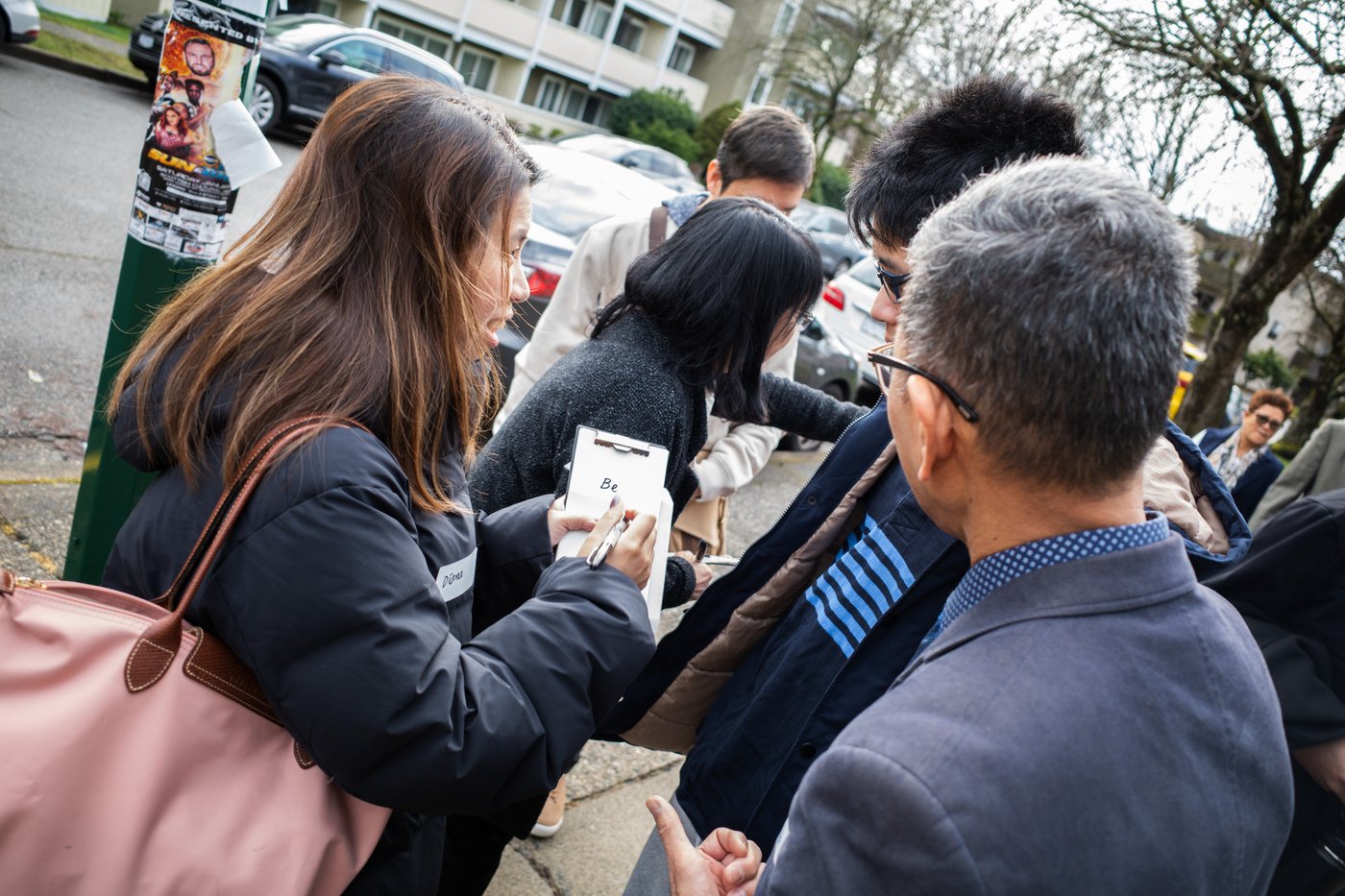
A volunteer writes out a name tag for Name Tag Sunday.
The Renewal pillars were drawn up close to a decade ago at the beginning of Father Justin Huang’s tenure as pastor. The other two pillars are Homily and Hymns. It should be said that both the choir and Father Huang’s preaching are excellent.
At a practical level, even if hospitality seems the least religiously crucial of the three, it is hard not to appreciate how difficult it would be to run a music ministry or preach with empty pews. After all, you cannot preach to the choir if it is empty.
Hospitality Ministry Leader Jessica Dy Tang manages just over 70 volunteers who make up the hospitality ministry. She has been active since its inception in 2015 but took the reins last year.
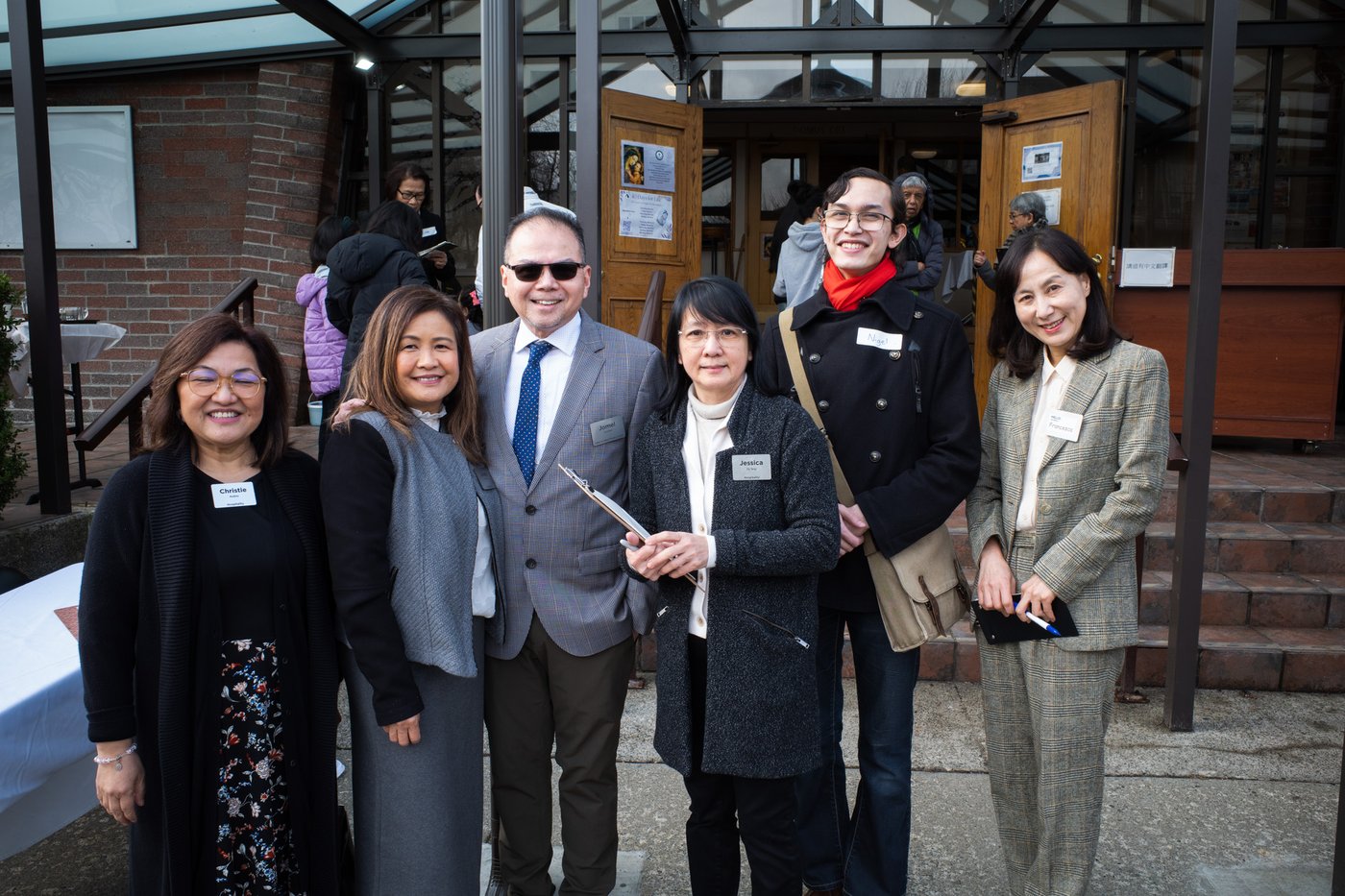
Hospitality Ministry Leader Jessica Dy Tang (centre-right) with volunteers.
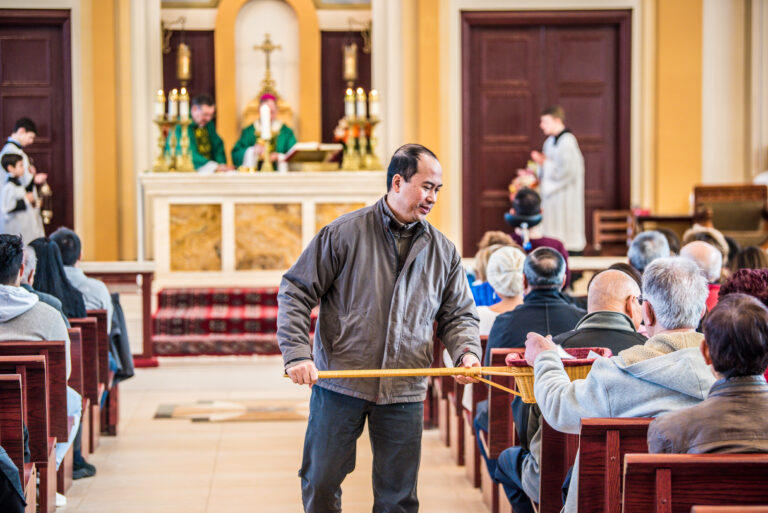
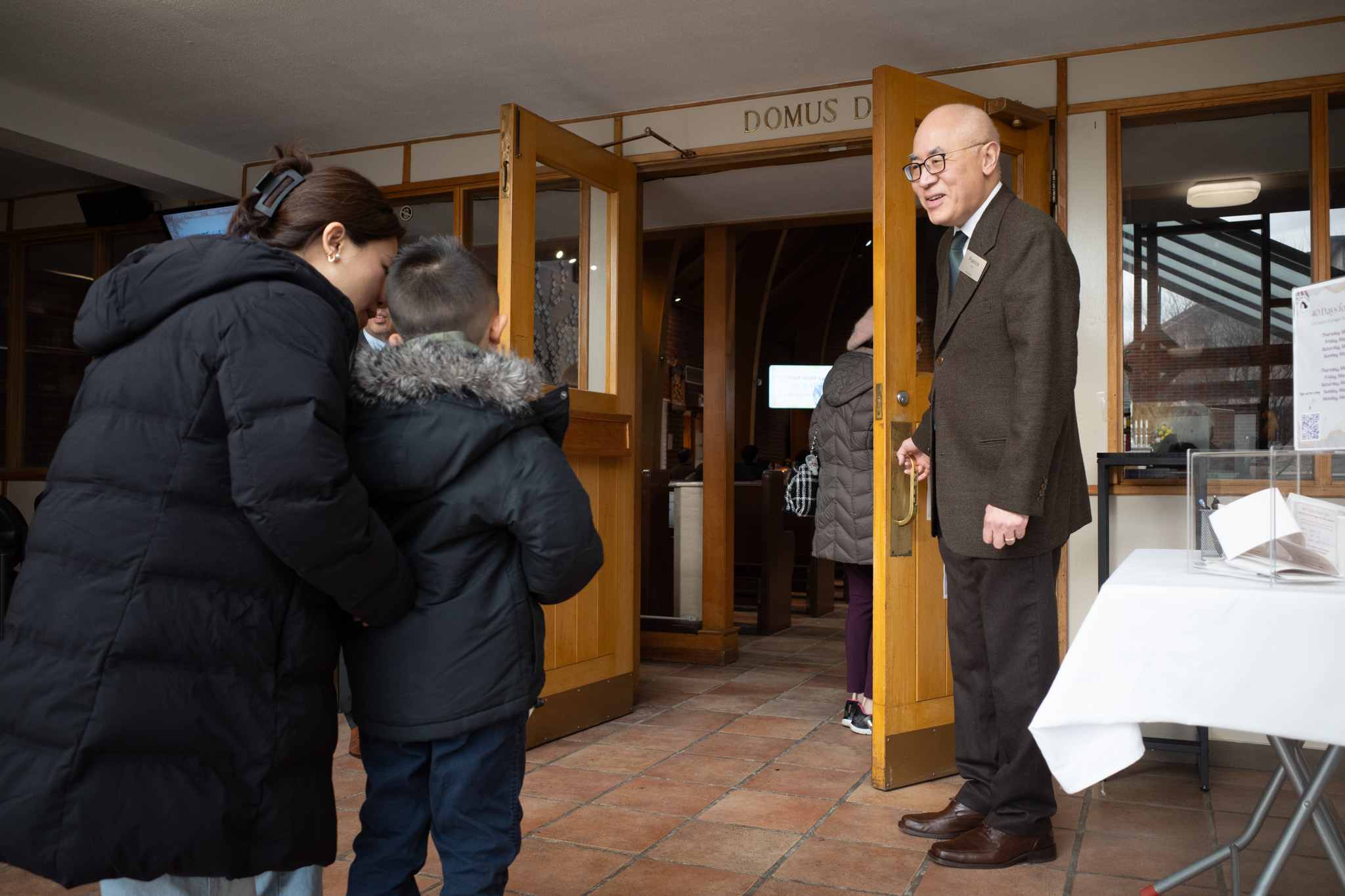
Most Sundays, her volunteers handle post-Mass coffee and snacks, as well as ushering and greeting to help attendees find their seats. Additionally, each month, they organize a special event — either an after-Mass breakfast or the small yet mighty Name Tag Sunday, where greeters ask Mass-goers their names and provide name tags to wear during and after Mass.
The idea behind it is simple: we are imitating Jesus. “Jesus knows us by name,” usher Patrick May told The B.C. Catholic. It is the least we should do for each other as Christians.
In some ways, Name Tag Sunday and Parish Renewal would not be necessary if the community did not need a boost. This might be why even something as small as Name Tag Sunday did not take off right away. Tang remembers that it took serious preaching from Father Huang to get people receptive to the idea. Even now, he reminds parishioners before the closing prayer: “Thank you for wearing your name tags, it’s an act of charity.”
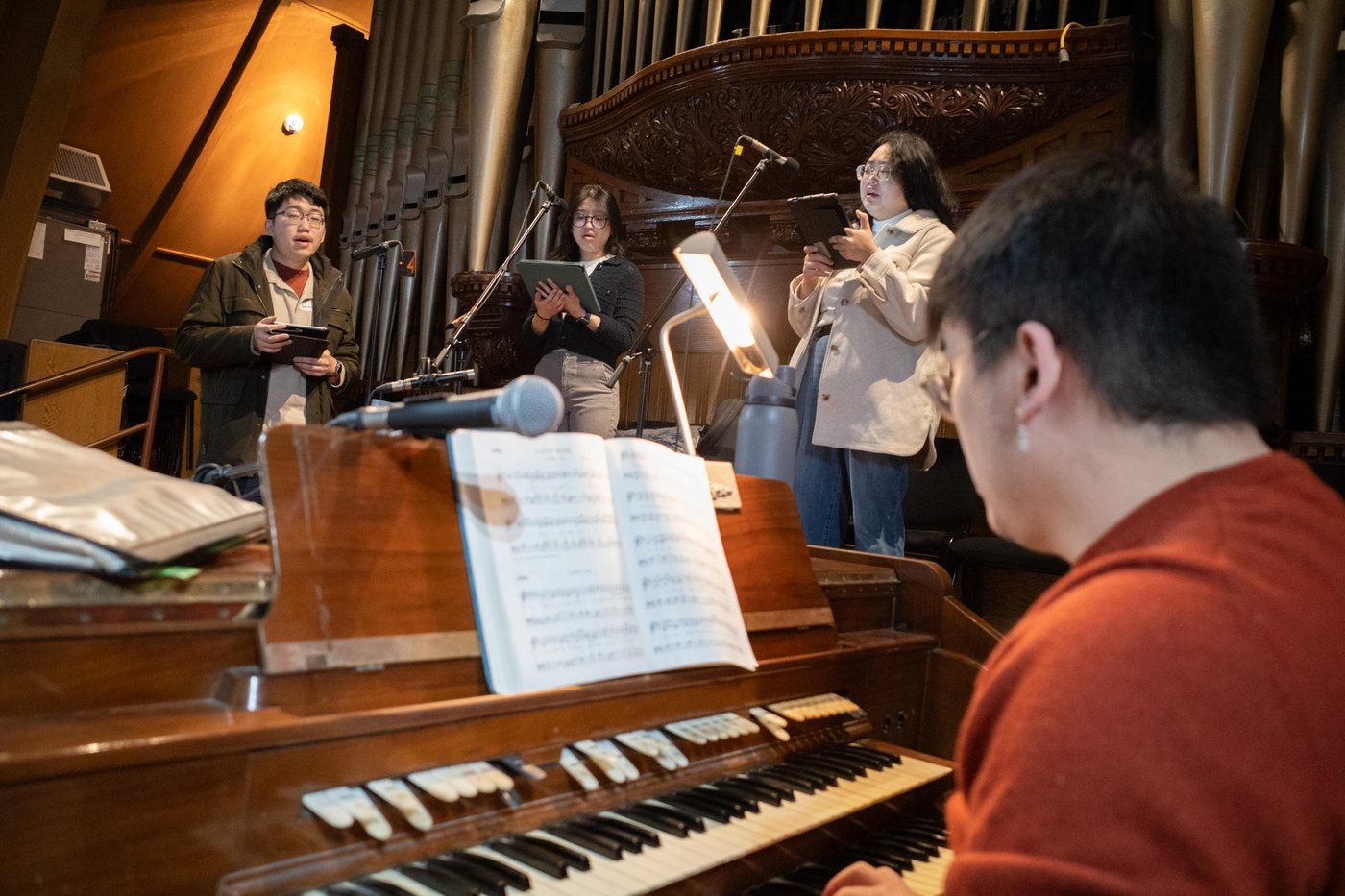
St. Anthony music ministry.
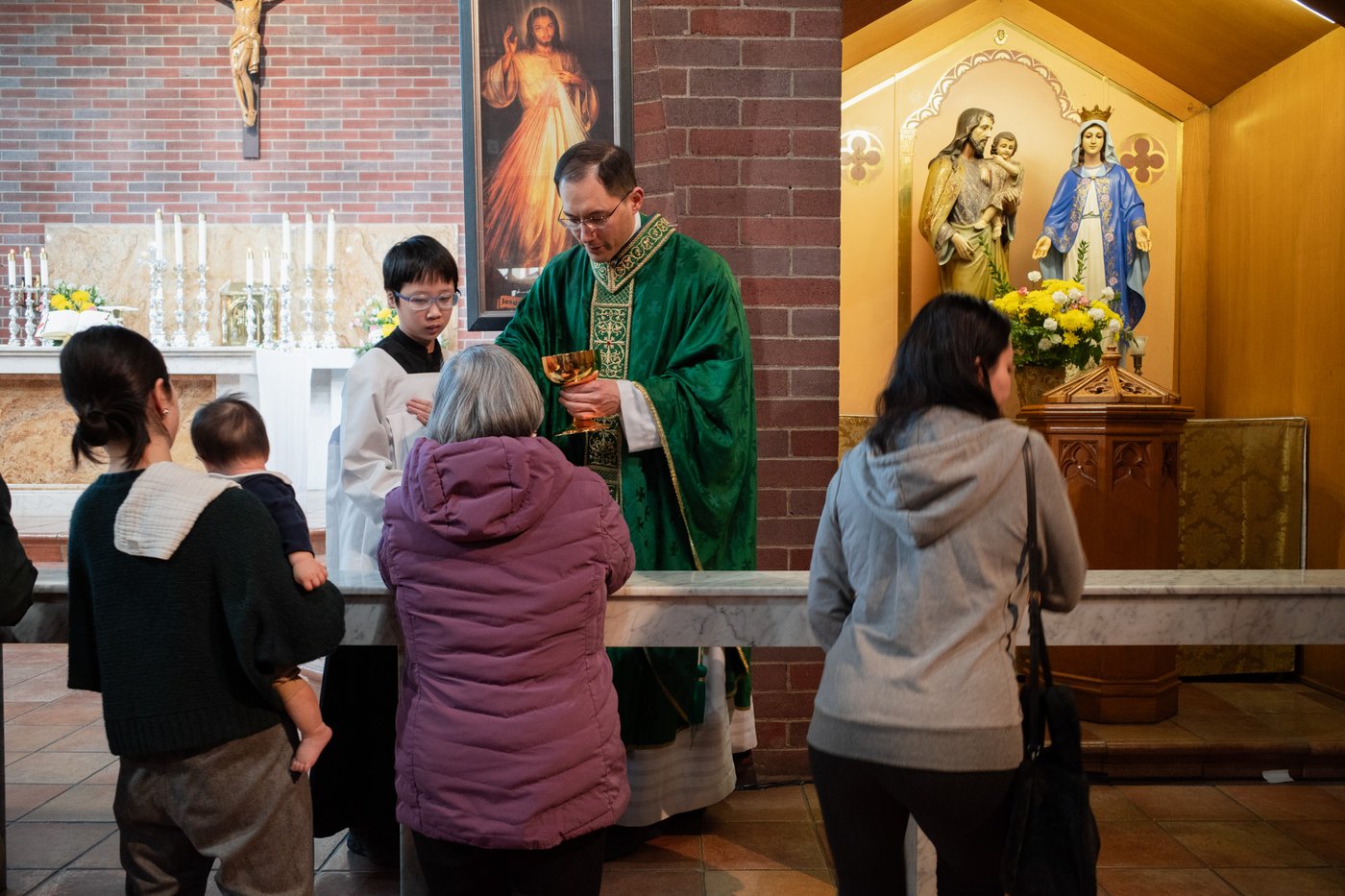
Father Justin Huang distributes the Eucharist.
In the years since it began, Tang says the community is “more vibrant, with more volunteers.”
This would suggest that most people just wanted to belong before they committed to parish life beyond simple Sunday observances. At its core, the name tag is about Christian connection.
“Our culture is becoming more individualistic,” he told The B.C. Catholic after Mass. People are more distracted than ever, and even at Mass, smartphones and conversations can get in the way of what is essential. The name tags help to break the anonymity of modern life.
Ultimately, Father Huang felt there was a need to develop the communal life of the parish. Mass is important, he says. The Eucharist is the lifeblood of the Church, but neither of these things is designed to be corporate. The benefit and intention behind initiatives like Name Tag Sunday and the hospitality ministry more broadly are that they help people connect and get to know each other.
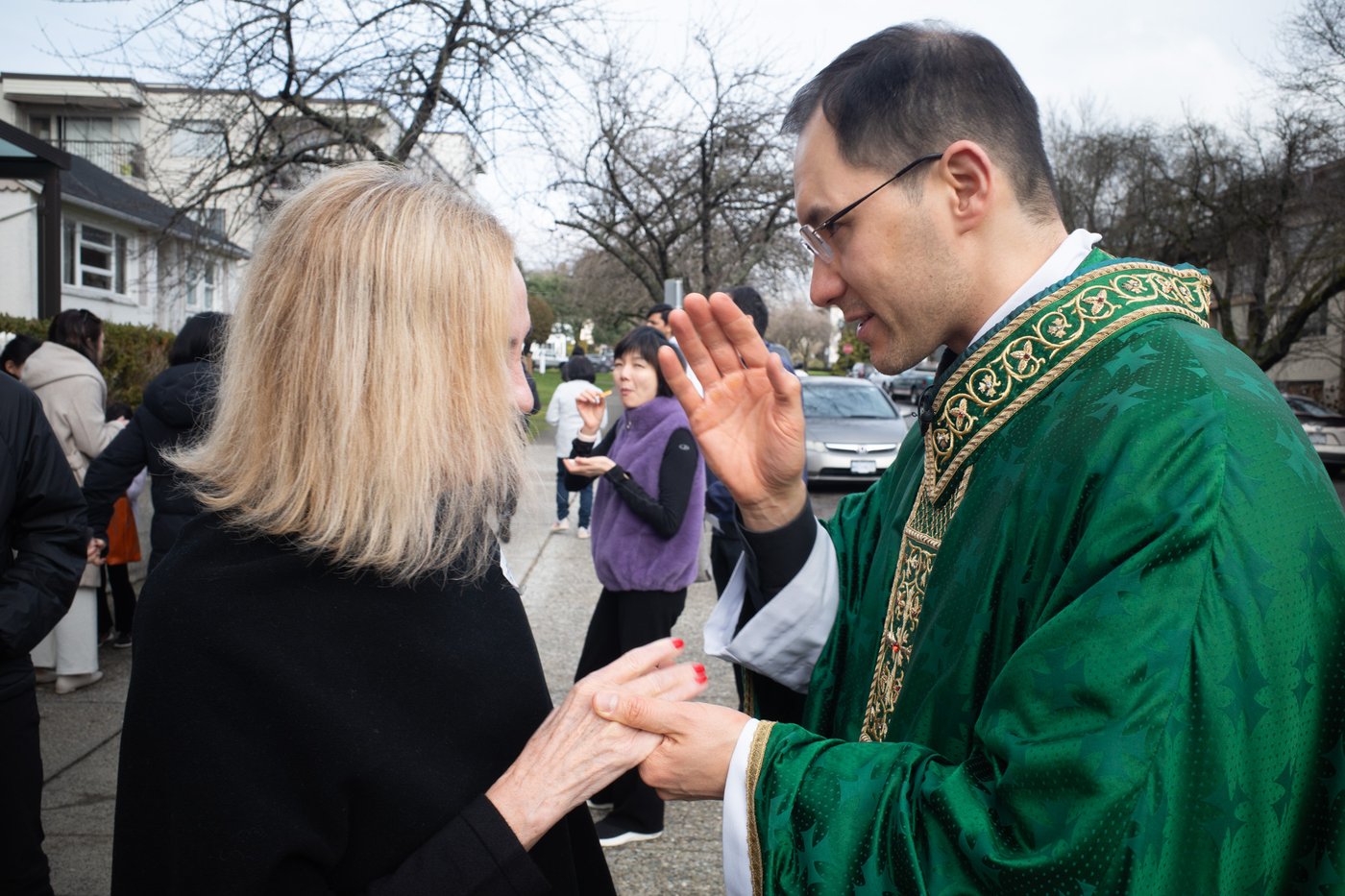
It is clear from talking to other ministry leaders within the parish that the Renewal pillar of hospitality means something deeper than tea and cookies. It is reflected most deeply in how community building has become intertwined with other aspects of parish life.
For example, parishioner Gracie Ruelle says the community was a big help to her when her husband ended up in the ICU. The parish was there to rally around her, sending people to pray with and comfort her. The visits helped bolster her faith in Christ, which was how she overcame the difficult time.
Even the parish’s Discipleship Pathway — the system through which newcomers integrate within the parish — starts with belonging. The process begins with Alpha, then participation in faith studies, and finally discernment with the Called and Gifted Ministry. If the person is not Catholic, the Pathway takes them through the Rite of Initiation for Christian Adults after attending Alpha. This last point is clever because by starting newcomers in Alpha they are integrated into the community before they start their formal catechesis in RCIA.
Alpha Core Team Member Ivan But told The B.C. Catholic that often people finish RCIA and find they are detached from the parish community. “Alpha creates partnerships that last into RCIA,” he said. When they get to RCIA, “they have some fellowship already.”
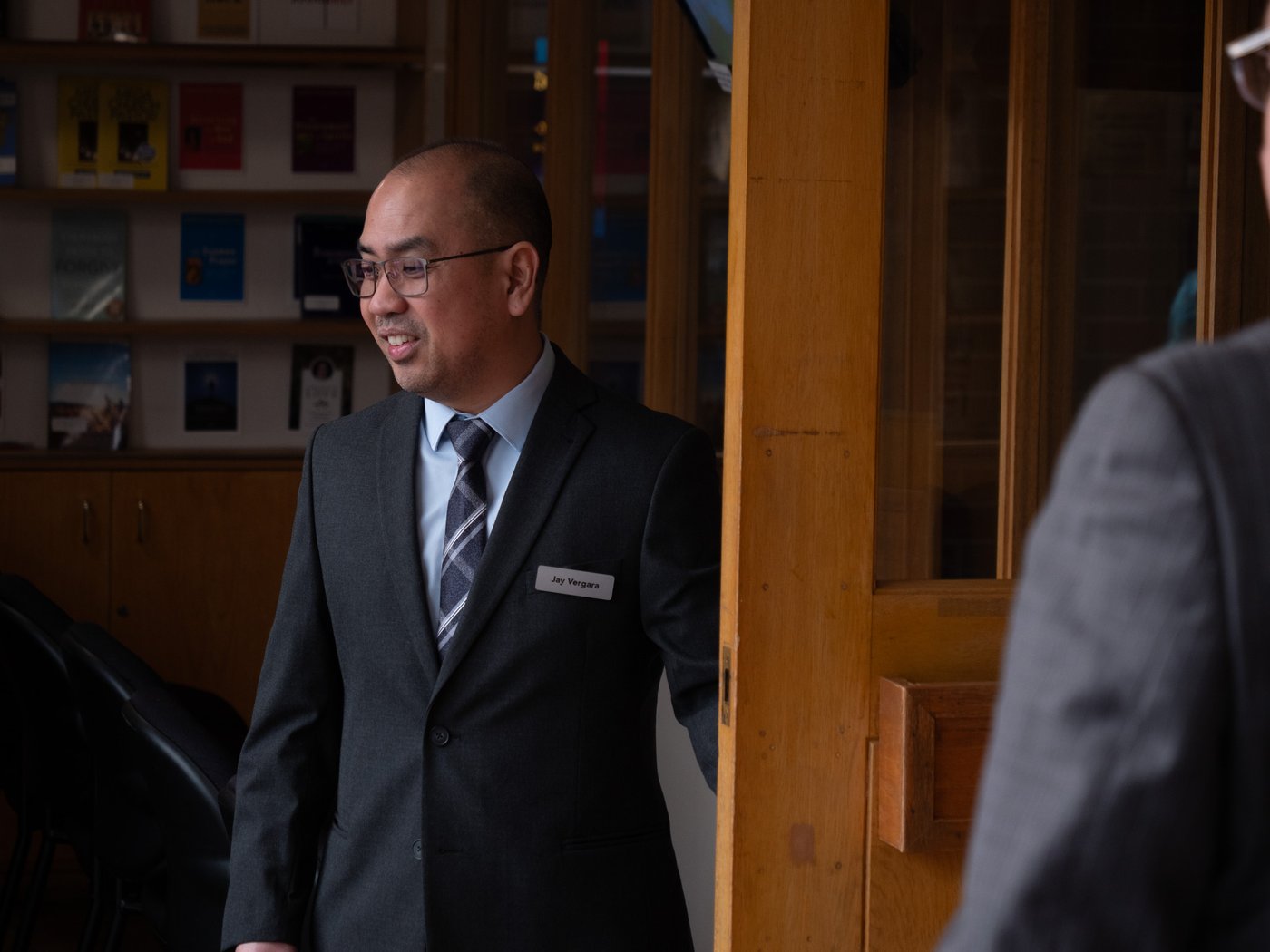
Like most things in Catholic theology and life, patterns emerge as the foundation for diverse aspects of parish life. In this way, the same rationale for Name Tag Sunday — that Jesus knows and calls us by name — finds its way into the final step in the Discipleship Pathway.
The Called and Gifted Ministry, run by Jomel Trinidad, is more than a continuation of Bible studies or catechism. At the end of the program’s discernment process, the goal is not necessarily to find a job within the parish but to help participants understand how they can connect their charism, or gifts, to the parish’s needs. It is a subtle difference, but it is worth unpacking..
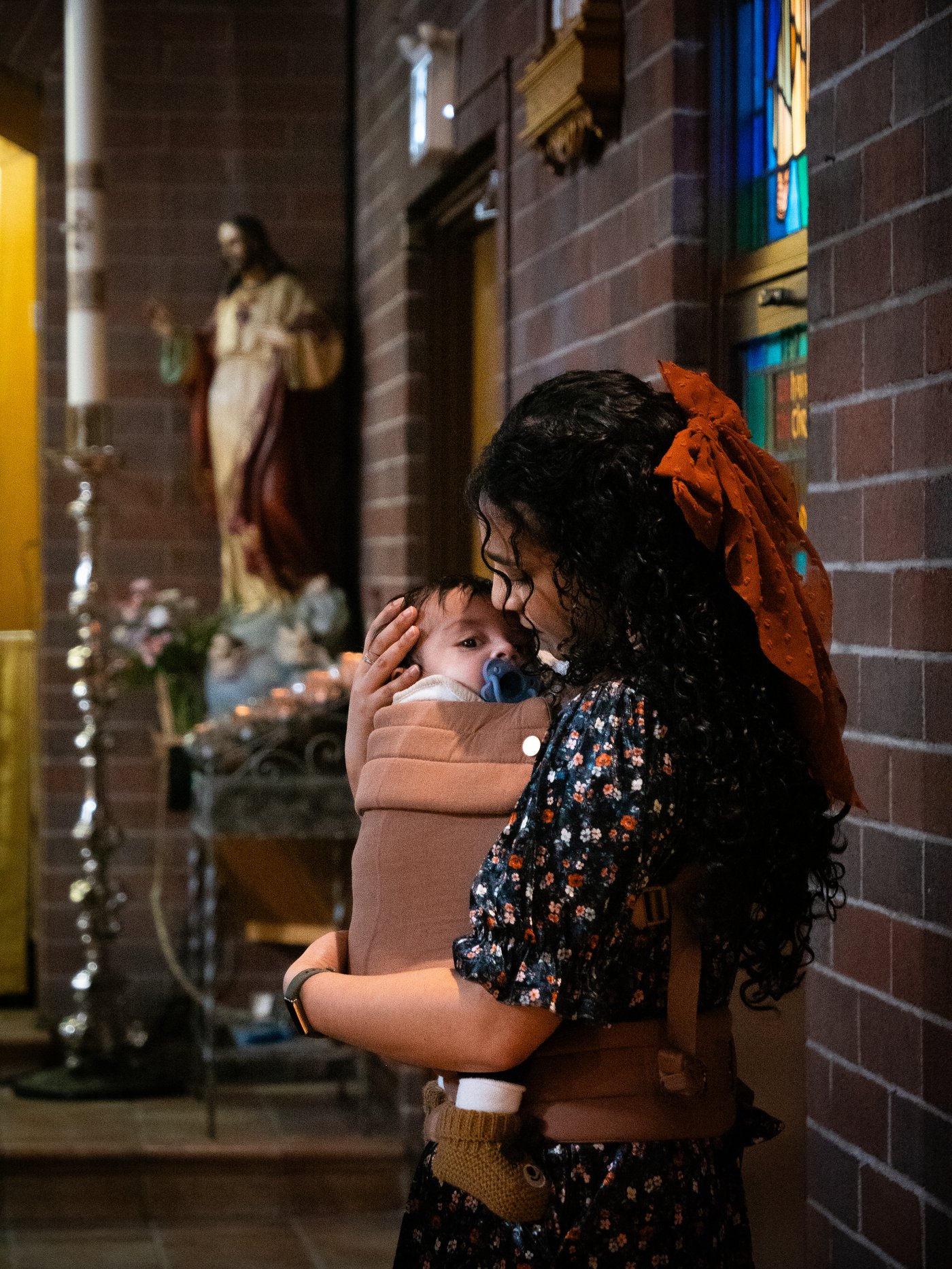
While it sometimes means Called and Gifted participants join an active ministry, Trinidad stressed they could end up doing almost anything. For example, one woman recently completed the program and felt called to make rosaries to give as gifts. This simple practice was what she had to offer to the parish.
Hearing this story brings to mind the Little Way of Saint Therese of Lisieux. There is something beautiful in the way that St. Anthony’s opens its doors to the world in welcoming, accepting, and encouraging even the smallest scattering of Therese’s “rose petals,” be they one-use name tags or handmade rosaries, to make everyone in the parish feel appreciated and welcome.
Your voice matters! Join the conversation by submitting a Letter to the Editor here.