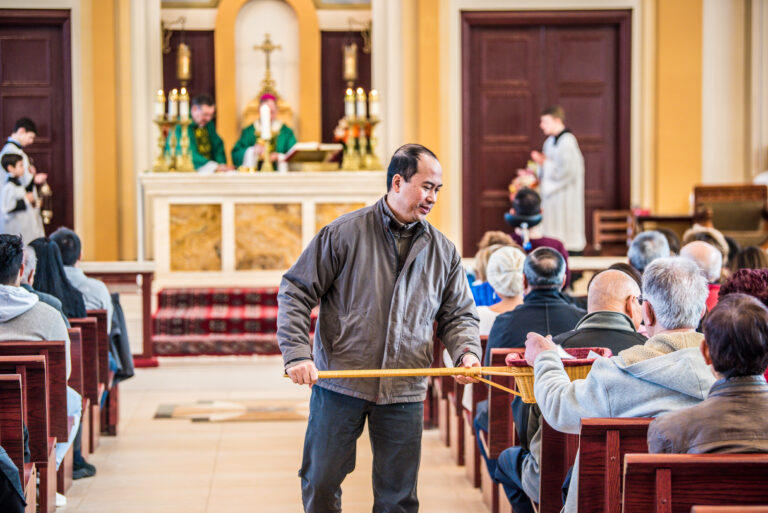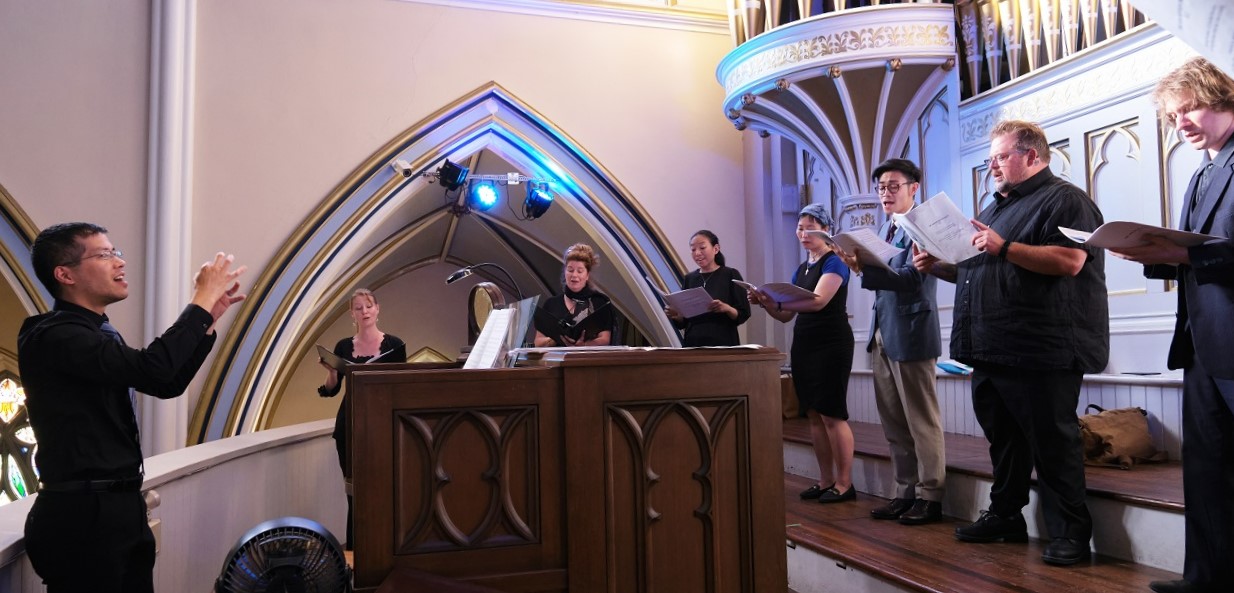

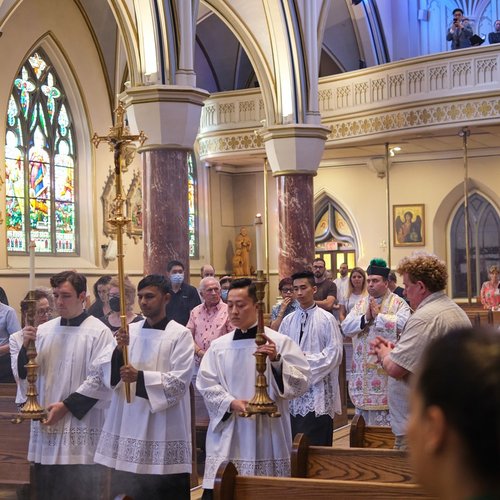
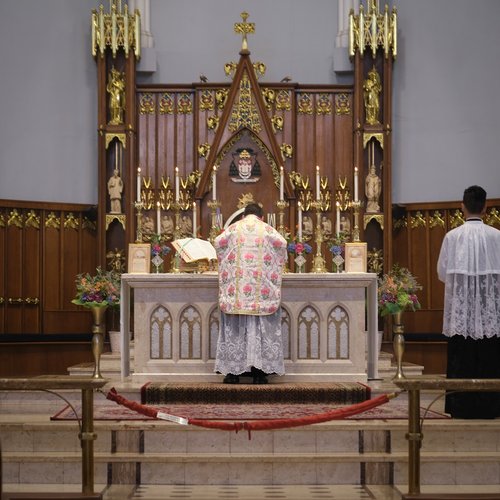
It is fairly easy to find sacred music performances if you try hard enough, but rarely will they be accompanied by the smell of incense and candles. Sacred Music organization MOTET’s Assumption Project aims to change this by placing the music back in its intended context.
Recognizing that many classical pieces of music were created to accompany the Mass, MOTET (taken from a Latin acronym: Musicae Opus Toti Ecclesiae Terrestri, translation: “The work of music for the whole Church on earth”) joined a growing movement in the Church to emphasize the beauty of the Mass through the contextualization of the music with Catholic liturgy.
At first glance, these things – candles, incense, bells – may seem only superficially connected to the music, but MOTET co-founder David Poon believes that we lose something when the music is divorced from the Church – and therefore sacred – context.
“Why does this music have pride of place in the secular world and not in our Catholic world?” Poon mused in an interview with The B.C. Catholic.
This question formed the core of MOTET’s reasons for starting The Assumption Project. Originally, they mostly ran concerts between Christmas and Epiphany called The Twelve Days of Christmas. The programs were structured around sacred music, but Poon wanted to go further.
He spearheaded The Assumption Project in 2016, on the Feast of the Assumption. The Mass featured Maurice Duruflé’s, Messe Cum Jubilo and it was a modest success. MOTET found growth through their second and third events, but unfortunately, like so many things, COVID got in the way. Poon was pleased with the turnout this year, regardless.
“I am hoping that The Assumption Project will be a lasting tradition,” Poon said. COVID hit and this year’s choir was smaller but still larger than the second event they put on.
The end goal was not just to create something beautiful for the moment, but to help bring that beauty – and musical education – out into the wider Church.
“I think just like the other things we do at Mass, the music needs to be set apart,” he said, “it needs to be different than everyday life.”
This is a subtle reference to a trend in some parts of the Church to create music for Mass that mimics secular music.
“Some new hymns are just not good songs,” Poon said. “It’s not about cultural context; they are just not good music.” Sacred music needs to be theologically sound and more than this, good sacred music must be “intrinsically sacred in form, transcending the mundane as it draws us to the Divine,” Poon said.
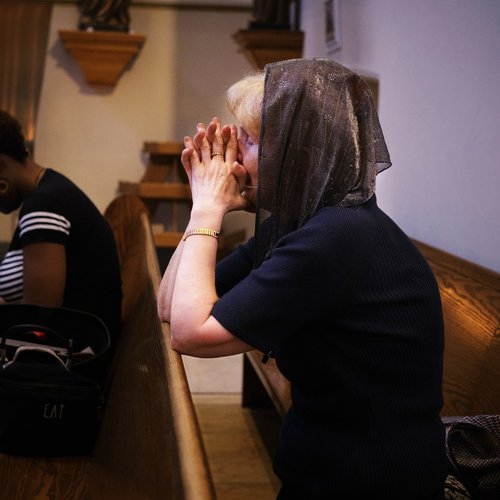
This year’s Assumption Project choir performed parts of the Mass written by Cristóbal de Morales, a Spanish composer from the early 1500s. Of his surviving twenty-two Masses, six are based on Gregorian chant. This was an important part of the decision process for Poon because Church doctrine specifically gives primacy of place to Gregorian chant within the realm of liturgical music.
“Gregorian Chant will never be ‘popular music,’ he said, but this fact helps it keep us “grounded in the sacred.” When music is informed by Gregorian chant, it elevates us to God because that’s “what it is intended to do.”
This is not just about simply helping people learn the music, but to foster a seriousness for the task of bringing music to the liturgy. Part of what makes this event stand out within MOTET’s program is the decision to invite both professional and amateur vocalists to participate in the choir.
“The goal is to bring musicians together from all different parishes for a single event,” Poon said. “Afterward they can bring those experiences back to their parishes.”
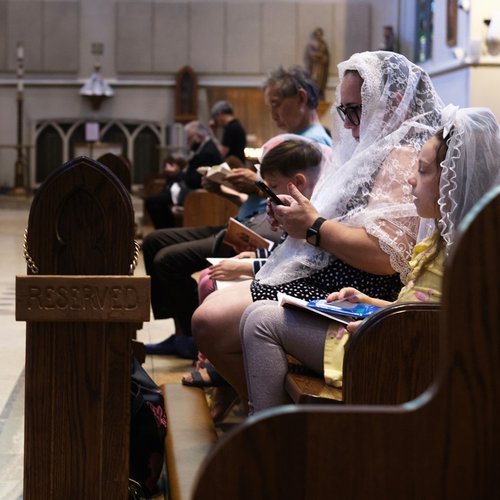
The focused nature of the music Poon chooses for The Assumption Project requires time and dedication to learn. MOTET hopes to foster a work ethic in the musicians who participate so they can go to their parishes and bring their work ethic with them. Regardless of the skill of the musicians, good performance should always be the goal of even the smallest inexperienced church choir.
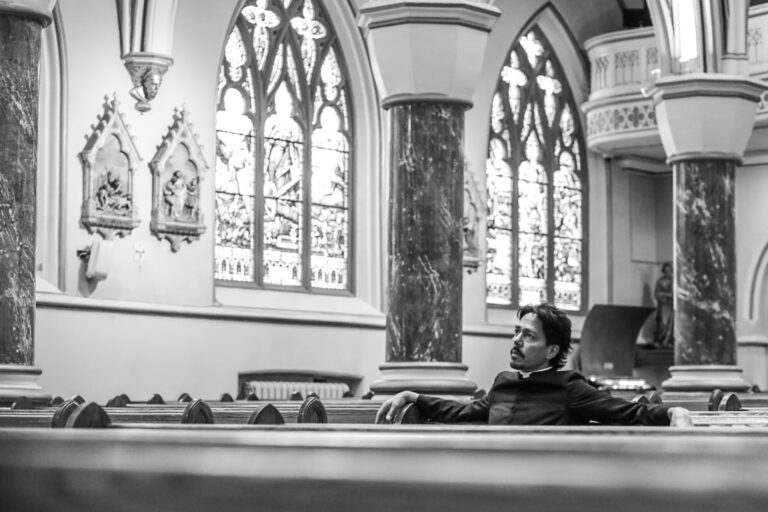
“There needs to be intent,” said Poon, “even if the group is not technically skilled” they should strive for the best performance they can. q Nicholas Elbers photo When music is informed by Gregorian chant, it elevates us to God because that’s “what it is intended to do,” says David Poon.