
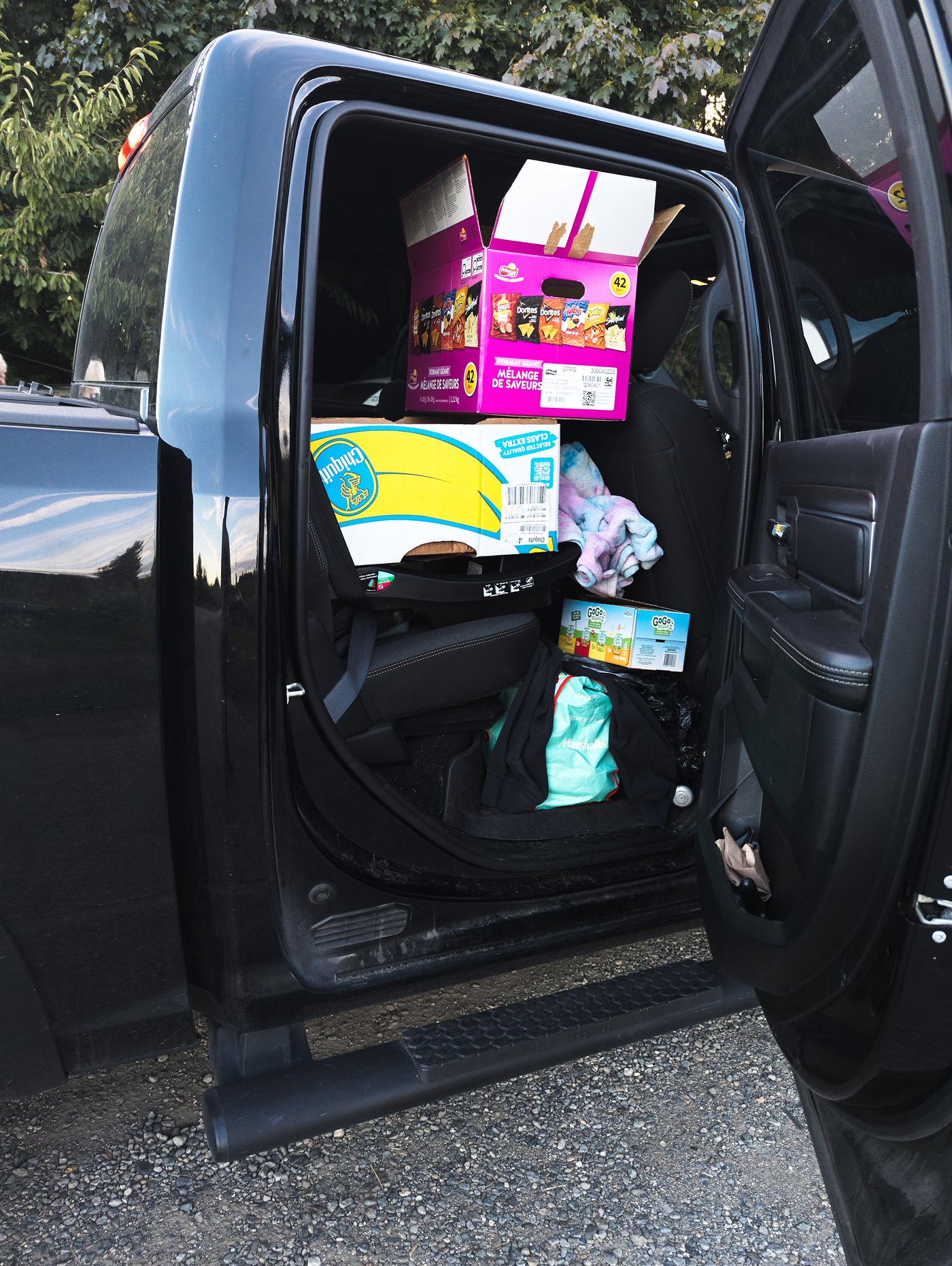
Waiting for Hugh Frieberg outside Gilmore Park United Church in Richmond, I didn’t know what to expect. It was late, but the sun was still peeking out, and I knew we were going out to deliver food to Richmond’s homeless population with the Food Delivery Coalition, which Hugh co-founded. I knew that St. Paul’s and St. Joseph the Worker Parishes in Richmond were involved with the ministry. I knew Hugh is a parishioner at St. Joseph the Worker, and I knew that he was a grandfather. Otherwise, nothing else.
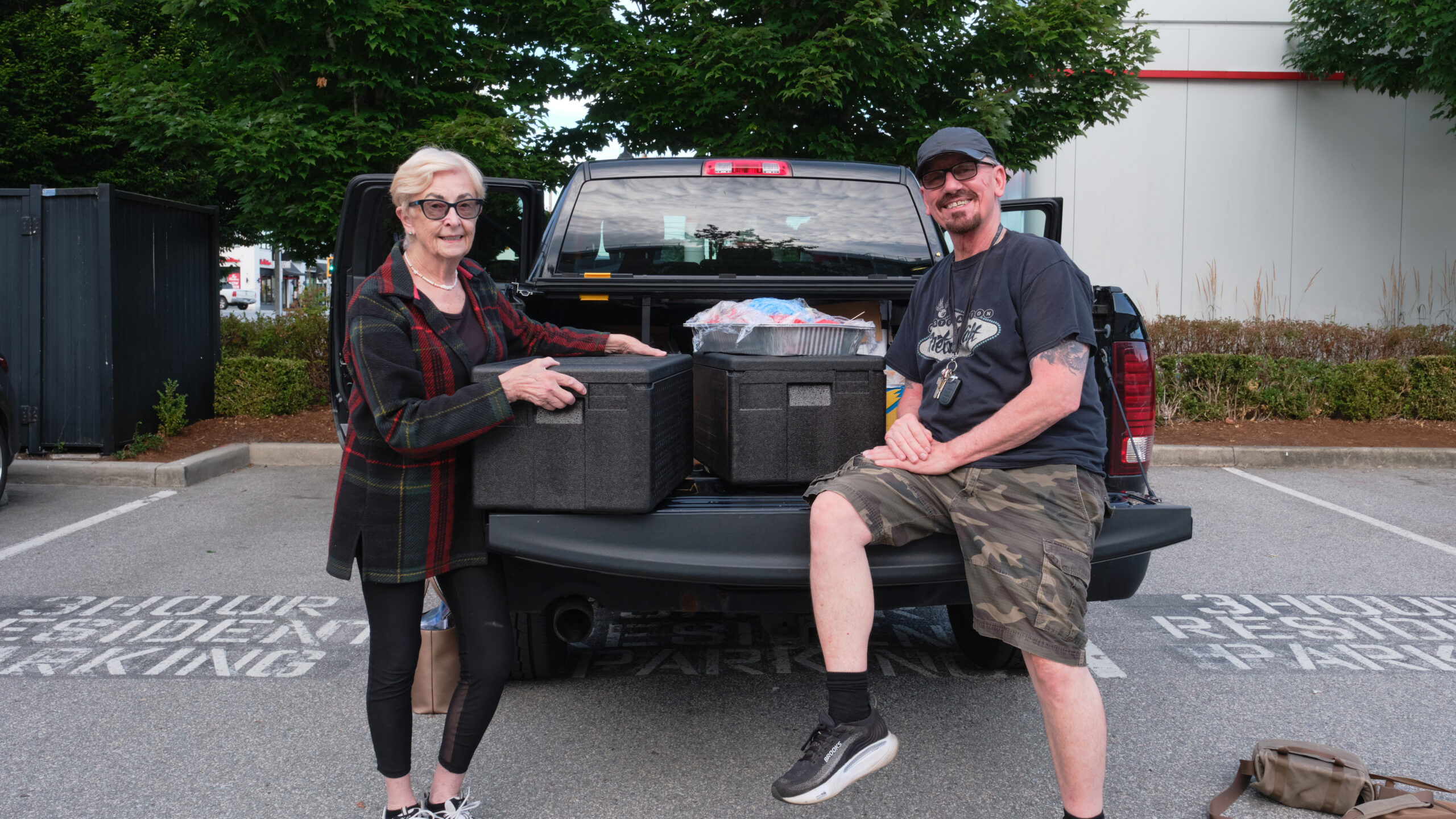
Hugh was taking me out on his last delivery run. He was retiring from the helm of the Food Coalition after 14 years of bringing food to the homeless population of Richmond. Honestly, I imagined a pretty strait-laced ministry man; I thought maybe he’d drive a van and wear conservative clothes. When he pulled up in a Dodge Ram pick-up truck loaded with food, tattoos peeking out from under his T-shirt sleeves, with a long goatee on his chin, my idea of what “church ministry people” looked like had to stretch a bit.
None of this mattered. Hugh was friendly, driven, and direct. Almost before I could ask any questions, we were pulling up to a nearby house to deliver some hot dogs, watermelon and water.
The man at the house wasn’t technically homeless, but his situation was precarious, and Hugh believed he needed help. “His family’s from Yugoslavia,” Hugh told me as we watched him walk across the yard. “He’s got a messed up right arm as you can see – he can’t feed himself; he can’t cook, he can’t do anything.”
Hugh and the man talked while I stay in the truck – he didn’t want photos taken, and I didn’t know how he’d respond to the idea that I was going to write about the evening.
The man was grateful, and as we watched him walk back inside, Hugh tells me he is worried that after his retirement, guys like this will fall through the cracks. “[Outreach workers] try to focus only on the homeless,” he says. “But he’s previously homeless, a victim of slumlords [Hugh estimates there are 15 people living in the house, better described as a dump, all paying around $1000 a month in rent], and disabled – he has huge gratitude.”
This set the tone for the evening.
Until recently, Hugh lived in Richmond, but he was born in Saskatchewan. His family moved around, first to Edmonton, then the Lower Mainland, and back to Edmonton. He eventually settled in Vancouver in 1992.
Like many people who work with the disadvantaged and homeless, Hugh lived a hard life, and he wanted to give back. “Basically, I got involved in drinking and drugging,” he told me. “Eventually, I decided I needed to clean up my act – I went to Salvation Army Detox in ’94. I sobered up and started volunteering there, assisting the health workers.”
“I felt that I could stay sober if I kept working with others that are trying to stay clean and sober and turn their lives around,” he said.
From there he went to Turning Point Recovery in Richmond, and then onto the Ministry of Children and Family Development, where he worked to repatriate children caught up in prostitution and other “horrible situations.”
“I did that for a while,” he said, looking tired. “It was really tough – actually, really tough, because I lost kids downtown. It was horrible.”
Hugh built a reputation as an effective caseworker until he got a call from the John Howard Society, who wanted him to work on a program that would bring kids off the Downtown Eastside streets and find them homes in rural areas of Vancouver Island. The program would put them in recovery and help them find work. “It was an awesome program. We were saving lives,” he said.
Before we could start out properly on the route, we needed to pick up Dianne Woodhouse, a cofounder of the food delivery program who’s worked with Hugh for decades. The safety policy of the organization is that no one is ever allowed to enter a homeless encampment alone. But Dianne is not just there for security; she is also bringing her expertise as a nurse.
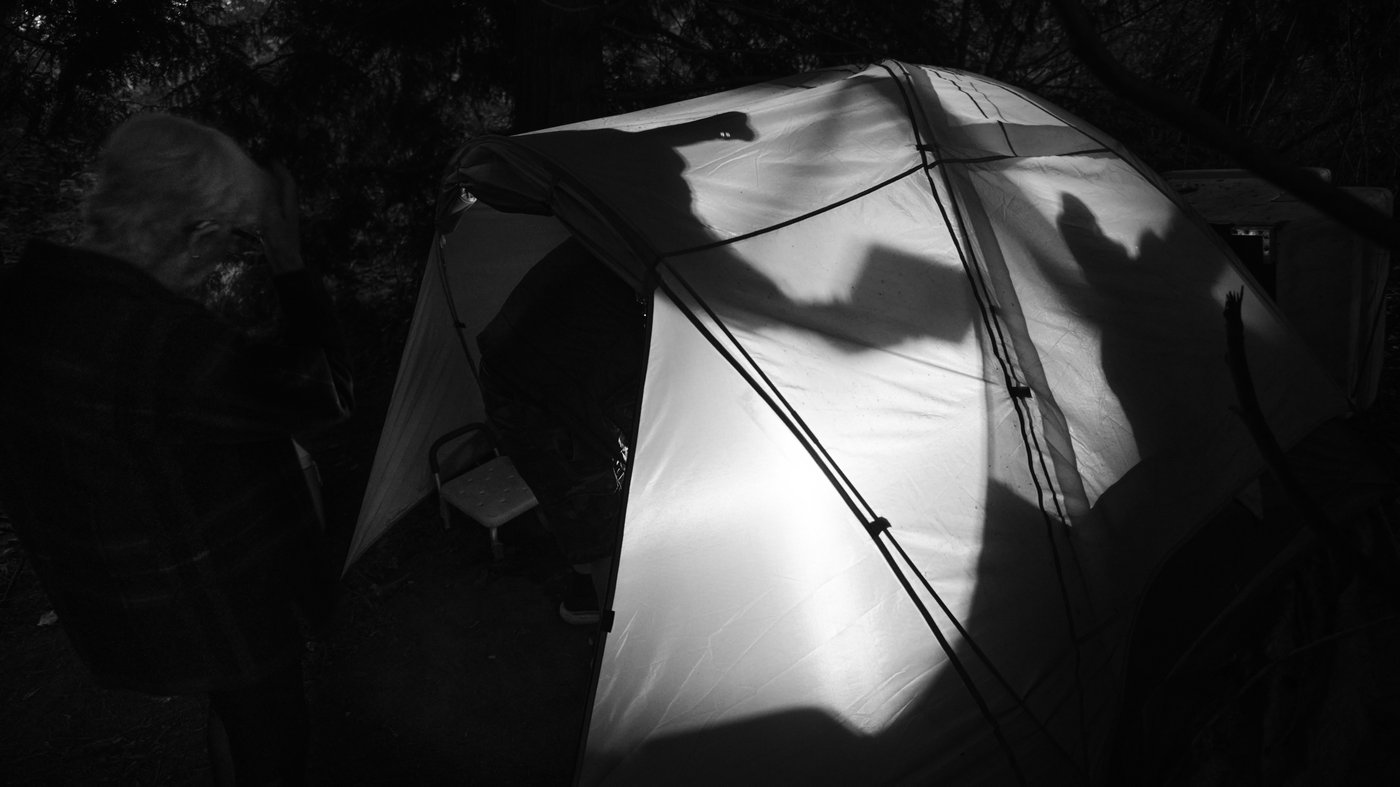
One of the night’s themes is that we always have time for someone in need, and even as we rush off to pick up Dianne, Hugh stops outside an old brick building. A large Asian man with a prominent sore on his face comes out to meet us. Hugh tells me the guy usually lives in his van, but last night he was able to sleep on a friend’s laundry room floor.
Hugh gives him some hot dogs while they engage in an animated conversation about a recent news story involving some local homeless camps. They know the men in the camps, and Hugh’s friend was concerned there might be ramifications for the campers.
As we drove away, Hugh kept talking out the window, reminding the man his successor will be there next week. “I love you,” Hugh calls as we drive away.
We picked up Dianne in a grocery store parking lot. Despite being a Catholic, Hugh met Dianne while volunteering at St. Alban’s Anglican Church in Richmond, as a greeter for their Tuesday night community meal.
“It was a couple of years after my wife passed away,” he recalled, “and I was looking for some good churches for ministry work, which is always helpful when you are grieving.”
What started as a relatively straightforward commitment – welcoming people for the meal – eventually turned into working evenings at St. Alban’s extreme weather shelter, putting out mats and bringing people in off the streets. He eventually worked his way up to manager.
St. Alban’s has been at the forefront of Richmond’s homeless outreach for years, offering a well-attended Tuesday night community meal, extreme weather shelter (the first of its kind in Richmond), and a breakfast and shower program, where people can come to eat, shower, and even do some laundry. The Food Delivery Coalition was ultimately an outgrowth of these efforts, and while we drove to the first camp, Dianne and Hugh reminisced about the start of the meal delivery ministry.
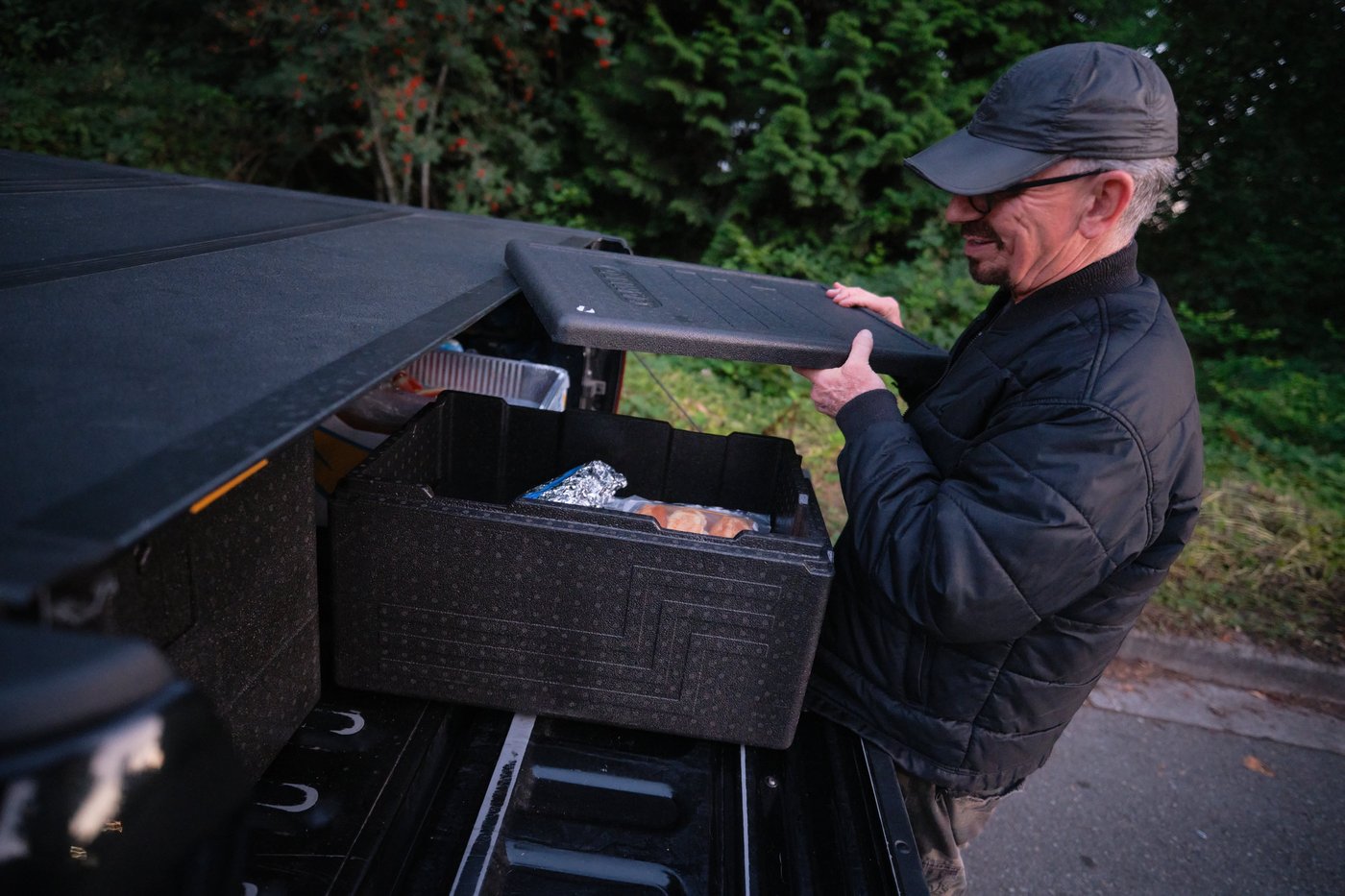
One night, Hugh and Dianne were sitting with the parish cook, Grace Turner, after the community meal. Grace, who has since passed away, was worried about wasting food at the end of the night and Hugh said he knew some people he could bring it to. Hugh says that while Dianne likes to credit him with the idea, it never could have happened without her.
Ultimately, Hugh wasn’t just interested in saving food; he understood that some homeless people weren’t interested in coming to the community meals. “Whether they’re in camps, or don’t want to get their stuff stolen – whatever the logistics barrier was,” he said. He simply wanted to help regardless of the circumstance.
That original program, which served a dozen meals a night, is now a sprawling ecumenical ministry that delivers upwards of 35,000 meals annually and includes contributions from numerous churches (occasionally synagogues and temples) and non-profits across Richmond.
There are a lot of volunteers. Richmond Presbyterian Church delivers on Monday, the Anglicans deliver on Tuesday and Sunday, the Mennonites on Wednesday, and on Thursdays the food comes from Gilmore Park United Church. The Catholics get Friday and Saturday, with St. Paul’s and St. Joseph the Worker respectively.
The primary financial stewardship of the program has changed over the years. First, it was at St. Alban’s, but it was soon taken over by the Richmond based non-profit Chimo Community Services, and then the Salvation Army. For the last 3 years, it’s been under the management of Refuge Church in Richmond.
In recent years, the City of Richmond has been financially supportive through its food security initiatives, in part because of incredible return on investment they get from churches, due to what Hugh calls “sweat equity.”
“It’s really incomparable,” he said, “when you look at all the volunteers that are working for nothing.”
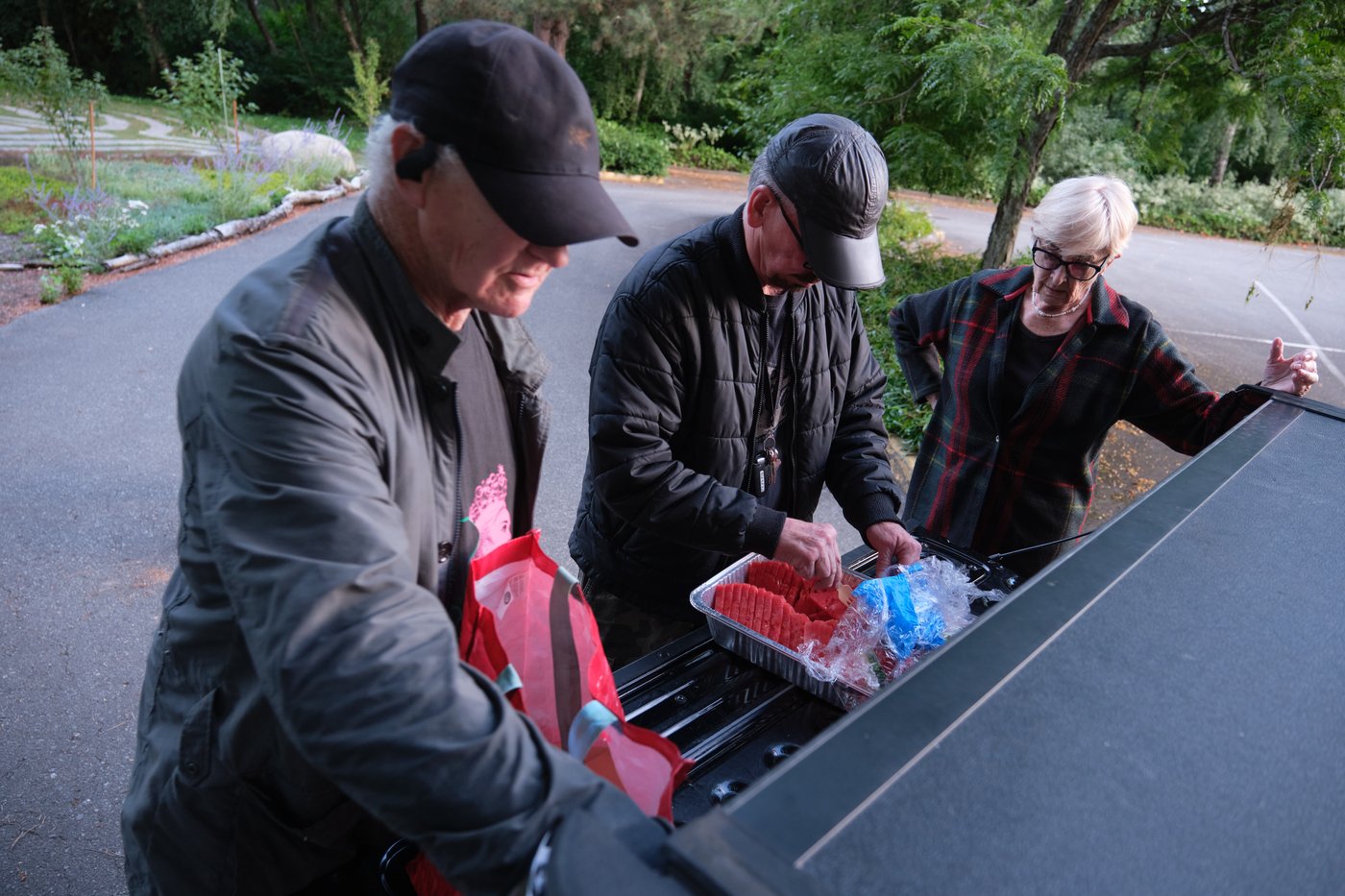
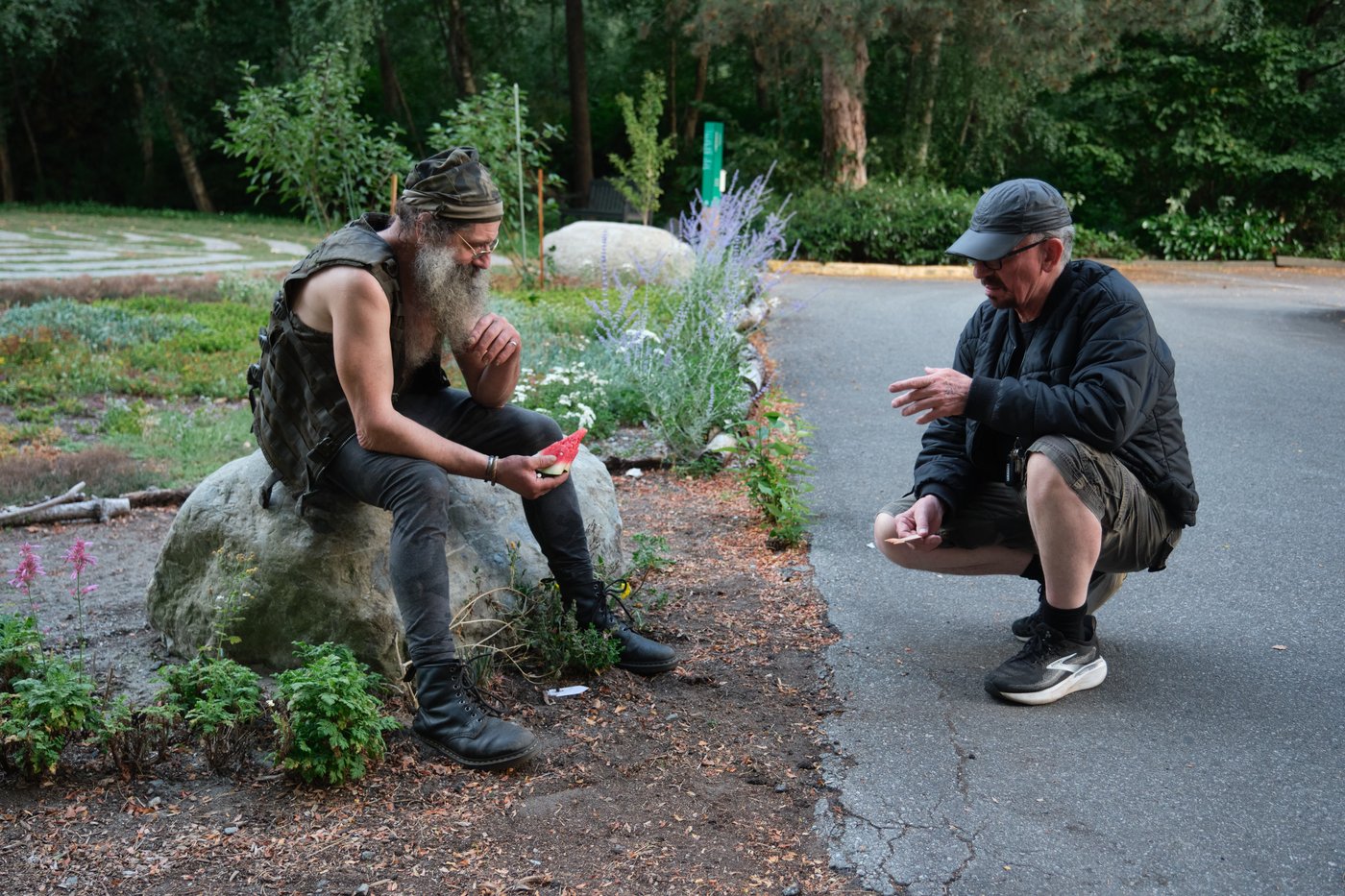
As we pulled up to the first camp, Hugh told me about the men I’m about to meet. “These guys are what you would call real survivors,” he said. “The one guy – he’s one of the smartest guys I’ve met. He’s so intelligent – very eccentric. He’s been out in a tent here for over 20 years, the other guy over a decade, and they live off the grid in the woods and we bring them meals.”
The word ‘camp’ is a bit of a euphemism, and as we drive up it’s clear the truth is more complicated. “Over there is one camp; you can see the big ass mess,” Hugh says, pointing. “The other tent is buried over there,” he gestures farther into the trees.
This illuminates one of the core problems with homelessness. Beyond its degradation of human dignity, it has a negative impact on local communities and the local environment. Many camps have more in common with dumps than actual camp sites.
Dianne told me they try to make a difference by removing as much plastic as they can from the packaged food, they deliver to reduce the garbage that builds up around many homeless camps.
Two men come out flanked by a dog. One of them, Mo, has a large beard. The other, Terry, is clean-shaven with Bluetooth earbuds poking out of his ears. Mo sits to have a smoke with Hugh. As they talk, Hugh sounds like a retiree making sure everything will continue to run smoothly at the business when he’s gone. “Stephanie will be here next week,” he says. “You know to call me if you need anything?”
We drive away and the men melt back into the woods.
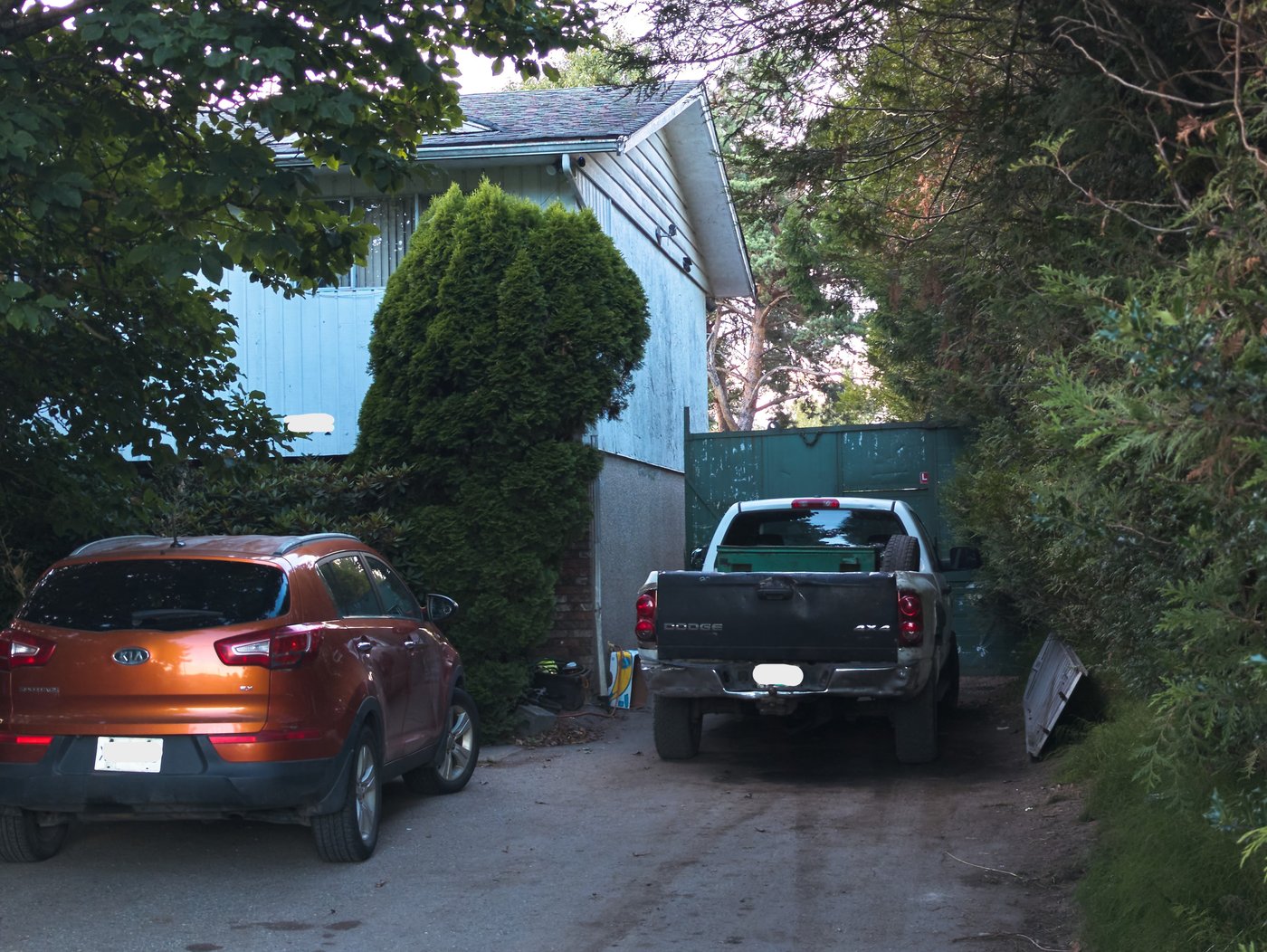
Throughout the night, there were a few memorable stops – an RV camp in the industrial south; an immaculately clean, hidden, campsite next to some industrial buildings – but The Green Door still stands out.
The large green door was prominently visible as we pulled into the driveway of a relatively unassuming mid-70’s house. While we waited for someone to come out, Hugh showed me an aerial view of the property on Google Maps. Behind the unassuming house and the large green door is a road that stretches for hundreds of meters. It winds through a junkyard full of camps clearly visible from the sky. From the road, you would never know it was there. The only indication something might be amiss is the large number of trucks parked on the lawn and in the sleepy street.
“There’s a bunch of people living on the other side of that green door in decrepit living situations,” he told me. “The guy that owns this place, he allows them [the homeless] to stay, and he gets their welfare.”
“These guys are all mechanics that ended up on the street for whatever reason – through family breakdowns, drinking, drugging, whatever. [The owner] gives them minimum wage working on these trunk and semis – these guys are top-notch mechanics.”
A man comes out covered in grease. His arms and hands are black and the grime clings to the rest of his body in patches. He’s in good spirits and is grateful for the food, but as he walks away carrying enough food for everyone else behind the door, Hugh gives me a list of names. “I’ve had three people die here on me already,” he says.
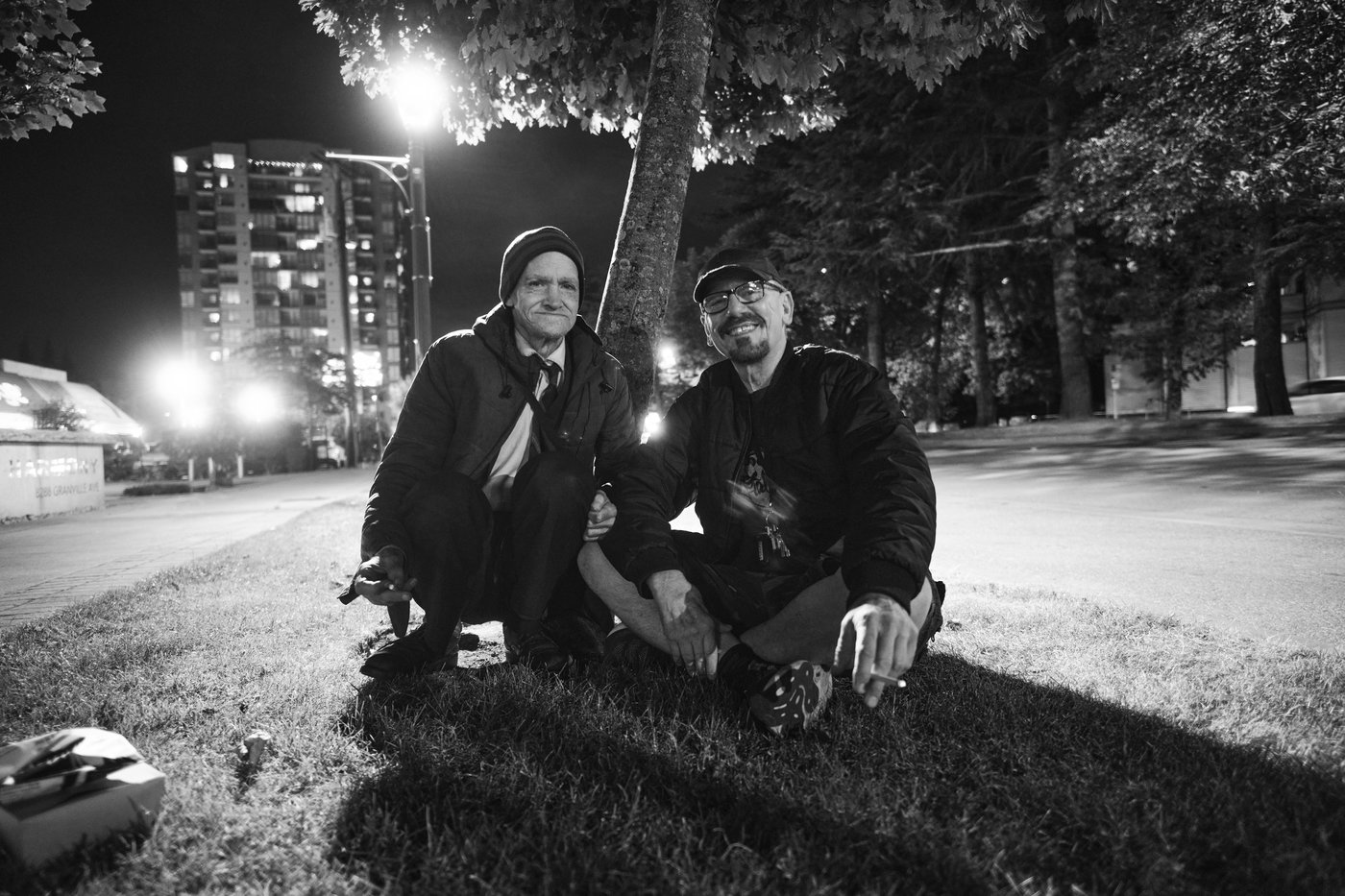
Halfway through the route, I ask Hugh what people understand (and what do they get wrong) about homelessness?
After a thoughtful pause, he tells me people overestimate the role of drugs. Many homeless people are addicted to substances and alcohol, sure, but often the problem is deeper than that – it’s spiritual.
“The stigma attached to it is that everybody that’s homeless is a fentanyl user, crackhead or whatever – speed freak, you know?” he muses. “[People worry] that they are going to knock you over the head and steal your wallet, but that’s not the case at all.”
“There are a percentage of people that are very sick, you know? They have spiritual maladies – they have mental health problems, drug induced psychosis issues, and you need to be a good outreach worker and know how to deal with them.”
Dianne admires Hugh – everyone I’ve met seems to – but she has her own thoughts on their work. In her words, Hugh is a “big blanket” for the homeless; he seeks them out and feeds them, with few, if any, strings attached. Dianne believes they need a bit more tough love.
When we deliver to a man living in a house owned by a St. Alban parishioner, she tells us she doesn’t think he should still be on the list. “We aren’t DoorDash,” she says.
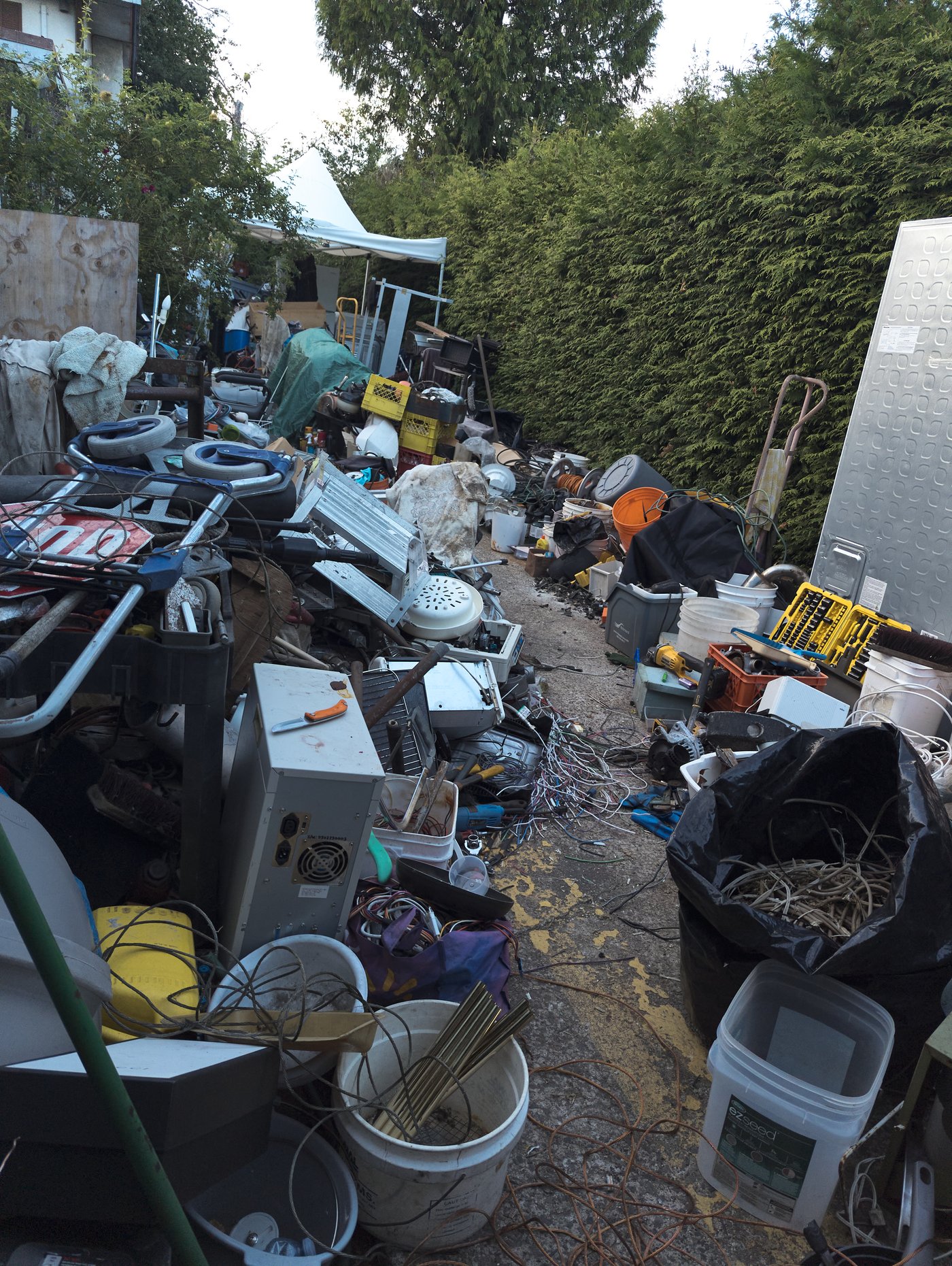
The man was found nearly a decade ago living out of a steel shipping container; someone at St. Alban’s had a vacant property, and they offered to let him live there. He makes his money – sometimes good money, according to Dianne – selling scrap metal, and the property looks like a hoarder’s dream. By all accounts, he seems materially capable, and Dianne and Hugh have a small disagreement over what he actually needs. Dianne says he should take care of himself, but Hugh wants to keep him on the list. He went through a messy separation, and he originally ended up homeless because he couldn’t cope with the pain.
“He was suicidal,” Hugh said. “He was down and out – so I’m happy to see him happy.”
If I’m being honest, I struggle with the apparent ambiguity of the situation, and I’m not sure who I would side with. Thankfully, no one asked me.
As we drive through the city and farmland, it becomes clear that Hugh has everyone’s number; he knows where they are and how to find them. Most of them are on the food list, not because they were hungry and went looking for food, but because Hugh went looking for them. He has a natural talent for finding people who most of us just don’t notice and the connections and friendships he built through the 14 years of running the ministry shine through at every stop. It is not unusual for him to introduce the homeless men and women as “my friend” so-and-so.
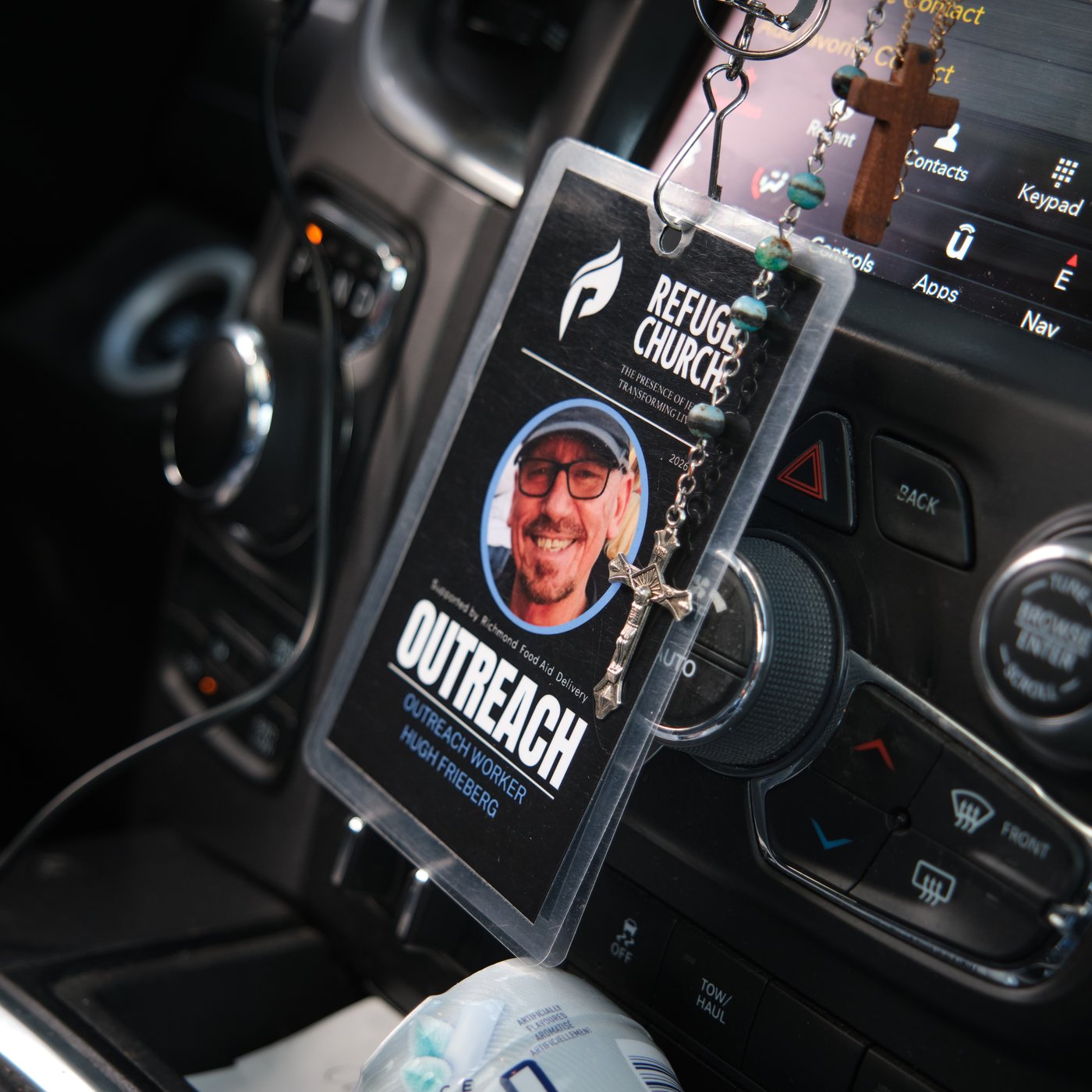
It is also clear, from watching Dianne and Hugh, that it takes all kinds to make homeless outreach work. After Dianne examines the swollen leg of a man living in the woods, she is quick to outline the means through which he should be helped, what paperwork needs to be filled out for him, and how he should be cared for. I consider that the man lies under the Hugh “blanket,” but it’s Dianne’s nursing savvy that might help him get back on his feet.
Watching them work together, it’s clear that, like so many things, our limitations and the relationships they necessitate are a large part of what makes life beautiful. It’s obvious that the homeless men I met trust Hugh in a way they wouldn’t trust other people; but it’s also true that his care often finds its resolution in Dianne’s professional assessment and expertise.
Throughout the night we stopped at a lot of camps. Some you could find yourself, but others you never would have imagined existing. Near the end of the night, we started to talk about spiritual things.
I asked Hugh about his faith, and he told me he comes from a long line of German Catholics who settled in Canada during the 1800s. One of his great-grandfathers was the artist Berthold Imhoff, whose artwork still adorns the ceilings of Catholic churches in Europe and Saskatchewan. “I have some of his paintings at home – they’re beautiful. I have one of baby Jesus with St. Joseph,” he said.
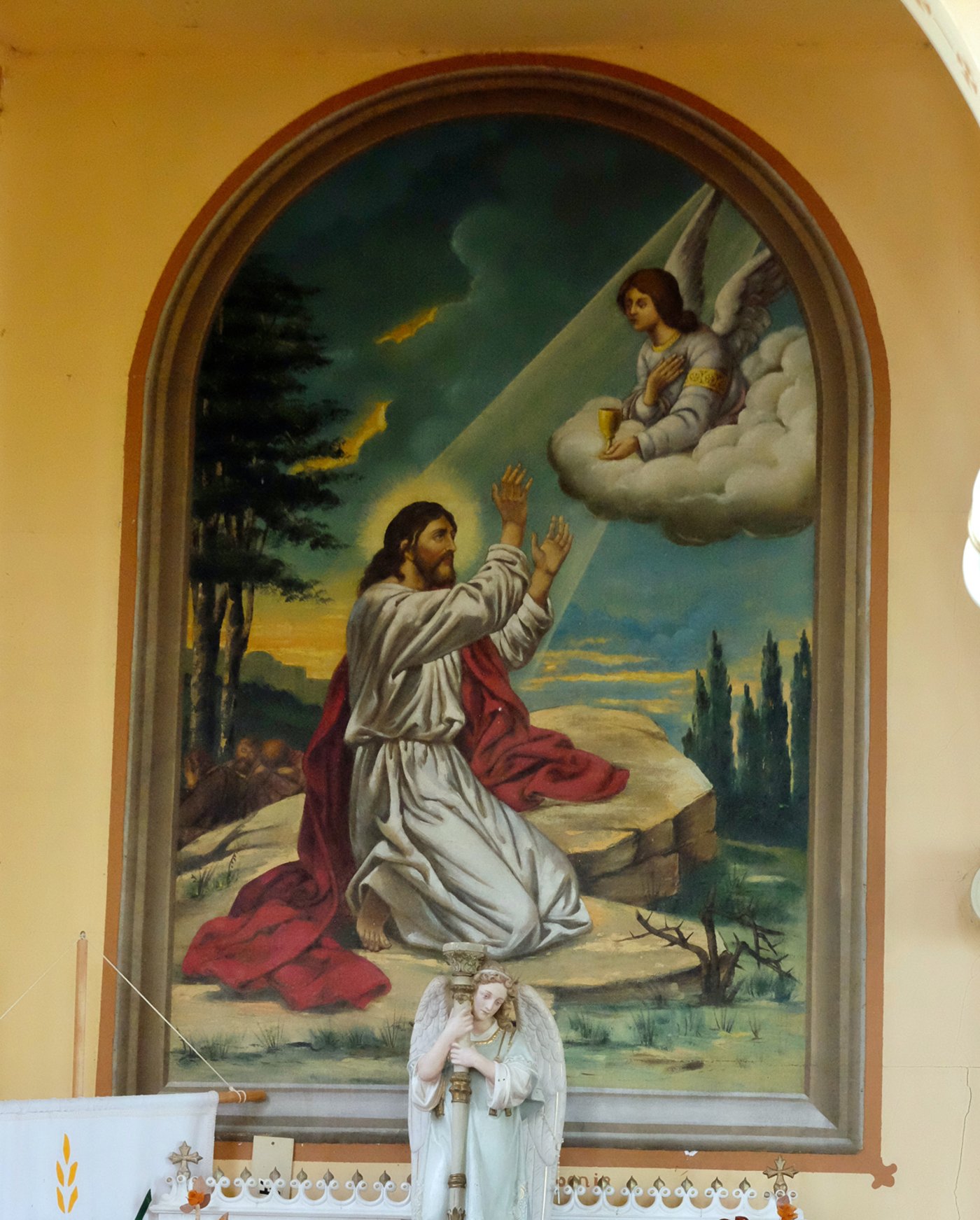
Hugh isn’t an artist, but he takes inspiration from Imhoff’s life. “He died poor, you know? He gave away everything he had,” he told me.
Hugh takes a lot of inspiration from his Catholic faith, but it’s also clear that in his estimation, a church’s denominations take a backseat to how it lives out the love of Christ.
“I have a rosary tattooed around my neck – I mean, that’s pretty Catholic, isn’t it? But for me today, it’s all about just wherever the spirit is moving,” he said.
When I asked him about his retirement, his response was simple: “It fills the soul to be able to work with your brothers and sisters that are out there, right? I’m alive and clean and sober today because of God’s grace and the doors that opened so I that I was able to be part of these ministries.”
“I keep what I have by giving it away.”