
So the last will be first, and the first will be last.
— Matthew 20:16
I’m not sure why Jesus’ parable of the vineyard struck me differently this time. Perhaps it was because I was sitting in my favourite church: the Notre-Dame Basilica in my hometown of Montréal. It was never my main parish, but in some mysterious way it became my spiritual home. No matter how far I travelled, I always try to visit whenever I returned to Montréal.
Perhaps the parable resonated differently because the Mass was celebrated in my mother tongue, and beautifully so, by a priest who carried the unmistakable music of our Québécois accent. His words seemed to reach not only the congregation as a whole but particular people within it. He spoke of those present, including several rows of adults preparing for their first baptism.
And then there was a man sitting only a row or two away who appeared to be homeless. He watched the liturgy with extraordinary attentiveness. His face was peaceful, almost rapt, as though he had found something in that magnificent space that he had been looking for elsewhere. Whatever the reason, the Gospel seemed to speak with unusual force: to him, and to me.
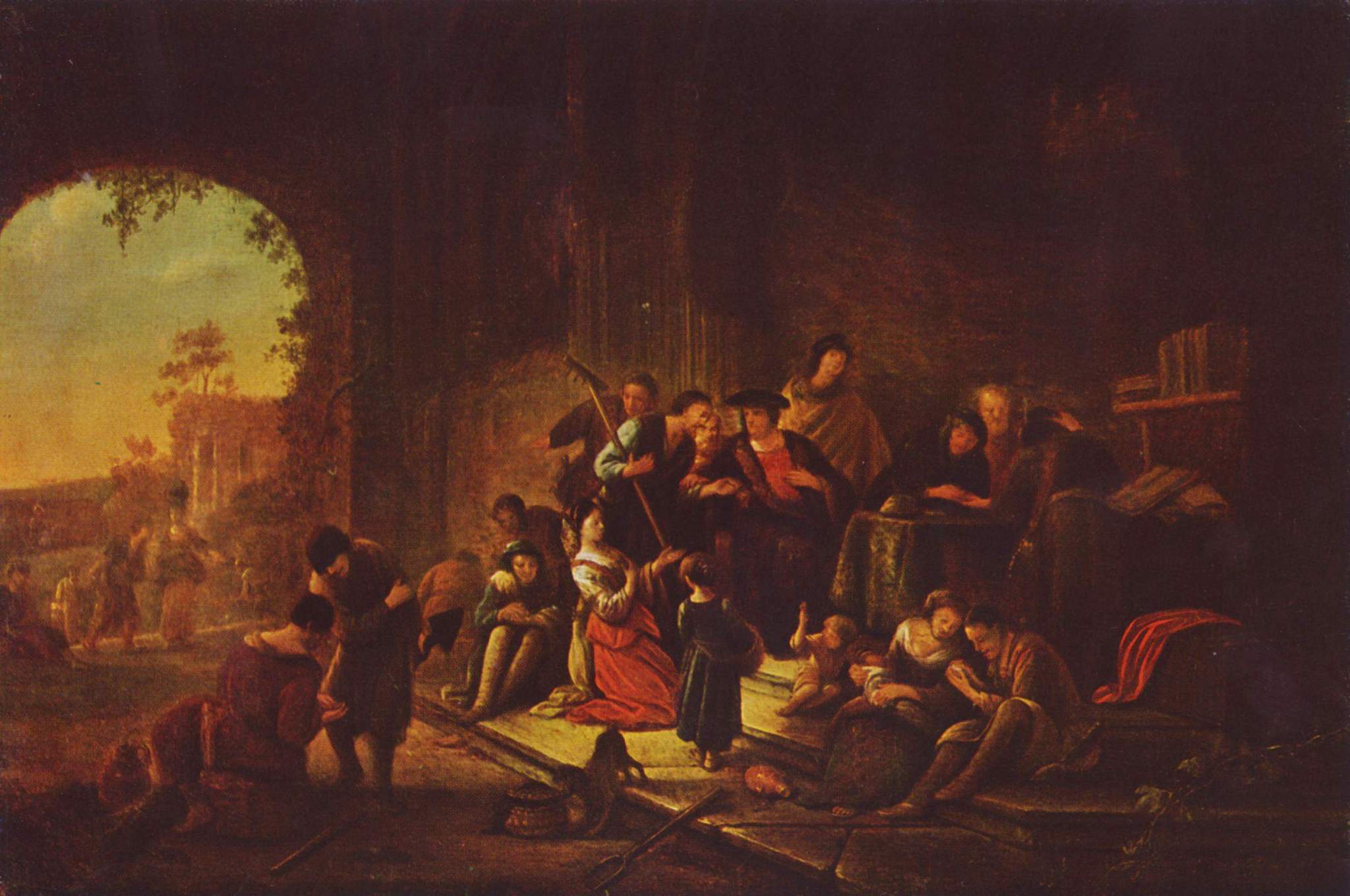
Jesus tells of a vineyard owner who goes out to hire workers. Some begin at the start of the day. Others are hired later, and still others arrive with only an hour or so left before the workday ends. Yet when the time comes to pay them, the owner gives each the same wage: one denarius.

It is hardly surprising that those who had worked since morning are unhappy. ‘These last worked only one hour,’ they complain, ‘and you have made them equal to us who have borne the burden of the day and the scorching heat.’ Their frustration is understandable. By almost every human measure, it seems unfair. But the vineyard owner reminds them: ‘I am doing you no wrong; did you not agree with me for a denarius?’ And then Jesus leaves us with those words that have echoed through the centuries: ‘So the last will be first, and the first will be last.’
Perhaps what makes the parable so uncomfortable is that we instinctively measure worth by effort. We count the hours. We compare sacrifices. But Jesus invites us to stop keeping score. If the vineyard is the Kingdom of Heaven, then the story becomes less a lesson about wages than about grace. God’s love is not a salary earned through years of faithful service. It is not a reward reserved for those who arrived early, followed every rule and never wandered from the path. It is a gift.
That doesn’t diminish the faithfulness of those who have spent a lifetime seeking God. Rather, it reminds us that their reward was never meant to be used as a measuring stick against someone else’s. The person who discovers faith at eighty is not less loved than the person who discovered it at eight. The person who returns to the Church after decades away has not missed the possibility of grace. And the person who walks through the doors of a church for the very first time may find that God has been waiting for them all along.
Maybe that is why I noticed the man sitting quietly in the Basilica that morning.
I have no idea what brought him there. I don’t know his story, his struggles or his faith. But for that hour, he was simply there: listening, watching, receiving. And perhaps that is all any of us ever really do before God. We arrive at different times. We carry different burdens. Some of us have spent years in the vineyard; others have only just walked through the gate. Yet the invitation is the same. Grace cannot be turned into a commodity, and faith is not a nine-to-five contract. We cannot earn God’s love by accumulating hours, checking boxes or perfecting our religious dance moves. Nor can we claim a larger share because we arrived first.
The vineyard belongs to God. And the astonishing message of Jesus is that there is room for all of us in it. Grace is not something we deserve more than someone else. It is something we receive. A fountain does not ask how long we have been thirsty before it gives us the water of life to drink.
Neither does God.