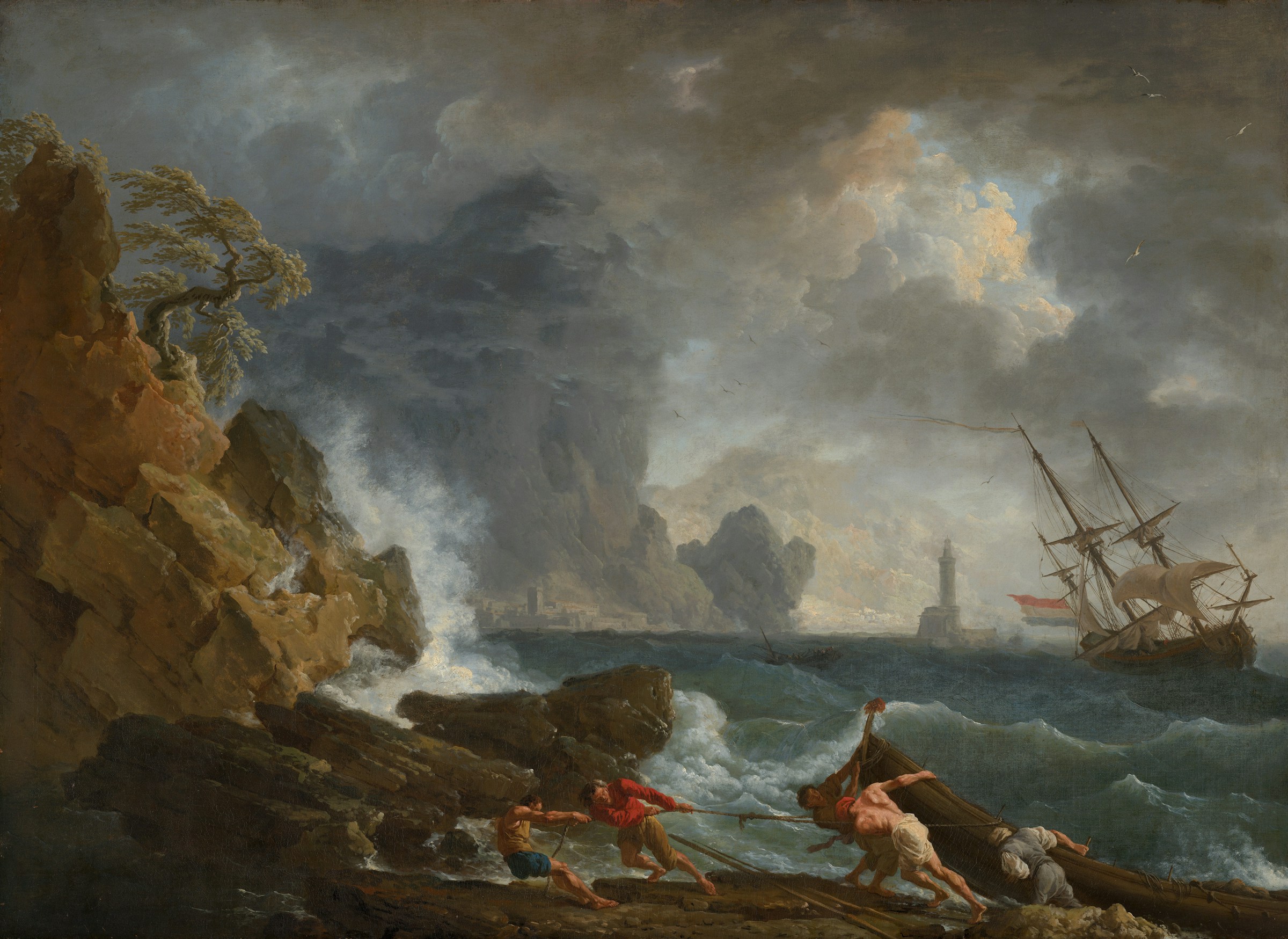

Acts 27 recounts a sea journey to Rome, and it is anything but smooth. Yet through the whole ordeal Paul remains calm in the midst of crisis. His example invites Christians to fix their eyes on Jesus and on the Father’s providence rather than on whatever danger they face. Paralyzing fear can close off our ability to respond appropriately.
Luke shows fear arriving in stages. The crew throws cargo overboard to lighten the ship. Later, neither sun nor stars appear for many days, until all hope of being saved is finally abandoned. One commentator reads these losses as a lesson for our own lives: when necessary to save our life, we must throw out whatever is in the way, even good things. Detachment is the first lesson. Sometimes God lets the things we depend on go, so that we will depend on him.
Into that darkness Paul stands and speaks. An angel has told him: “Do not be afraid, Paul; you must stand before Caesar; and behold, for your sake God has granted safety to all who are sailing with you.” Paul answers with a simple act of faith: “I have faith in God that it will be exactly as I have been told.”

We can link this to our Blessed Mother, for Paul seems to have the kind of faith Elizabeth praised: “And blessed is she who believed that there would be a fulfillment of what was spoken to her from the Lord” (Lk 1:45). Paul was not building himself up by speaking this way, but summoning the others to faith. His peace was meant to be shared.
This chapter does not offer an easy spirituality. Paul has a divine promise, yet when the sailors try to flee, he warns the centurion: “Unless these men stay in the ship, you cannot be saved.” Paul does not presume that the promise is unconditional. God often uses human means, and the passengers’ safety depends on human cooperation, including sensible and skilled responses to difficult navigation. God is helping them arrive, but this is not a bright light carrying a ship miraculously across the sea.
Through all the human means, God is guiding history, and this applies not only to the ship but to the Church. No one should leave the ship to save himself, abandoning the others to their fate, whether on the ship or in the Church.
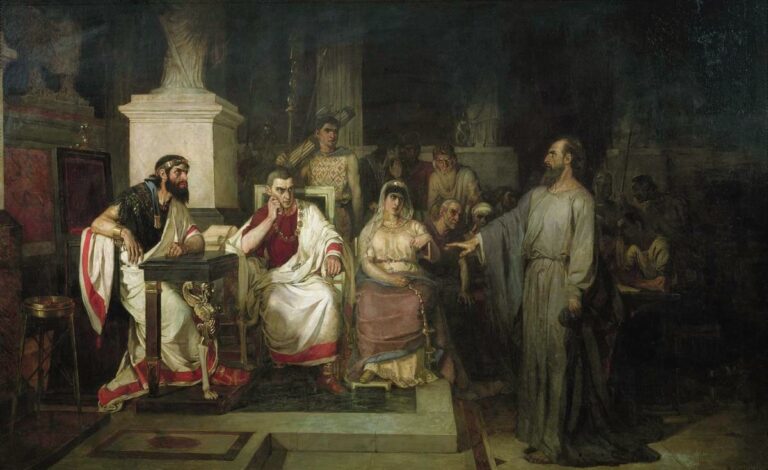
We also see a favourite Lucan reversal, where the lowly are lifted up and the mighty brought down. St. John Chrysostom points out that the centurion, who was free, needed the prisoner in chains. The skilled pilot needed the one who was not a pilot, or rather the true pilot, for Paul steers not a vessel such as this but the Church of the whole world. The man in chains earns trust by staying faithful and calm.
At dawn Paul urges everyone to eat. Luke says he took bread, gave thanks to God in front of them all, broke it, and began to eat. This is ordinary food, neither the Eucharist nor the Christian agape, yet Luke’s language closely resembles the institution of the Eucharist. St. Bede says that no one escapes the tempests of this world except those nourished by the Bread of Life. Everyone on broad is encouraged, and new hope arises.
God’s promise is kept, but the ending is not triumphant. The ship breaks apart, and some reach shore on planks, others on debris. It is not a glorious arrival. What matters is that all reach land safely. God’s promise was kept, though not in the way anyone would have chosen.
That can be true for us too. God makes promises to us but continues to use human means, and the way to our destination may not be the way we would choose, because ultimately we are not in charge. We are being guided, and we must approach with faith and trust. Luke himself recalls the words of Jesus: “By your endurance you will gain your lives” (Lk 21:19).
Faith is not focused on removing our storms but on God’s power that enables us to endure. God promised Paul the destination, but the way there was not the way Paul chose, and nothing along it was manifestly miraculous. Often God works quietly, not in the visible way he appeared on the road to Damascus, yet he is in charge.
We can grow in faith and hope through persistent prayer, like the desperate father in Mark’s Gospel: “I believe; help my unbelief!” (Mk 9:24). If we form a habit of surrendering every fear that arises to God, especially through the intercession of Mary, we can arrive at a peace about our concerns. This peace calms our emotions and lets us think clearly enough to respond to the crisis in the most effective manner.
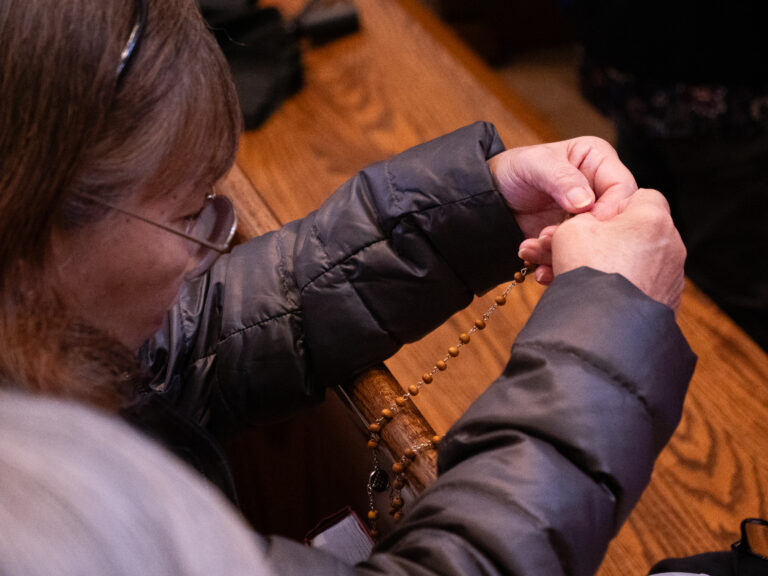
Our journey to heaven will always have storms and winds, but we stay calm by looking to Jesus and Mary. We can take up the attitude of loving trust and total surrender taught by Mother Teresa and expressed in Fr. Dolindo Ruotolo’s Surrender Novena. We can also pray the Rosary and look to Our Lady, Star of the Sea, talking over our problems with our Blessed Mother and always trusting.
We may not see anything miraculous, but we know that God is quietly in charge and giving us actual graces. Sometimes actual grace is very visible, as in Paul’s conversion; most of the time it works quietly through ordinary circumstances. Like Paul, we stay calm through trustful surrender.