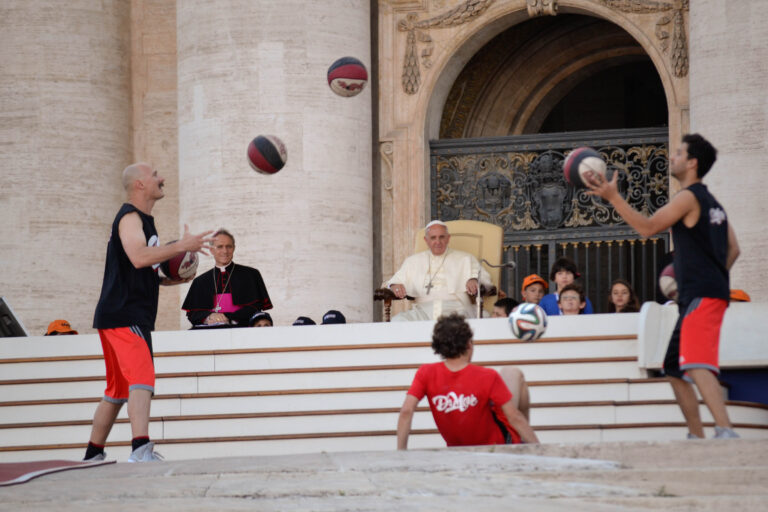
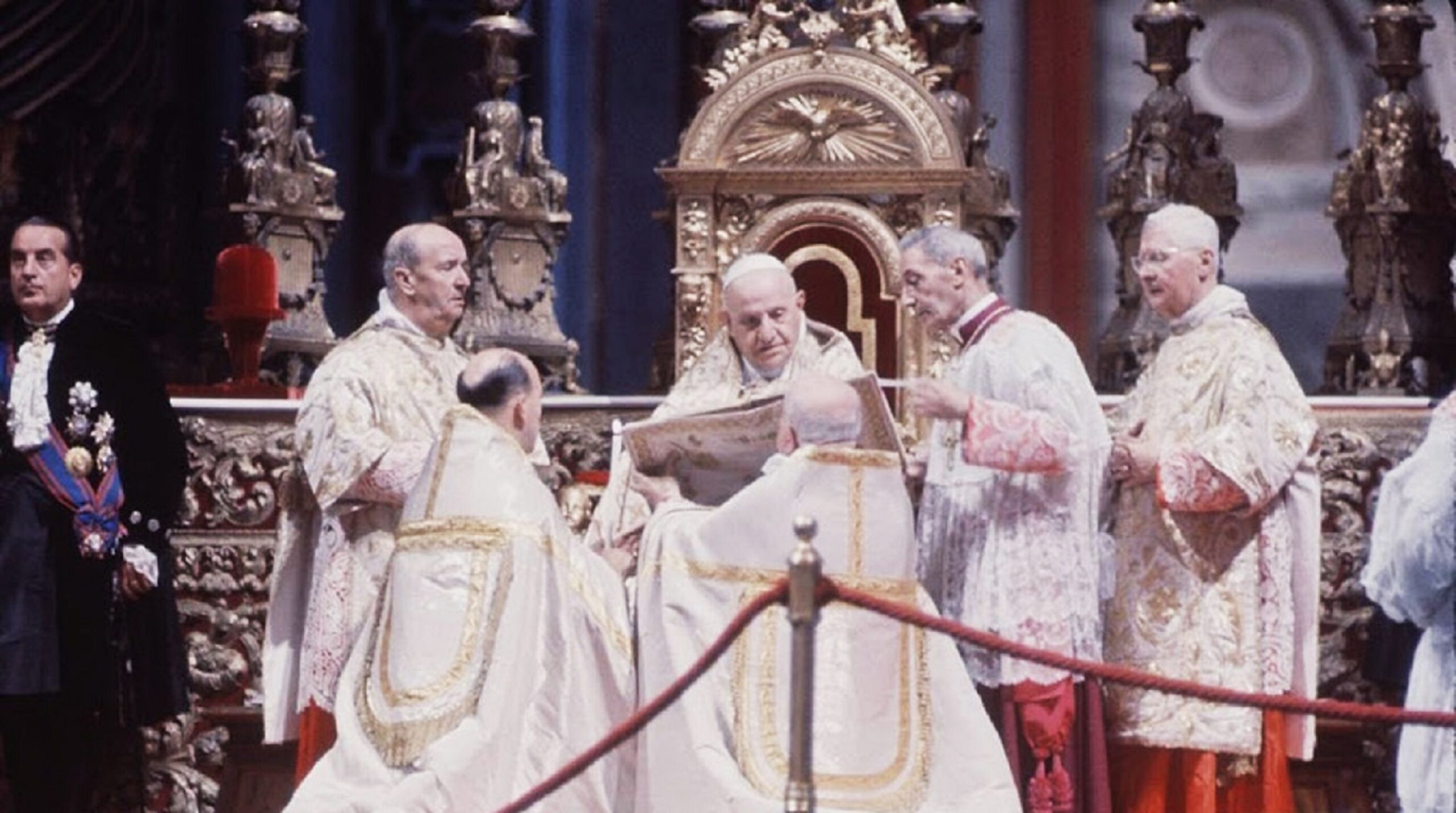

At his General Audience on January 7, 2026, Pope Leo XIV began a new series of talks on the importance of reading the Second Vatican Council through its documents. As those who experienced the Council grow older and pass away, the Pope urged Catholics to learn about it directly rather than rely on hearsay or other people’s interpretations. Quoting St. John Paul II, he called the Council “the great grace bestowed on the Church in the twentieth century.”
A helpful guide to understand the Council is Sources of Renewal, written by Karol Wojtyła, the future Pope St. John Paul II. He wrote it to help the Archdiocese of Kraków put Vatican II into practice.
Wojtyła gives us a simple principle: “The implementation of Vatican II, or the process of Conciliar renewal, must be based on the principle of the enrichment of faith”
On October 11, 1962, Pope St. John XXIII opened Vatican II with his address Gaudet Mater Ecclesia. This address is an important guide to understanding the Council’s purpose.
The Pope spoke of the Council as a day of joy. He rejected the attitude of those who saw only danger and disaster in the modern world. The Council’s purpose was to protect and teach the faith more effectively, passing on Catholic doctrine in its fullness without changing or distorting it.
John XXIII distinguished the deposit of faith from the manner of expressing it, insisting that renewed expression preserve the same meaning and judgment.
Rather than relying mainly on condemnations, the Church would offer “the medicine of mercy.” Mercy does not mean giving up the truth. It means presenting the truth with love and concern for those who need to hear it.
Wojtyła helps us understand what it means to call Vatican II a pastoral council. Its purpose was to teach Christians how to live. As he wrote, a pastoral council teaches “for the primary purpose of giving Christians a life-style, a way of thinking and acting”.
In other words, the Church does not abandon doctrine when she cares for people. She teaches the faith so that it can shape their lives.
Pope Leo XIV has highlighted several important gifts of Vatican II. The Council renewed our understanding of God as our Father, who calls us through Christ to become his children. It also presented the Church, in the light of Christ, as a mystery of communion and a sign of unity.
The Council also renewed the Church’s liturgical life, emphasizing the mystery of salvation and the full, conscious participation of the faithful in the liturgy. It encouraged dialogue and shared responsibility in building a more just and brotherly society.
Wojtyła teaches that genuine renewal requires a deeper understanding of the Church as a community united by communion.
The Church is more than an organization. Through Christ, we are called to share a common life of faith and love.
Vatican II produced sixteen documents: four Constitutions, three Declarations, and nine Decrees.
The four Constitutions are especially important:
- Dei Verbum — on Divine Revelation.
- Lumen Gentium — on the Church.
- Sacrosanctum Concilium — on the Sacred Liturgy.
- Gaudium et Spes — on the Church in the Modern World.
The three Declarations address Christian education, the Church’s relationship with non-Christian religions, and religious freedom. The nine Decrees deal with particular areas of Church life, including bishops, priests, the laity, religious life, missionary activity, and ecumenism.
The teachings of the Council must be understood according to their purpose, the subject being discussed, and the way each teaching is expressed.
We should read the Council’s documents slowly and prayerfully, in the light of Tradition and the whole of Revelation. They are not merely historical records of past debates. They contain teachings that call for a response from us today.
The closing message of Pope St. Paul VI, recalled by Pope Leo XIV, offers a fitting guide: welcome the Church’s rich tradition, face the present with its sufferings and achievements, and bring the Gospel to a world thirsting for a higher life.