Catholic Vancouver July 07, 2026
Even in suffering, something beautiful can emerge: Deepening marital commitments with the Focolare in the ‘City of Mary’
By Arleen D Souza
For Norio and Alizza Kudo, aged 85 and 80, the past two years have been defined by serious health challenges but also by a profound and enduring witness to faith, love, and perseverance.
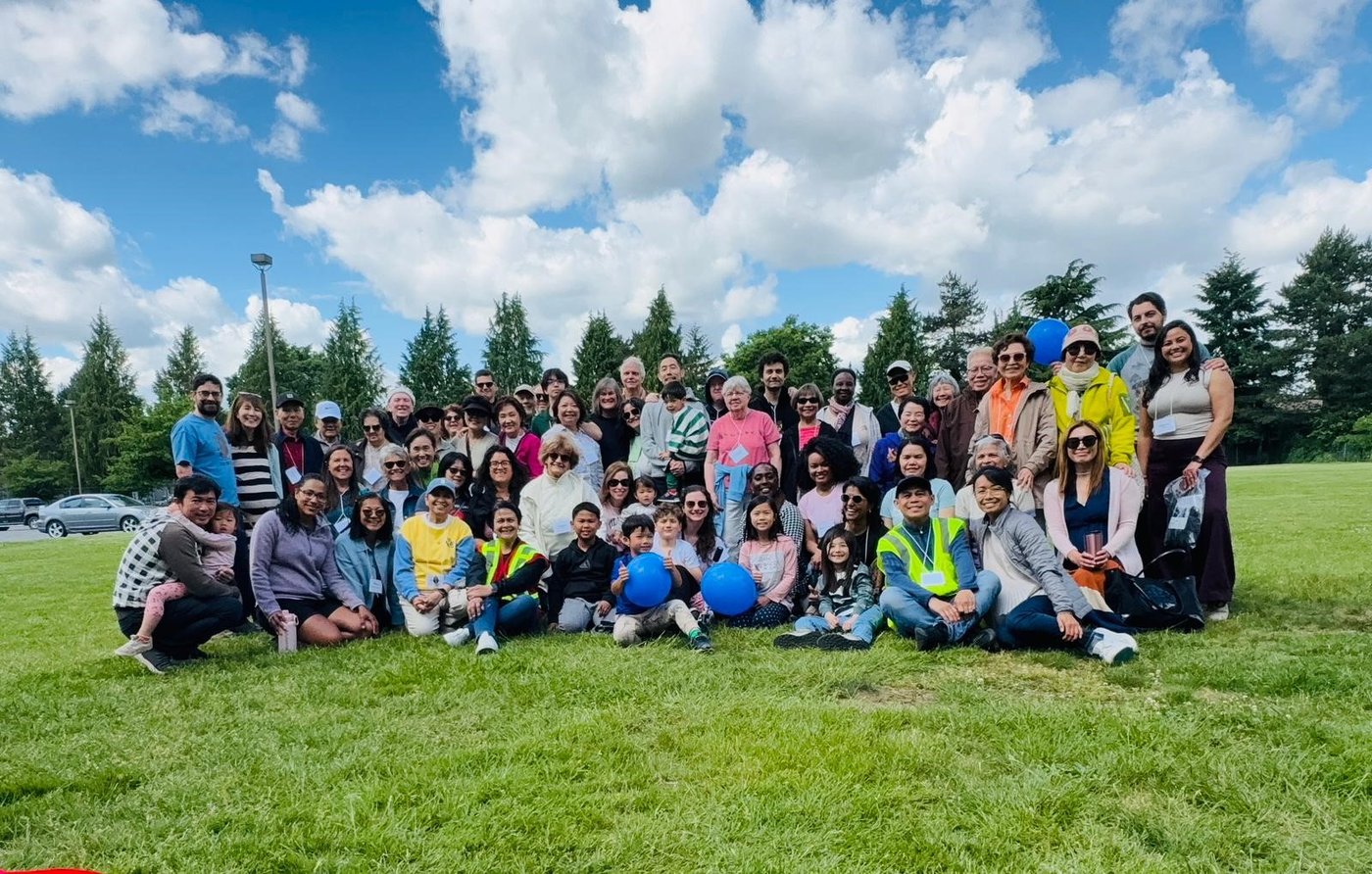
The couple, parishioners from Saint Clare of Assisi in Coquitlam, recently shared their story at the Mariapolis retreat, held at Columbia Bible College in Abbotsford, and run by members of the British Columbian Focolare community. They reflected on how suffering deepened their commitment to one another and to their faith.
Norio Kudo’s ordeal began with what he initially dismissed as minor back pains. Unfortunately, the condition steadily worsened, eventually making it difficult for him to walk and causing a painful forward stoop. Medical treatments offered little improvement, and everyday activities he once enjoyed with his wife, such as cooking, gardening, and walking in nature, became nearly impossible.
“I had to rely on my wife for everything,” Norio said, describing the emotional weight of losing his ability to go about simple everyday tasks with ease. While he sought to accept his condition as part of God’s will, the uncertainty surrounding his health and the prospect of surgery proved difficult.
Throughout this time, Alizza Kudo leaned deeply on the vows they made nearly 50 years earlier to remain faithful in sickness and in health. However, caring for her husband was not without its challenges. “At times, when I was tired or busy, I sometimes forgot to love,” she admitted. Yet, she found strength in a principle she learned from Chiara Lubich, founder of the Focolare Movement, to “start again” each day with renewed love and patience.
Their trials intensified just weeks before their son’s wedding, when Alizza suffered a serious fall, fracturing her spine. She was hospitalized for emergency surgery and left temporarily immobile. Despite the pain and uncertainty, she sought to transform her suffering into an opportunity to serve others. “The nurses were my neighbours to love,” she said, recalling a sense of peace that came from offering her suffering in union with Christ. She built personal connections with the hospital staff and extended kindness to those caring for her, including her surgeon.
During one of these conversations, she mentioned Norio’s condition and inquired about possible options for surgery. At the time, their chances remained uncertain, as such procedures typically involve very long waiting periods.
Throughout their hardships, the couple found strong support in the Saint Clare’s parish community and the Focolare Movement. Fellow parishioners and friends provided constant encouragement through prayers, visits, and practical help they offered.
“It felt like we were surrounded by an army of prayer,” Alizza said.
In a remarkable and unexpected turn of events, her surgeon had a sudden opening in his schedule and arranged for Norio to undergo surgery much sooner than anticipated, which often took years. The procedure would be Norio’s first surgery, and because of it’s complexity, he was both anxious and hopeful.
Nevertheless, the operation proved successful. “I went into the operating room, and before I knew it, it was over,” Norio recalled in amazement. By the following day, he was able to stand upright and was discharged shortly thereafter.
Today, the Kudos reflect on their experience not as a burden, but as a profound grace. “God is present in every situation,” Alizza said. Even in suffering, something beautiful can emerge.
‘The City of Mary’
By: The B.C. Catholic Staff
Father Harry Clarke, a priest from the Diocese of Nelson, was a participant at the Mariapolis retreat, and he said it was an experience of the “synodal church” envisioned by Pope Francis. “The family atmosphere enabled everyone to participate as a gift to the others – radiating a special presence of the joy of the gospel,” he said.
Mariapolis literally translates as “City of Mary,” and the retreat serves the Focolare community as a school of formation, said Father Clarke. “We saw a new way of animating life in our parishes: everyone becoming ‘a disciple of Jesus’ - putting love, everyday, in the families and in the ordinary realities of life.”
“The Marian profile of the Church was much in evidence,” he said. “As in the early days of the Focolare movement, everything was organized with unity and enthusiasm by a group of [mostly] young women.”
“Listening to the experiences of love of God and neighbour, that we could relate to, couldn’t lave us in our old ways of seeing ourselves as Christians,” he said. “Our souls were also awakened to a world crying out for the peace of Christ.”
“Under the influence of grace, I asked all participants to offer themselves to Jesus, on receiving him in Holy Communion, to be his disciples in today’s world – believing in his gift of the Holy Spirit to lead us. It all seemed so simple and taught us to celebrate every Mass as the source and summit of the Christian life. It is the power from which true parish life flows and the high point towards which disciples of Jesus are directed – a united world.