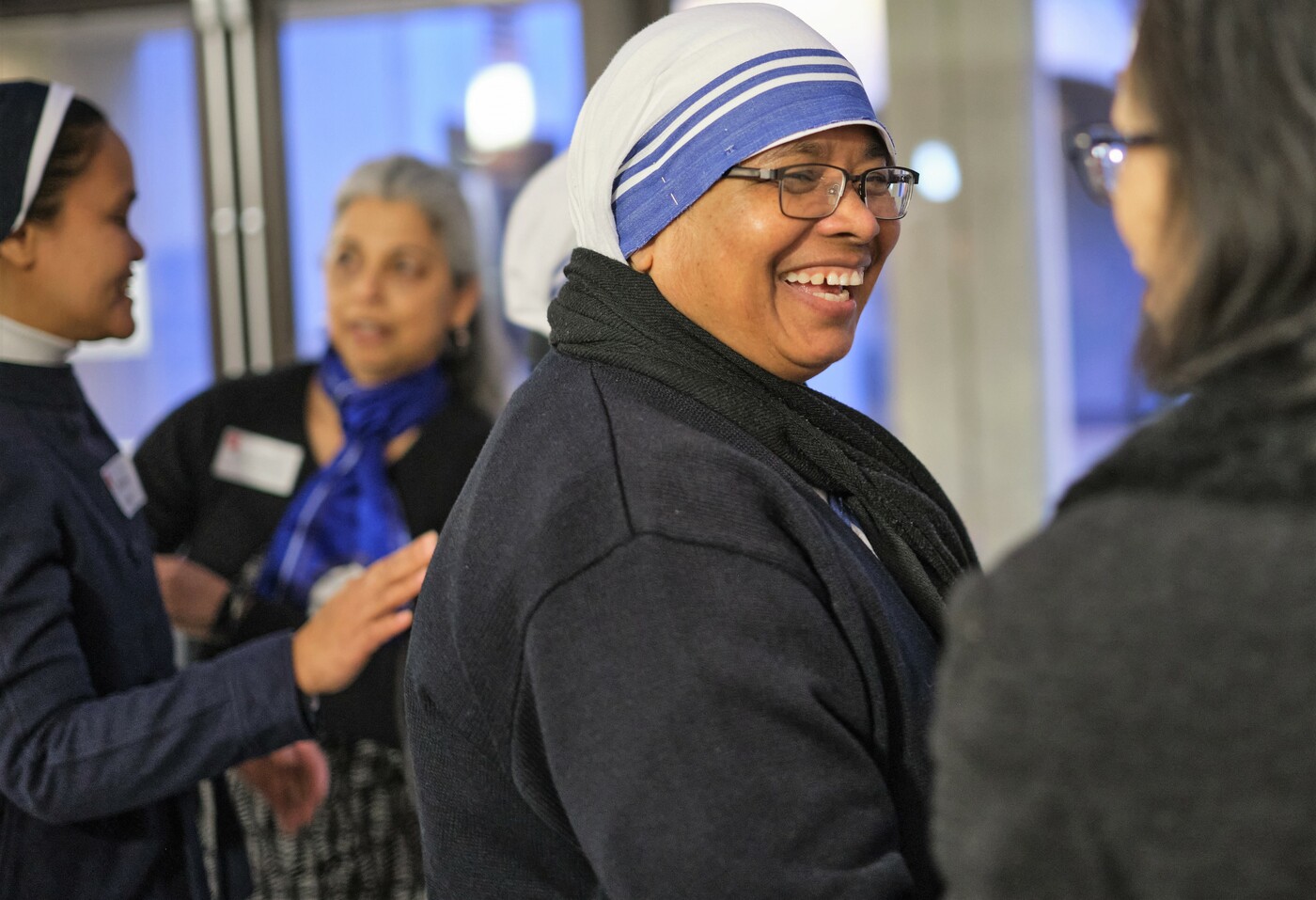

The following is from a homily by Archbishop Miller for the Feast of the Presentation of the Lord and World Day of Consecrated Life, Feb. 2.
Pope Benedict XVI said consecrated persons “are like watchmen among the People of God who perceive and proclaim the new life already present in our history.”
I would like to thank two congregations serving the Archdiocese that are celebrating jubilees of their founding: the Carmelite Missionary Sisters of St. Thérèse of the Child Jesus are celebrating their centenary, and the Sisters of Charity of Halifax are marking their 175th anniversary.
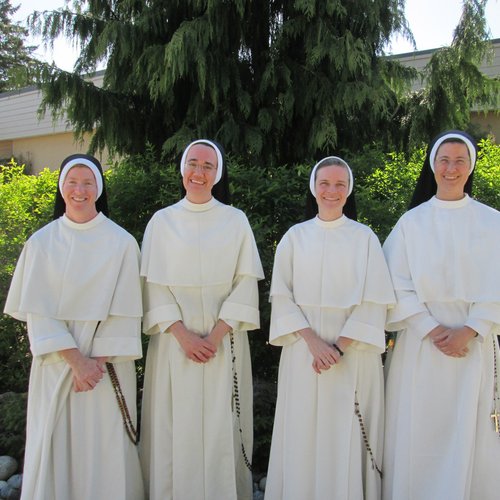
Our two cloistered communities are also celebrating jubilees within the Archdiocese: the Poor Clares in Mission are marking their 75th anniversary, and the Dominican Sisters of Queen of Peace Monastery are celebrating their silver jubilee here.
I also wish to honour and thank two golden jubilarians of St. Clare’s Monastery: Sister Claire Marie Blondin and Sister Marie-Thérèse Murphy.
Barely six months into their ministry in Vancouver are six Claretian Missionaries serving in the Downtown Eastside. They are engaged in parish, educational, and health-care apostolates. I am extraordinarily grateful for their decision to bring a fresh missionary dynamism to our Archdiocese.
The succession of charisms in the consecrated life manifests the unfolding of the Gospel down the ages, lived in ever-new and radical ways. Here in our Archdiocese, we are spiritually enriched by this life in its wide variety of forms: monastic – with the Benedictine monks, the Poor Clares, and Dominican nuns; and active men and women in many congregations and institutes, whose numbers have increased over the last 15 years. We are also blessed with members of societies of apostolic life and numerous newer expressions of consecrated life, such as the Daughters of the Church, Focolarine, Memores Domini, Madonna House Apostolate, and, for the first time, a hermitess.
Pope John Paul II compared consecrated life to “a plant with many branches which sinks its roots into the Gospel and brings forth abundant fruit in every season of the Church’s life.” Right now, its branches in our Archdiocese are bearing abundant fruit, for which we give the Lord thanks and praise today.
The prophetic witness and apostolic commitments of consecrated persons are essential if we are to proclaim the Good News of Jesus Christ effectively in this corner of the vineyard entrusted to us. Though this can sometimes make us uncomfortable, as the recent Synod final document declared, “They are called to interrogate Church and society with their prophetic voice.”
In light of the Holy Father’s pressing appeal to the Church, adopting synodality is vital to the consecrated life. I encourage all communities to learn and use this way of making decisions for the common good. The Holy Father has said:
A Church that “goes forth” is open to others. It is a welcoming and embracing community where the Lord lives and the Spirit is active. … Today the Church must grow in a synodal approach, listening to everyone, dialoguing with everyone, and discerning in the Holy Spirit what her mission is. Synodality is not a question of being in fashion. … For this reason, I encourage you to promote synodality in every aspect of your life. May every community grow and enjoy a synodal “style” whereby each member feels listened to and accepted.
What light does the Gospel shed on the consecrated life on the Feast of the Presentation?
Mary and Joseph personally and publicly presented the Child Jesus to God in the Temple, handing him over entirely to the Lord. They offered him to God “in the way that sacrifices in the Temple were ‘offered.’ The language of sacrificial offering and priesthood is evoked here.” He is the true Lamb of God, who takes away the sins of the world. As such, the Child now belongs totally to God, his Father. By handing over Jesus, Mary continues the fiat she spoke at the Annunciation.
Pope Francis said:
Dear brothers and sisters, in the light of this Gospel scene, let us look to consecrated life as an encounter with Christ: it is he who comes to us, led by Mary and Joseph, and we go towards him guided by the Holy Spirit. But the centre is him. He moves everything; he draws us to the Temple, to the Church, where we can meet him, recognize him, welcome him, embrace him.
Dear consecrated men and women, you are called first and foremost to be men and women of encounter, drawing from a grace that touched you through a life-changing experience.
Every time a community presents a new member, that individual, through their consecration, gives themselves entirely to the service of the Church and of all their brothers and sisters.
Jesus’ presentation is followed by two scenes of prophecy. The old man Simeon and the prophetess Anna appear in the Temple and greet “the Christ of the Lord” (Lk 2:26).
Simeon was a righteous and devout man, attuned to God’s will. He represents Israel’s faithful anticipation and heartfelt jubilation for the coming of “the consolation of Israel” (Lk 2:25), the Messiah who was to come. “He trusted in the promise and did not let himself be consumed by regret for times past or by the sense of despondency that can come as we approach the twilight of our lives.” At the end of his days, the old man can exclaim: “It is true, hope in God never disappoints” (cf. Rom 5:5). God never deceives us. “Life is worth living in hope because the Lord keeps his promise.” Their song was born of hope, the hope that sustained them in their old age.
A man of hope and expectation, Simeon joyfully praised God with the Child in his arms before turning to Mary with a courageous but sorrowful prophecy. Jesus will bring light to the world, “a light for revelation to the Gentiles” (Lk 2:32), yet it is in the darkness of the Cross that this mission is fulfilled.
By their radical following of Jesus in living the evangelical counsels, consecrated persons embody this sequence of the Paschal Mystery in their way of life. Dear friends, you remind the rest of us that salvation comes at a price: the anguish of the Crucifixion before the radiance of the Resurrection.
Inspired by the Holy Spirit, Simeon says that the Child is destined for the rise and fall of many and that he will be “a sign that will be opposed” (Lk 2:34), hated as well as loved. He foresaw that Jesus had power over humanity’s destiny and that he would suffer greatly from those who rejected him.
At the same time, Mary also receives Simeon’s prophecy: “And a sword will pierce your own soul too” (Lk 2:35). “Her role in the history of salvation did not end in the mystery of the Incarnation but was completed in loving and sorrowful participation in the death and Resurrection of her Son.”
So it is with us. You know well that the enthusiasm of the day you made your first promises has frequently been put to the test over the years as you have confronted unforeseen struggles and temptations. Day after day, like Mary, we repeat our first fiat.
The prophetess Anna is a model for every consecrated person. A spirit-filled woman at home in the Temple, she lives with God and for God. When the Child Jesus appears with his parents, Anna is alert. “Her prophecy consists in her proclamation – in passing on to others the hope by which she lives.”
Following in Anna’s footsteps, consecrated persons have the mission of sowing a future of hope, especially where it is most lacking.
To ensure the presence of the consecrated life in our Archdiocese, I encourage you to intensify your prayer to the Lord of the Harvest for a new springtime of vocations. Thanks be to God; signs of this springtime are already evident.
Now, as we renew our commitment to our consecration, I make my own the words of the Apostle Paul:
“I thank my God every time I remember you, constantly praying with joy in every one of my prayers for all of you” (Phil 1:3–4).
Your voice matters! Join the conversation by submitting a Letter to the Editor here.