
The school year draws to a close, and with it comes the celebration of our little domestic school’s first year of operation. We had one grade, kindergarten, and one student, my son. He completed the year surrounded by the hum of domestic life and the violent, chaotic presence of a toddler. I couldn’t be prouder, not just of him, but of the whole family.
Perhaps it’s odd, but we never seriously considered alternatives to homeschooling. Neither my wife nor I had particularly good experiences in traditional classrooms, and it felt like a solid bet that any child resulting from our genetic combination would be unhappy as well.
Whether we’d pursue kindergarten posed the first difficult decision we had to make about our children’s education.
For context, my wife is an early childhood educator who gravitates towards the educational philosophies of Loris Malaguzzi (Reggio Emilia) and the more well-known Maria Montessori. I studied history and have some background in education. So I guess it was never really a question of ‘should we do something?’ but what should we do?
At first, it seemed superfluous: “The Scandinavians don’t teach their children to read until they are seven or eight,” we thought, “and they have some of the best literacy scores in the world. What could possibly be the point of structured education for a 5-year-old?”
“The public system doesn’t even require kindergarten. What is the point?” In reality, this non-requirement is what makes kindergarten so attractive, what give’s it deeper meaning.

When Friedrich Frobel first introduced kindergarten to Germany in the early 1800’s, it was surprisingly subversive, so much so that kindergartens were officially suppressed in 1851. They were too dangerous and Frobel was labelled an atheist and a socialist—common slanders levied against radicals throughout history—and nothing he could say would reduce those accusations.
Frobel attempted to appeal the decision in a heartfelt letter to King Friedrich Wilhelm IV, in which he implored the monarch, “in the name of childhood … do not allow the sprouting seed of a new education for humanity be trampled!”
“His protests … went unheeded,” wrote Peter Mommsen in last winter’s edition of Plough Quarterly. “The government regarded kindergartens as a genuine political threat.”
The prohibition would only be lifted eight years after his death.
It’s not hard to see why the state was concerned. Compared to the educational philosophy of the Prussian schools, Frobel’s suggestion that children should have space to grow, like flowers in a garden no less, was a hard challenge to an educational system that engineered uniformity and thoughtless obedience.
Nearly two centuries later, it’s apparent the ban did nothing to slow the spread of Frobel’s ideas. The ban blew kindergarten teachers out of Germany and across the globe like dandelion seeds. Today, kindergartens are nearly as ubiquitous as public education—an irony perhaps, considering kindergarten’s counter-cultural roots.
It’s also clear, two centuries later, that much of Frobel’s vision has faded. Kindergartens no longer stand as an innovation in early childhood education. Instead, they are sandwiched between day care and grade school as a necessary stopgap to keep children out of sight and out of mind during the workday.
When I was a child 25 years ago, all-day kindergarten was unheard of. Now, half-day kindergartens are hard to find, and it’s not uncommon to hear people say that it’s not just ‘okay,’ but good, for a five-year-old child to spend their entire day stuck in formal education.
This isn’t an indictment of good teachers making the best of their situation, but it’s hard to ignore the refrain I hear from teacher friends that they feel like glorified day care attendants. Notably, a growing number of those teachers have opted to homeschool at the expense of their careers. Much like Steve Jobs keeping the iPad from his children, teachers opting out of institutional schooling for their own children should give us pause for thought.
I am not the only one who has noticed this trend. As one mother confided in me at a recent playdate: “My friends who are serious about education all seem be at least considering homeschooling.” She is wondering if this is something she should be doing too.
All of this was on our minds when we started thinking about homeschooling last year. Education is not just a place for children to learn skills, but it provides them a moral foundation. It’s about more than job viability; it’s where children encounter art, and poetry, and literature, and the beauty of the natural world. The idea that, at a mere five years of age, we would divorce my son’s education from family life felt absurd.
The more we thought about it, the more kindergarten jived with many of our ideas about good living and my wife’s interest in early childhood education. We enrolled my son with Traditional Learning Academy, for the practical benefit that it allows us access to some public funding. We are free to choose curricular material and decide priorities on our own as long as they don’t stray from British Columbian standards of education, which are generally less than we would like to accomplish anyways.
The school has a library where we get free access to expensive curricular materials, and we have a support teacher who can answer questions and procure resources when we need. Regular field trips and physical education opportunities abound.
More than offering flexibility, homeschooling has allowed us to create a domestic world in which our growing philosophy of education intertwines with family life. Education has become a way of living, rather than an institutionally mediated exercise in becoming merely useful.
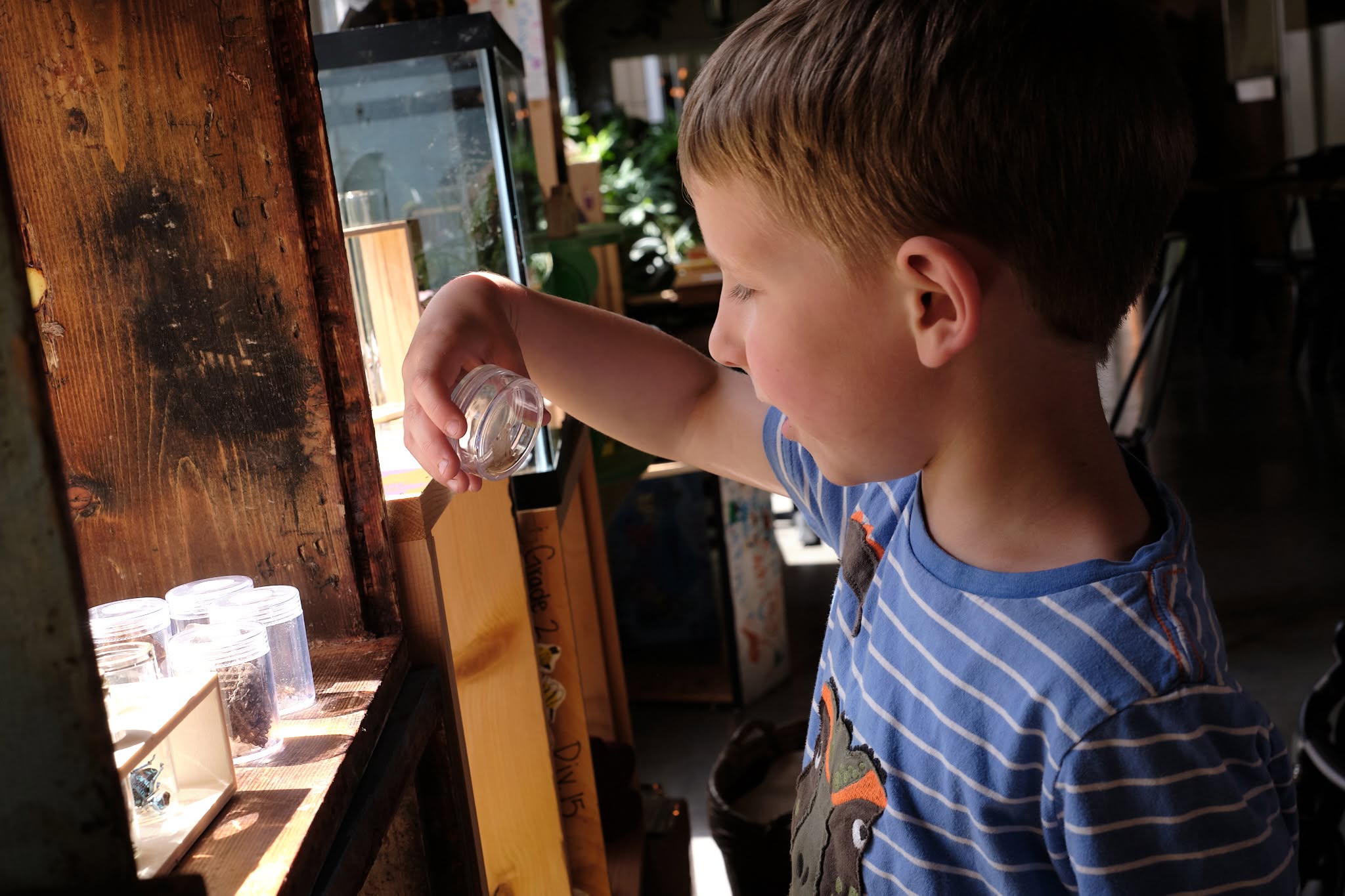
Moreover, pursuing kindergarten through homeschooling has recaptured some of its early radical subversion, and my children experience education as our own riff on Frobel’s original vision. Classrooms are replaced by rainy nature walks. Classmates are replaced by friends and their families. Learning happens at the speed they need—be it fast or slow—and best of all, we don’t need to stop for the summer (although we will mark the closing of this year with a party).
Your voice matters! Join the conversation by submitting a Letter to the Editor here.