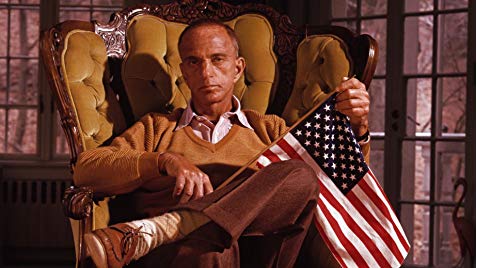

At few times in history has political controversy been as central to people’s lives as it is today. Concerns over the rise of the alt-right in several countries, fierce divisions over Brexit, the storm of controversy raging around President Trump, and the issues inevitably raised by a Canadian general election: these loom large at the dinner table and the water fountain. Now, to add to the mix, along comes a fascinating and disturbing documentary: Where’s My Roy Cohn?
Regardless of where one stands on these various political spectra, one thing should be made clear. Though the film is ostensibly about one of the most controversial lawyers ever to have lived, an anti-Trump agenda underlies its main thrust.
The film does focus on the life of Cohn, showing him to be a brilliant law student who completed his law degree before he was old enough to be called to the bar. He is then shown to have used his brilliance to become a career opportunist, playing a leading role in the trial (and execution) of the Rosenbergs and the McCarthy anti-Communist investigations. However, unlike McCarthy, Cohn was able to survive the Army–McCarthy hearings and went on to become one of the most sought-after lawyers in New York.
Clips from old interviews and newspapers depict Cohn as a man (virtually self-confessedly) totally without morals or ethical scruples, willing to stoop to any tactic to prove his clients, including Mafia bosses, innocent when they were transparently guilty. He courted anyone who was famous, wealthy, or powerful, who could help boost his standing, including the Reagans and Barbara Walters. He revelled in being seen at exclusive restaurants and night clubs with A-list people. Despite Cohn’s own attacks on homosexuals, he, throughout his life, was a closeted homosexual, something he publicly denied up to his death from AIDS in 1986.

The film then is, for most of its running time, a searing portrait of a despicable man who was willing to stop at nothing to complete his own agenda. In the last section of the film, however, director Matt Tyrnauer makes an obvious effort to argue that Cohn’s ruthless tactics now govern President Trump’s approach to office. The film shows that Cohn came to the defence of the Trump family when it appeared inevitable they would lose a major lawsuit over the building of the Trump Tower in Manhattan. Cohn successfully mounted a defence that resulted in an out-of-court settlement so that the Trumps were not found to be guilty.
In overt commentary by people who knew Cohn, including friends and family members, the parallel between Cohn and Trump is blatantly emphasized. It’s in this respect that Where’s My Roy Cohn? (the title is purportedly what Trump is supposed to have asked at one point in his own career) becomes most controversial.
One’s final reaction to the film is likely to be determined by one’s attitude to the President. Some will see it as shamefully libellous; others will see it as yet further evidence justifying their disapproval of the President. Either way, it offers a fascinating insight into Roy Cohn, a truly nasty man of Machiavellian bent. As such, it becomes an object lesson in how evil can triumph in a world driven by a lust for power and wealth. It is not pleasant to watch, but it is gripping, cleverly edited, and salutary in its portraiture of a man whose evil lives long after him.