


In 2021, Pope Francis instituted the World Day of Grandparents and the Elderly to be celebrated on the fourth Sunday in July, on or near July 26, the Feast of Saints Joachim and Anne, Jesus’ grandparents. Even though I chose St. Anne as my Confirmation saint, other than the fact that she was the mother of Our Lady, I have never known much about her.
Not to criticize my religious instruction, but when we were asked to choose a name for Confirmation, rather than looking for a saint—a spiritual mentor whose story resonated with me on some level—I merely looked for a name. While Anne was my mother’s patron saint and my sponsor’s first name, Jesus’ grandmother was ultimately chosen as my patron because, as a 13-year-old, I thought “Anne-Marie” (as she is also known) flowed nicely with my given names.
I later became devoted to St. Therese of Lisieux; yet, St. Anne has always remained in my life, and I have appreciated praying the St. Anne Novena with Pray More Novenas in recent years. This year, however, I resolved to learn more about St. Anne.
I turned to the Formed platform to watch Mary McGeehan’s interview of Dr. Carl Vennerstrom on the topic of Saints Anne and Joachim. Dr. Vennerstrom explained that their story is not mentioned in the Gospel narratives but is in the Protoevangelium of James, which was written in the second century.
He also clarified that while Our Lady’s parents are not in Scripture, they are represented in approved Catholic traditions through Marian feasts, namely Our Lady’s Immaculate Conception celebrated on Dec. 8, her birth remembered on Sept. 8, and her presentation in the temple acknowledged on Nov. 21.
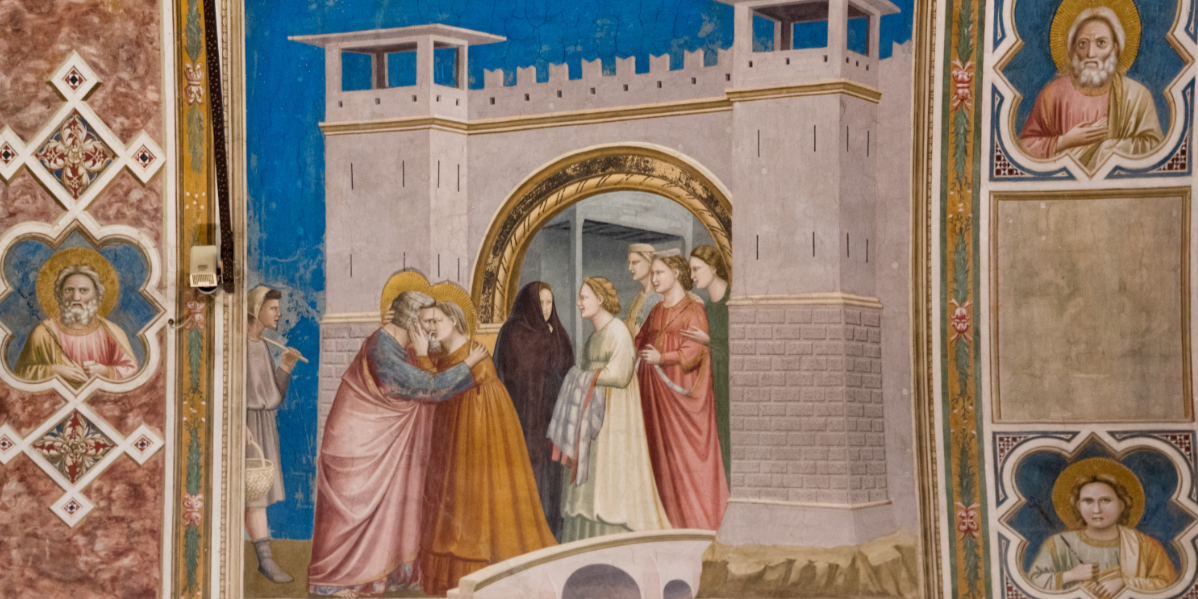
Dr. Vennerstrom mentioned that “Anne” comes from the name “Hannah” and that there are parallels between the stories of Anne and Hannah. Both women were childless until they were older. After 20 years of infertility, Joachim left and fasted for 40 days, while Anne remained home in prayer. During this separation, the angel Gabriel appeared to each of them simultaneously, promising that they would have a daughter. Upon hearing this news, they reunited at the gates of Jerusalem. Three years later, they presented their child, Mary, at the temple, where she remained until she was about 12 years old.
McGeehan raised the point that it would have been rare for a female child to be presented in the temple, the way males—like Jesus himself—were. Vennerstrom agreed, mentioning that, like Hannah, who learned of her child, Samuel, from an angel and offered him for service to the Lord, Anne and Joachim also offered the child for whom they had longed to God’s will. While the stories are not exact parallels, McGeehan commented that they sort of “rhyme.”
Linked to this video, Formed also provides an interview between Taylor Kemp and Dr. Ben Akers as they discuss the painting Joachim and Anne Meeting at the Golden Gate by Giotto di Bondone. Dr. Akers commented that, upon hearing the angel’s message, Anne ran from the city and Joachim ran from the desert to reunite at the gates of Jerusalem, standing on a bridge, which is often taken to represent the gate or bridge between heaven and earth. Akers also noted that, in the tender embrace depicted by the artist, we see Anne and Joachim bent toward each other, halos merged and eyes locked, indicating that they “share the same vision.”
In looking at this beautiful image of marriage, Kemp shared that he and his wife have a devotion to Saints Louis and Zelie Martin, parents of St. Therese. He noted that they lived a hidden life and “produced the home that enabled there to be who we now know as the great St. Therese.”
With Saints Joachim and Anne, it is similar in that we do not know much about them, but “it was their home that enabled the Blessed Virgin to grow in God’s providence.” As Kemp drew parallels between these two families, I could not help but hear the rhyme within my own story: Saints Anne and Therese were linked in my heart as well!
As we remember Saints Anne and Joachim—patrons of grandparents, infertility, unmarried women, housewives, and mothers in labour—on their feast day, as well as grandparents and the elderly, let us give thanks for the sacrifices, the prayers, and the foundation of faith that have come before us.
Let us also pray that we—whether biological parents, grandparents, or not—may share the vision of Saints Joachim and Anne, fixed on God in our unconcealed, and even our hidden, support of future saints.
Read more at praymorenovenas.com/st-anne-novena or sign up for Formed at formed.org.
Your voice matters! Join the conversation by submitting a Letter to the Editor here.







