
Part 2 in a series.
Two years after Pope Francis’ visit to Canada and following the signing last Easter of a Sacred Covenant between the Archdiocese of Vancouver and the Kamloops First Nation, many see this time as a pivotal moment in the relationship between the Catholic Church and Indigenous peoples as it continues to develop through an ongoing, though imperfect, process of truth and reconciliation.
In this timeline, we look at the progress made in healing and reconciliation initiatives between the Archdiocese of Vancouver and Canada’s Indigenous peoples since their first encounter. This week, the 1960s and the arrival of Archbishop James Carney.
ARCHBISHOP JAMES CARNEY
In 1969, as Vancouver Archbishop James Carney’s episcopacy was in its infancy, the Canadian government was in the process of taking over the residential school system, ending Church involvement. Residential schools in British Columbia were being transformed into student residences and students were integrated into public schools.
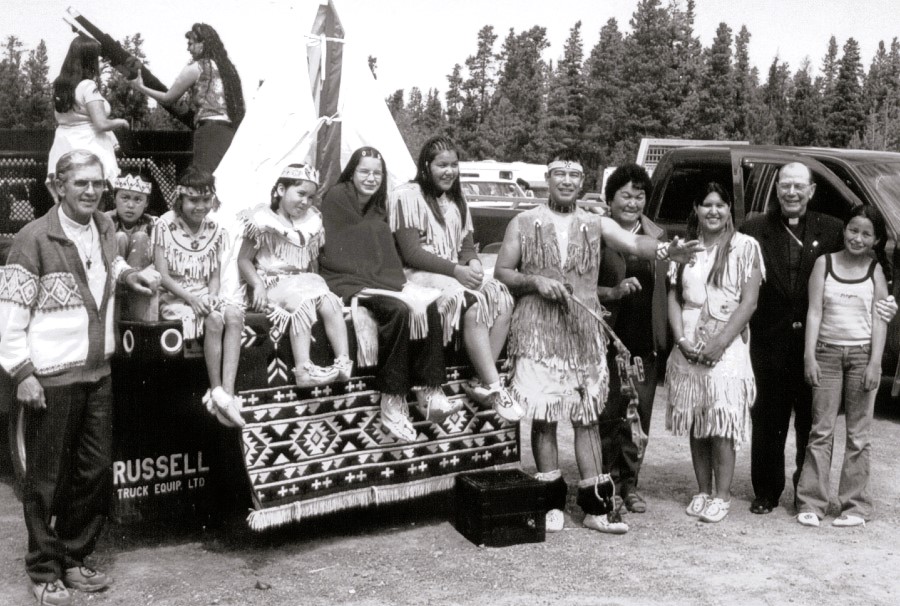
Archbishop Carney encouraged First Nations in the renovation of their historic churches, offering blessings for the Squamish people at St. Paul’s Church, North Vancouver, in 1982, and for the Stl’atl’imx at Holy Cross Church, Skatin, in 1984.
Meantime, the Oblates of Mary Immaculate developed lay associate programs to aid in their ministries to First Nations and the poor of the downtown Vancouver area. Some diocesan priests, such as Father Gary Gordon in Chilliwack who was ministering to the Sto:lo communities, began to assist with traditionally Oblate missions.
JOHN PAUL II VISITS CANADA
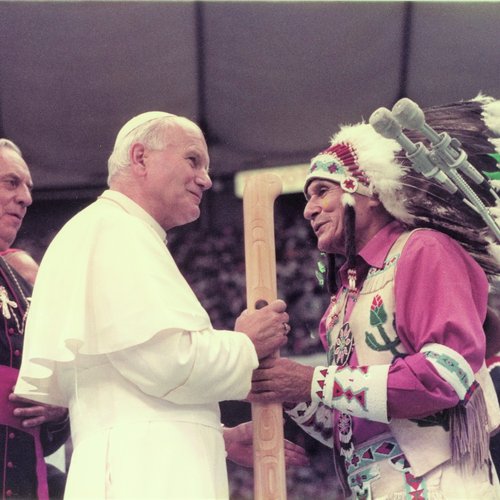
In 1987, Pope John Paul II visited Fort Simpson, NWT, where he met the Indigenous people of the town on Sept. 20. He addressed them with these words:
“Let me recall that, at the dawn of the Church’s presence in the New World, my predecessor Pope Paul III proclaimed in 1537 the rights of the native peoples of those times. He affirmed their dignity, defended their freedom and asserted that they could not be enslaved or deprived of their goods or ownership. That has always been the Church’s position (cf. Pastorale Officium, 29 May 1537: DS 1495). My presence among you today marks my reaffirmation and reassertion of that teaching.”
OBLATE APOLOGY
In March 1991, at the National Meeting on Indian Residential Schools in Saskatoon, bishops and leaders of religious communities across Canada apologized to Native students who were abused in Church-operated Indian residential schools. A three-day conference was called to discuss a national strategy for dealing with allegations of widespread physical, sexual, psychological and cultural abuse of students at the schools.
Present at the meeting were bishops and representatives of 21 dioceses across Canada, 25 superiors general from religious communities of women, nine from religious communities of men, six Aboriginal people and observers from the Anglican, Presbyterian and United Churches.
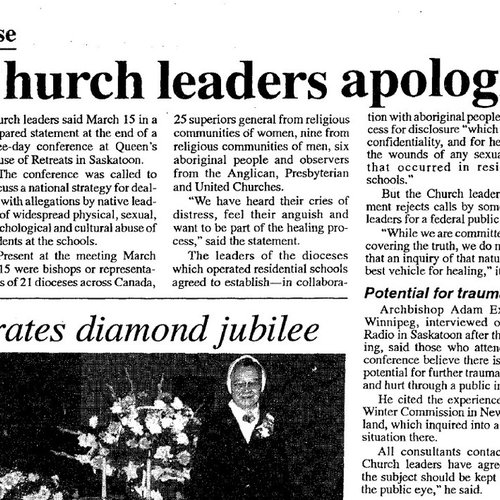
“We have heard their cries of distress, feel their anguish, and want to be part of the healing process,” said the final statement from the meeting.
The leaders of the dioceses that operated residential schools agreed to establish in collaboration with Aboriginal people a process for disclosure “which respects confidentiality, and for healing of the wounds of any sexual abuse that occurred in residential schools.”
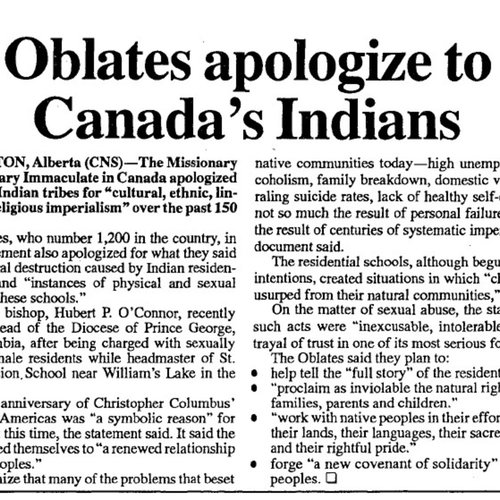
In July 1991, the Missionary Oblates of Mary Immaculate in Canada apologized to Canada’s Natives for “cultural, ethnic, linguistic and religious imperialism” over the past 150 years. They also apologized for what they said was the cultural destruction caused by Indian residential schools and “instances of physical and sexual abuse within these schools.”
Father Douglas Crosby, OMI, president of the Oblate Conference of Canada, said, “Recognizing that within every sincere apology there is implicit the promise of conversion to a new way of acting[;] We, the Oblates of Canada, wish to pledge ourselves to a renewed relationship with the Native peoples which … seeks to move beyond past mistakes to a new level of respect and mutuality.”
The Oblates recognized that “many of the problems that beset Native communities today – high unemployment, alcoholism, family breakdown, domestic violence, spiraling suicide rates, lack of healthy self-esteem – are not so much the result of personal failure as they are the result of centuries of systematic imperialism.”
The residential schools, although begun with good intentions, created situations in which “children were usurped from their natural communities,” the Oblates said.
On the matter of sexual abuse, such acts were “inexcusable, intolerable, and a betrayal of trust in one of its most serious forms.”
The Oblates said they planned to:
• help tell the “full story” of the residential schools.
• proclaim as inviolable the natural rights of Indian families, parents and children.
• “work with Native peoples in their efforts to recover their lands, their languages, their sacred traditions, and their rightful pride,” as well as forge “a new covenant of solidarity” with Native peoples.
ARCHBISHOP EXNER
Archbishop Adam Exner, an Oblate of Mary Immaculate, became Archbishop of Vancouver in 1991 and made reconciliation with Aboriginal peoples a particular focus of his episcopacy.
His installation as archbishop on Aug. 15, 1991, took place just weeks after his Oblate congregation made its apology to the Aboriginal peoples of Canada. Before the end of his first year in office Archbishop Exner began to make the apology more than words, reaching out to Aboriginal peoples to forge a new relationship.
From 1992 to 1995, Archbishop Exner sat as a member of the Canadian Conference of Catholic Bishops Working Group on Residential Schools from 1992 to 1995.
He responded to an invitation from the Vancouver First Nations Committee, a group composed of Natives, clergy, and lay Catholics. He proposed a Native Pastoral Council, which in 1991 became the Archdiocese of Vancouver First Nations Council, intended to “address the needs of all Catholic Natives, with a focus on inclusion, fostering leadership and healing.”
Every two months Archbishop Exner met with representatives of the Squamish, Sto:lo, Sliammon, Sechelt, Stl’alt’imx, and Thompson. In 1992 the council sponsored three healing conferences, in the Fraser Valley, on the Sunshine Coast, and in Vancouver. In subsequent years the council sponsored a conference on reawakening of Native spirituality and meetings with the Cursillo movement.
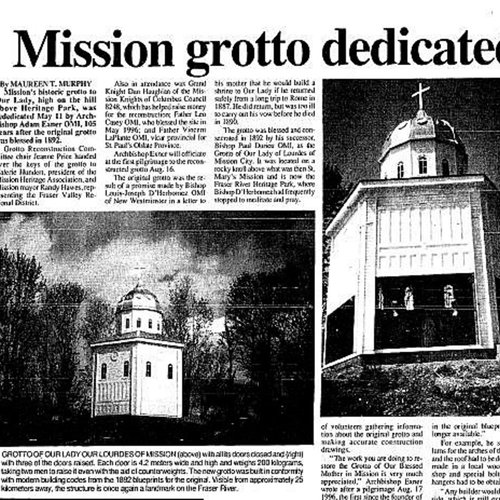
The council worked with the local committee for the annual pilgrimage to the historic Grotto of Our Lady of Lourdes on the grounds of St. Mary’s Mission. The Knights of Columbus and the Mission Heritage Association had worked from the 1980s to reconstruct the grotto, originally built in 1892 in fulfillment of a vow by Bishop Louis-Joseph d’Herbomez, and to create a heritage park.
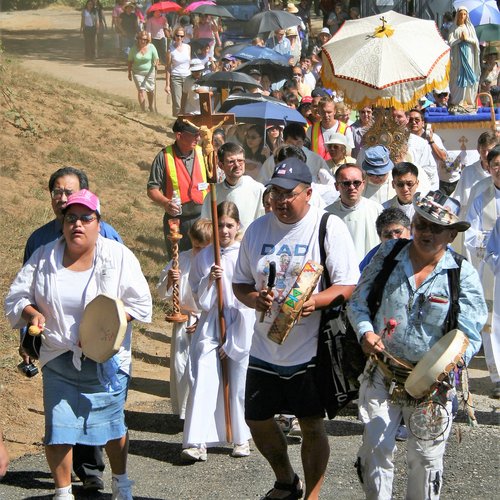
Priests and parishioners of St. Joseph’s in Mission, the Knights of Columbus, and Aboriginal peoples had begun making pilgrimages to the grotto site every August, like those held there until the 1960s. Archbishop Exner wanted to see greater Native participation in the liturgy at the annual Marian pilgrimage.
By 1997 the grotto reconstruction was complete and 4,000 people, Aboriginal people and newcomers, met and prayed together. The Prayers of the Faithful were spoken in Native languages as well as English, French, Italian, Portuguese and Filipino. To this day the pilgrimage is the largest annual event in the archdiocese.
GOVERNMENT-CHURCH SETTLEMENTS
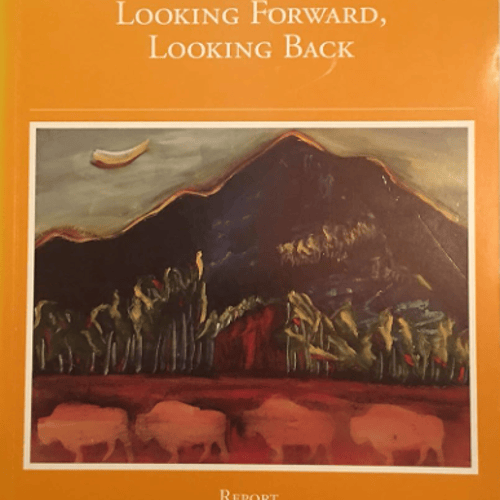
In November 1996, Canada’s Royal Commission on Aboriginal Peoples issued its report, making 440 recommendations for changes in the relationship between Aboriginals, non-Aboriginals and governments in Canada.
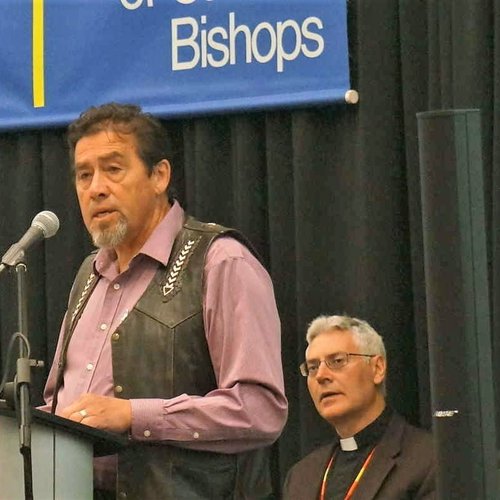
In 1997, Chief Harry Lafond of the Muskeg Lake Band in Saskatchewan, co-director of the region’s First Nations Diocesan Circle, attended the Special Assembly of the Synod of Bishops for the Americas at the Vatican where he addressed Pope John Paul II and bishops regarding the relationship between the Christian Churches and the Aboriginal Peoples of America. Lafond received applause from the Pope when he spoke about the Church’s damaged relationship with Aboriginal people and said the new millennium provides an opportunity to reconcile historical injuries and begin a new journey.
In January 1998, in response to the report of the Royal Commission on Aboriginal Peoples, the Canadian government issued an apology to those who experienced physical and sexual abuse at Indian residential schools and acknowledged its role in the development and administration of residential schools. It set up a $350-million healing fund to deal with the aftermath of cultural, physical, and sexual abuse at Native residential schools and began planning new approaches for community development and strengthening Indigenous governance.
The Aboriginal Rights Coalition, a social justice coalition of 12 national churches and church bodies, said it was “cautiously optimistic” about the apology and funding, but noted the government’s apology was “less concrete than apologies made by several of the churches. An ARC spokesman said the process of healing was started by the churches before the government became involved and that the Native community itself is split on the government’s action.
In November 1998, faith leaders in British Columbia, including Archbishop Adam Exner, signed a statement supporting in principle the Nisga’a Treaty, giving the Nisga’a control over 2,000 square kilometres of land, self-government, and $190 million.
In the statement, the spiritual leaders said they believed ratification would be in the best interests of British Columbia and Canadians.
They also said the ratification process should be preceded by public dialogue “based on respect and information sharing which leads to mutual understanding and reconciliation.”
The faith leaders pledged to “commit ourselves and our communities to such a dialogue and encourage all British Columbians to join us on this journey of understanding and reconciliation.”
The Aboriginal Rights Coalition, an ecumenical group of 12 national churches and organizations, commended the faith leaders for their decision. It said the Nisga’a people have a right to define their relationship within Confederation. The ARC also congratulated the Nisga’a leadership for their “patience and tenacity” in reaching the agreement with Canada and B.C. after decades of negotiations.
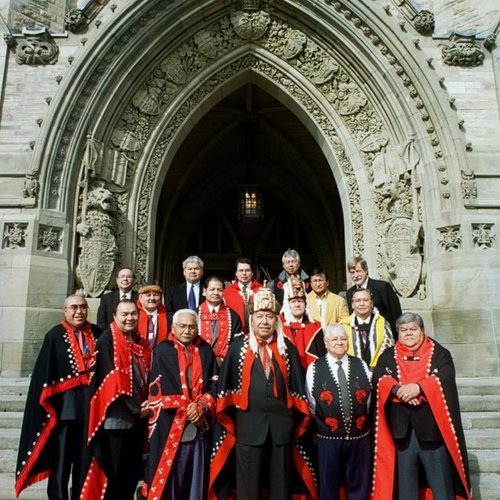
Archbishop Exner said he didn’t necessarily endorse all aspects of the agreement but he supported it in the interest of justice and because it was negotiated by all parties.
In 2001 the federal government started negotiations with the Christian churches on a compensation plan for settlements with former students claiming abuse. The government ultimately agreed to pay 70 per cent of the settlement costs.
The complexity of the issue of jurisdiction, responsibility, and vicarious liability was evident in two Supreme Court of Canada decisions in 2005. The court ruled the United Church of Canada was 25 per cent liable and the government of Canada 75 per cent liable for general damages in a B.C. residential school case involving sexual abuse.
In a separate ruling, the court ruled the Oblates of Mary Immaculate in B.C. were not vicariously liable for sexual assaults an employee carried out at another residential school because the employee in question had not been hired to supervise children.
In November 2005, an offer by 41 Catholic religious orders and dioceses was included in an agreement-in-principle to settle Indian residential schools abuse claims.
Described as an “historic milestone” by Assembly of First Nations National Chief Phil Fontaine, the $2-billion compensation package would give $10,000 to each of 86,000 residential school survivors, plus $3,000 for each year spent at a school. An advance payment of $8,000 would go to survivors 65 and over. The average age of former students was 60. The 41 entities would contribute $29 million in cash and real property and $25 million in “in-kind” contributions for programs such as Returning to Spirit, programs on self-esteem, programs for healthy mothers and babies, and other works the groups do in Aboriginal communities. The agreement settled the liability of the 41 groups in various class-action suits.
Your voice matters! Join the conversation by submitting a Letter to the Editor here.