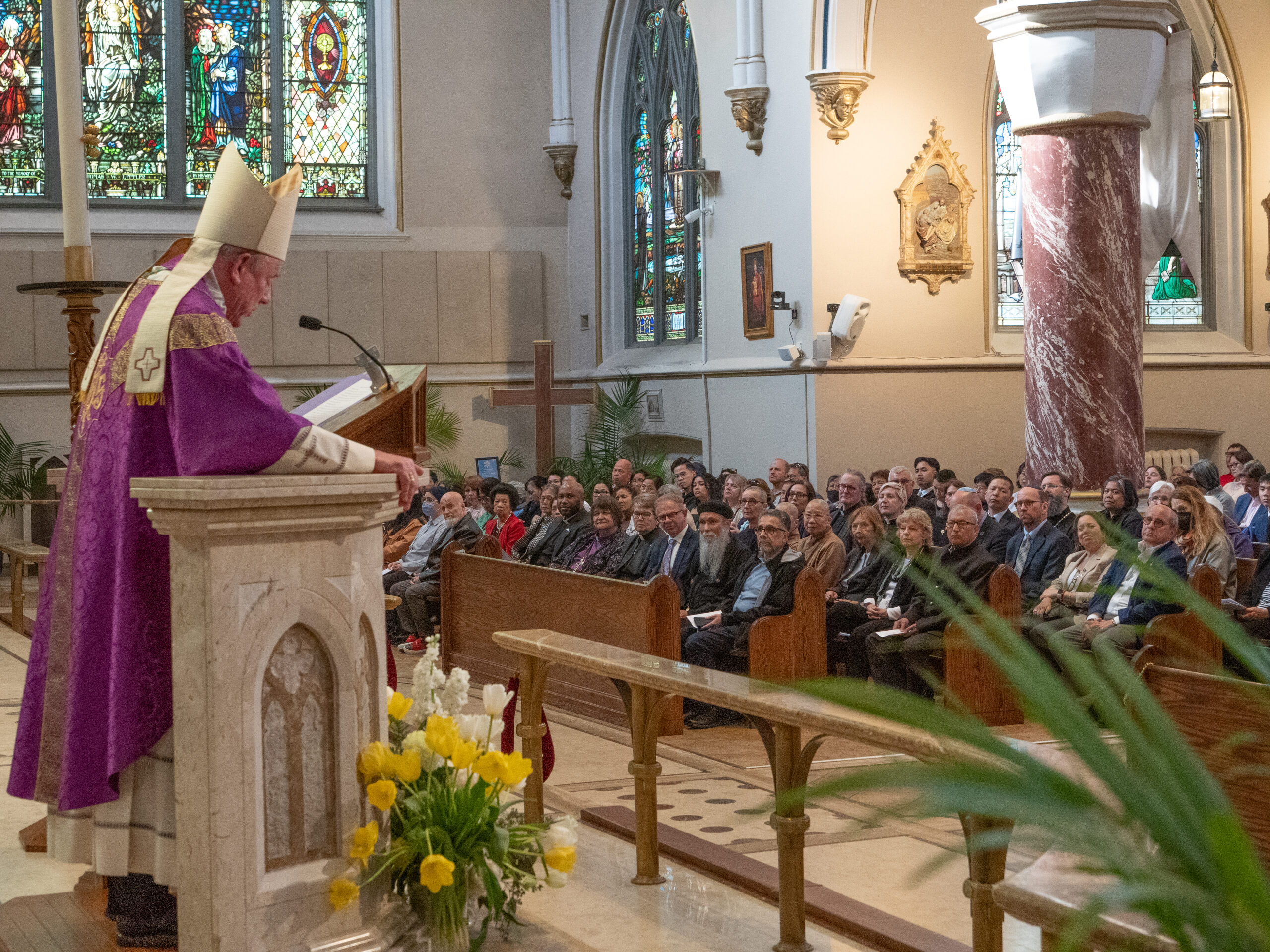

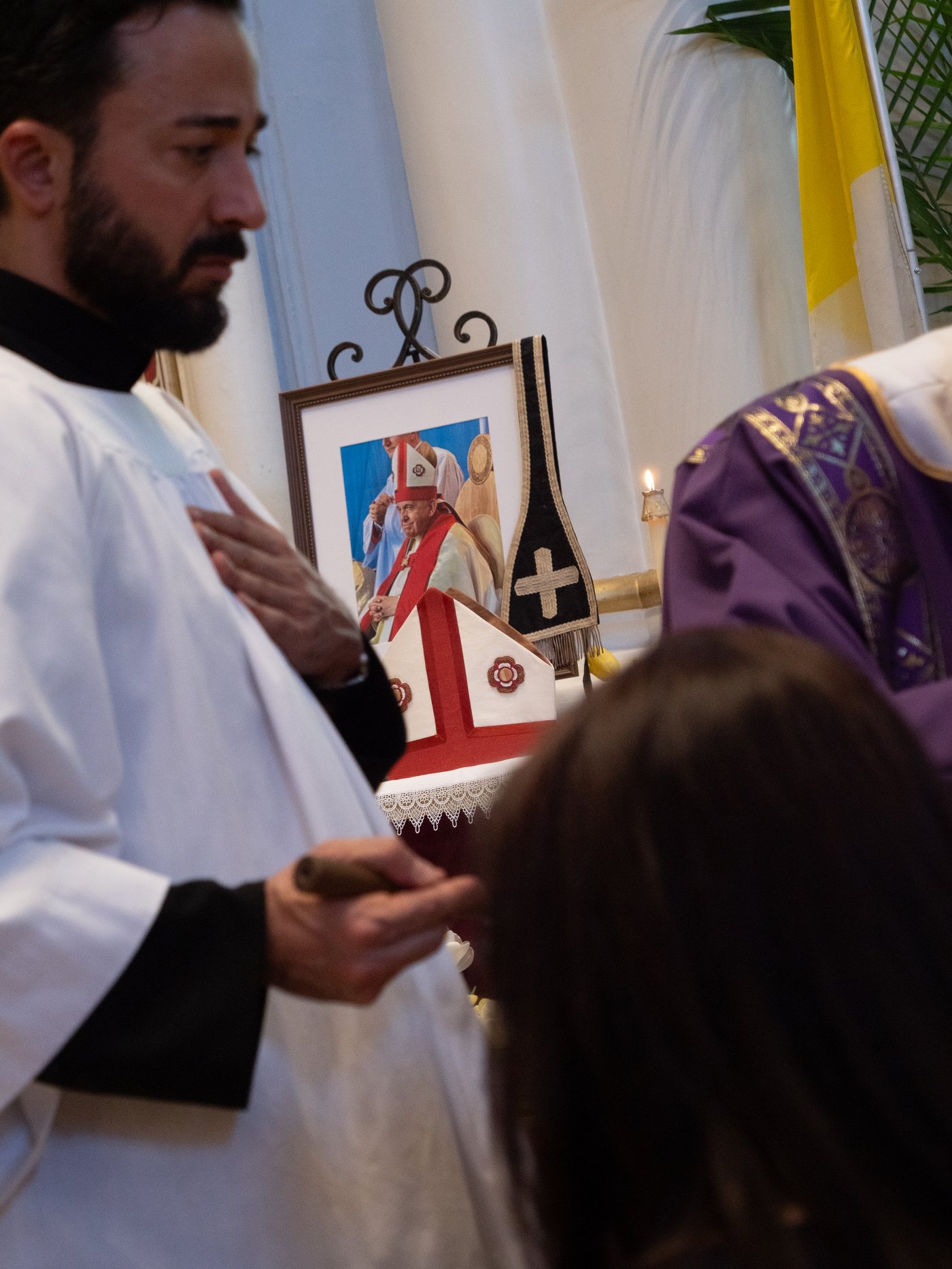
“At the end, death came to Francis as a friend,” Archbishop J. Michael Miller told the multi-faith congregation gathered at Holy Rosary Cathedral for a Requiem Mass offered for the late Pontiff on April 14.
Pope Francis will be remembered as a shepherd of “boundless compassion” who “lived the Gospel by walking alongside the marginalized,” Archbishop Miller said in his homily.
“His complex and sometimes controversial pontificate radiated love for the poor, the displaced, and the most vulnerable. He was as much a spiritual director to the world as a universal pastor,” he said.
Members of many other Christian denominations, including Anglicans and Orthodox, as well as followers of other faiths such as Buddhism, Islam, and Judaism came to show their solidarity and pay their respects.
Delegates included Reverend Tellison Glover, the Director for Mission and Ministry Development for the Anglican Diocese of New Westminster, who was representing Archbishop John Stephens; Rabbi Philip Bergman from Temple Sholom in Vancouver; Rabbi Jonathan Infeld from Congregation Beth Israel in Vancouver; Ashag Ahmad and Umar Chaudhry from the Ahmadiyya Muslim Jama’at in Delta; and Venerable Yin Kit Sik of the Po Lam Meditation Vihara in Chilliwack.
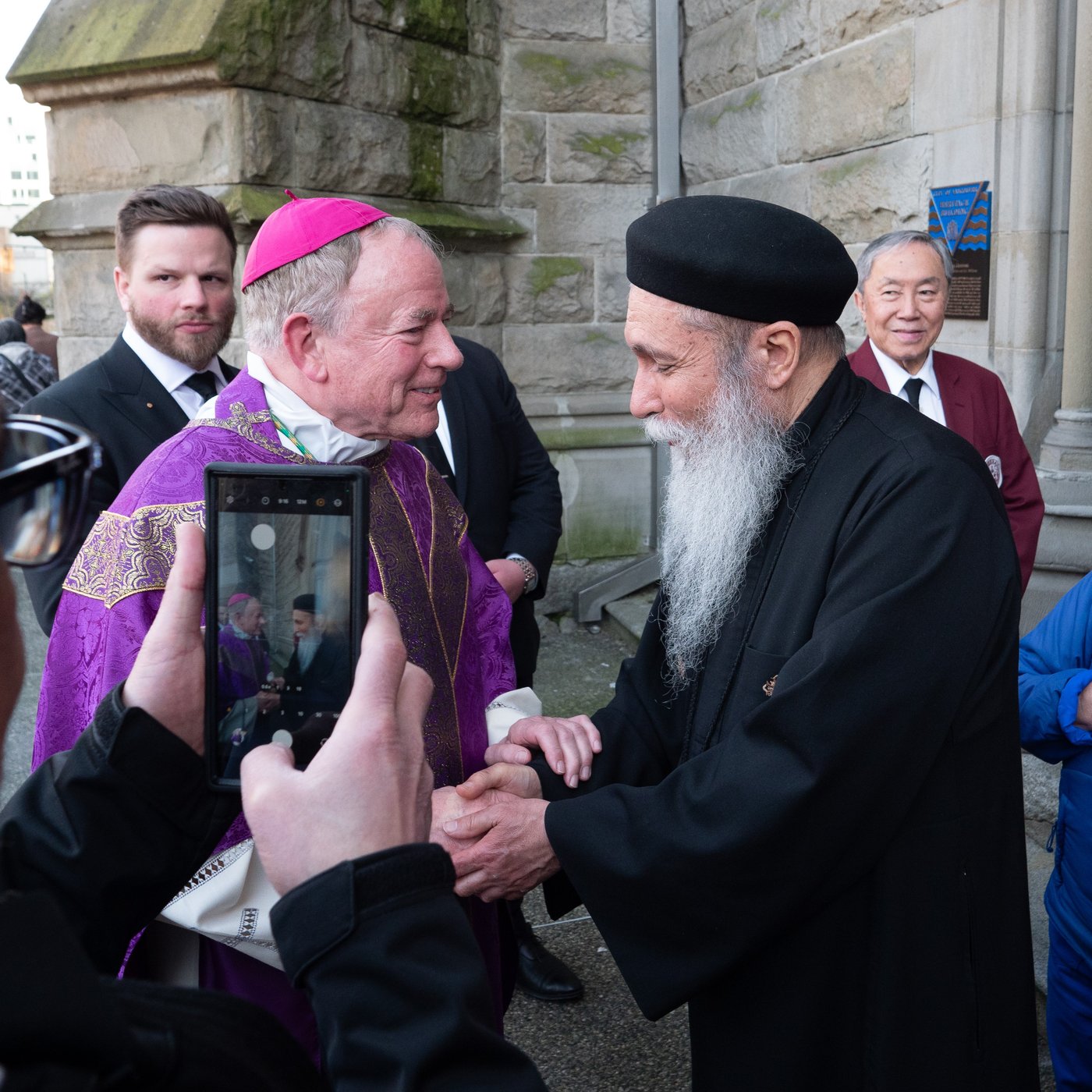
Father Armia Gerges, from St. George’s Coptic Orthodox Church in Surrey, told The B.C. Catholic he attended the Mass to offer his community’s condolences. Pope Francis “was a very good man—we respect him,” he said. “He was lovely and humble. May God choose a worthy successor for him.”
Father Matthew Francis, pastor of Holy Apostles Orthodox Church in Chilliwack, told The B.C. Catholic, “it’s important for us to bear witness to the Resurrection of Christ. Pope Francis fell asleep in the Lord on Easter Monday, so he is bearing witness to the Resurrection. It is important for us as Christians to continue to do that and to honour and pay respects to the Catholic community here in B.C.”
Mother Amanda Ruston, head pastor at St. James Anglican Church in Vancouver, was one of many Anglicans who attended and said they came to offer love and condolences to their Catholic brothers and sisters.
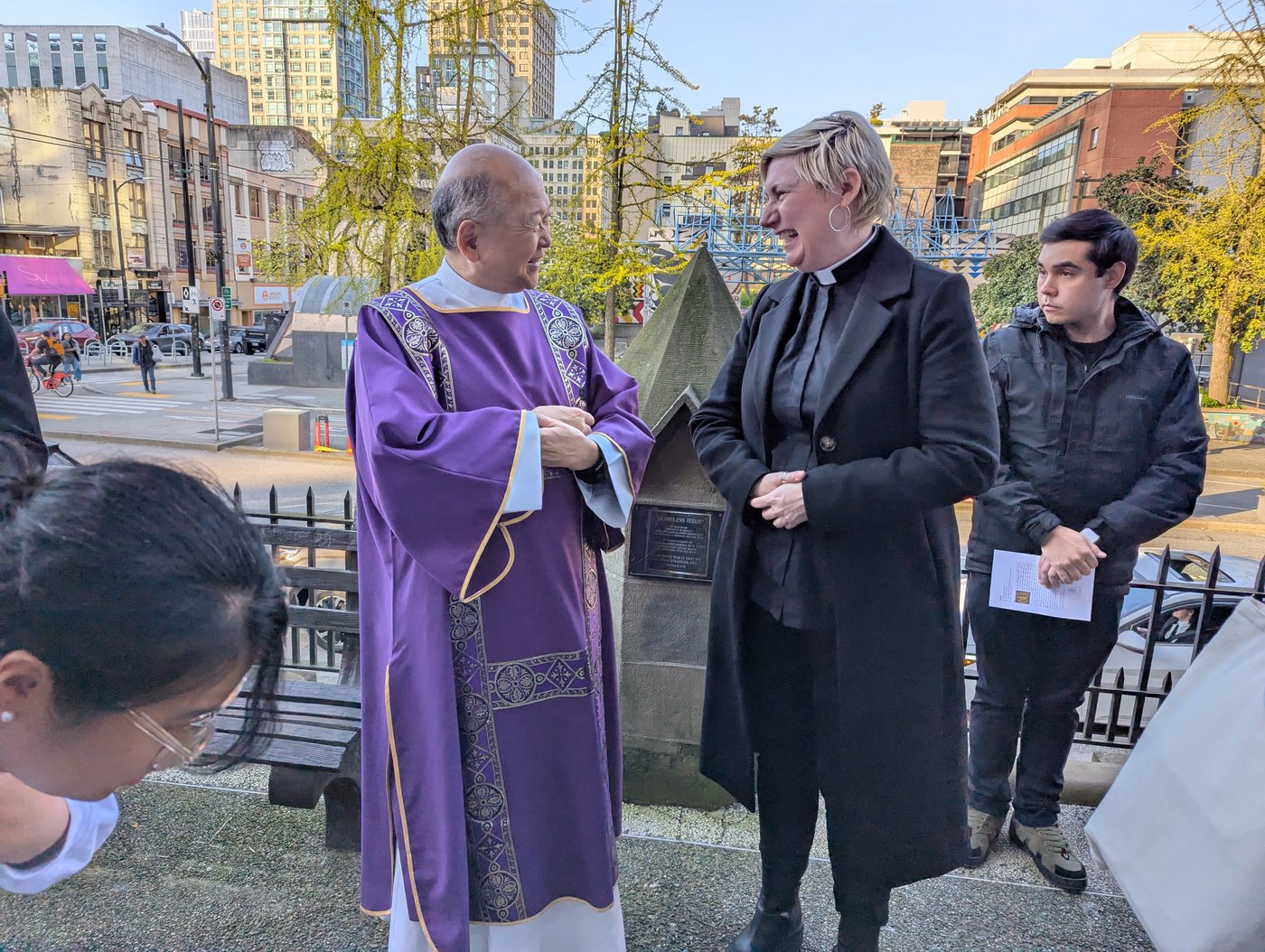
“Pope Francis is a spiritual leader for all people, not just Catholics,” she said. “Certainly, people in my faith tradition looked up to him as a great leader, and a person of great wisdom, faith, and love of Jesus Christ. We came to honour him and our brothers and sisters in the Catholic tradition as well.”
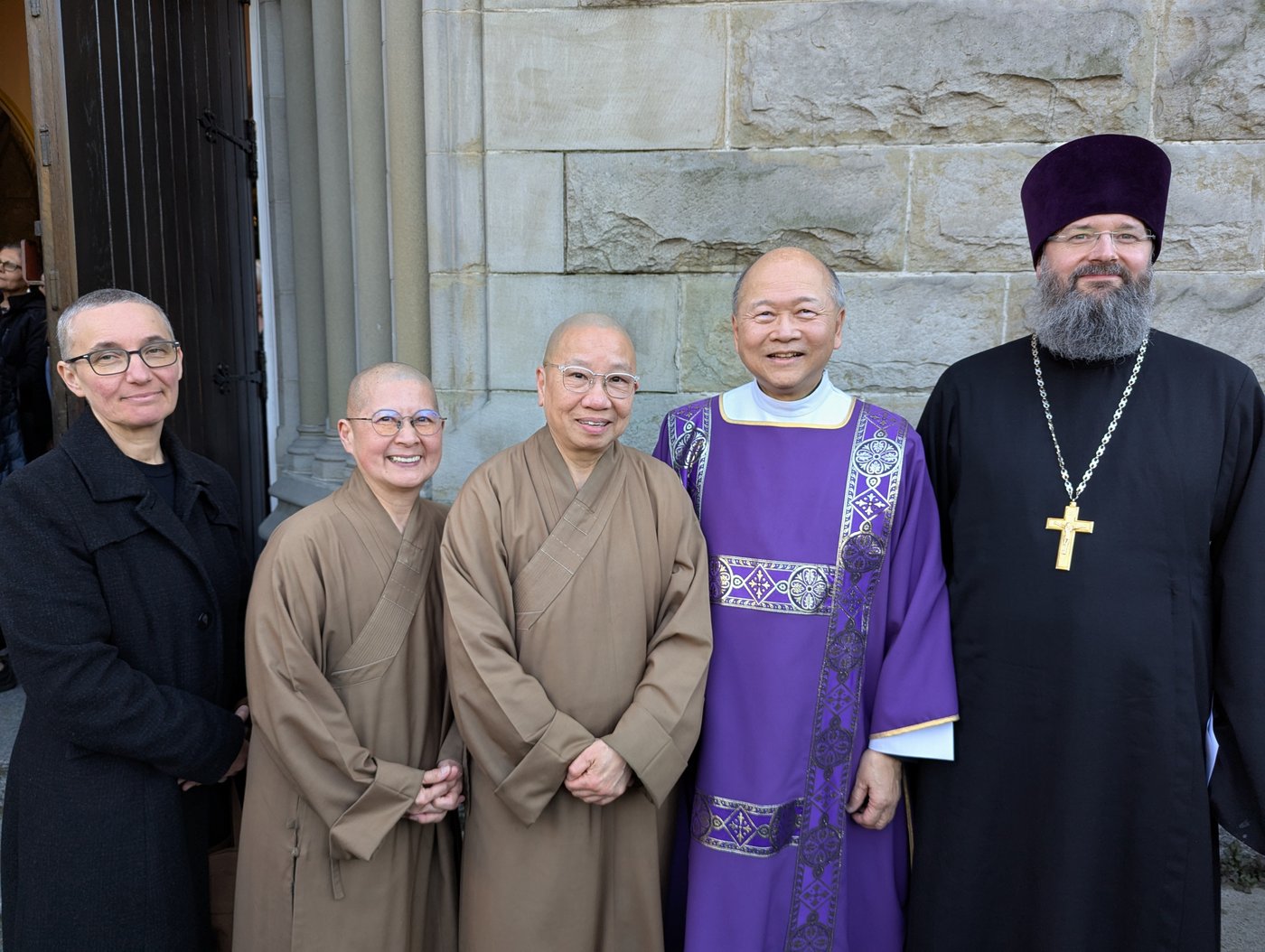
Venerable Yin Kit Sik attended with two members of her Chilliwack Buddhist community. “We have to be here,” she said. “It is an honour because Pope Francis was such a role model for today’s world—[he taught] how to develop compassion for humanity and minorities. That is why we came.”
Umar Chaudhry, secretary of public relations for the Ahmadiyya Muslim Jama’at said his Islamic community appreciated the Pontiff’s commitment to interfaith relationship building.
“[Pope Francis] was a great leader. He believed in religious equality and he was a champion of the emancipation of the poor,” said Chaudhry. “He tried to build bridges between all faith communities, including the Islamic faith. He had this openness about him where he invited people and had frank dialogue with all of them.”
Pope Francis will be remembered as “the Pope of the Peripheries,” said Archbishop Miller. He opposed what he saw as a “self-referential” Church turned inwards and away from those it should love and evangelize.
“[Francis] pressed us to reach out to those on the margins,” he said, including “the poor, elderly, disabled, unborn, refugees, and prisoners.”
In his love for the poor and downtrodden, Pope Francis led by example, he said, and highlights of his papacy included trips to the developing world—Iraq, the Arabian Peninsula, Mongolia, and Myanmar—as well as prisons and detention centres in the developed world.
A critic of any dehumanizing ideological force, Pope Francis was an outspoken opponent of the “ideological colonization of the developed world,” he said. He rejected Western secular ideas about transgenderism, abortion, and a “throwaway culture that treats everything and everyone deemed no longer useful, including the unborn and elderly, as disposable.”
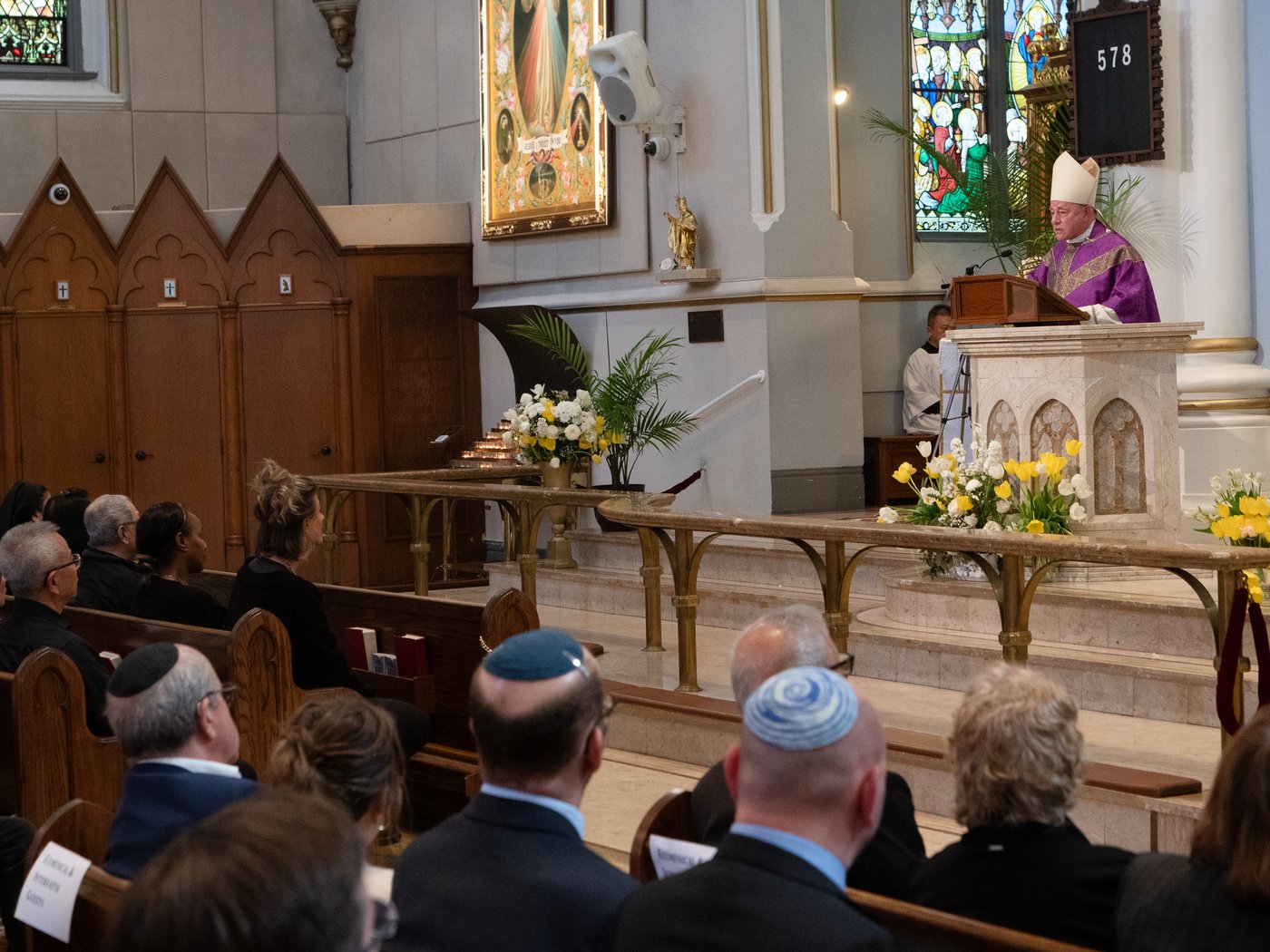
Pope Francis emphasized mercy as “the beating heart of the Gospel,” he said, and bore witness to the “maternal face of the Church that stoops down to those who are hurting, especially those wounded by sin.”
In addition to bringing “unprecedented regional diversity to the College of Cardinals,” Pope Francis’ reform of Church governance around synodality will have a lasting impact on the development of the Church, he said.
By opening the synodal process in 2021, “he invited all members of the Church to journey together as pilgrims, listening to the voice of the Holy Spirit and to each other.”
Quoting Pope Francis, he added: “It is precisely this path of synodality which God expects of the Church of the third millennium.”
He noted the Pope’s numerous contributions to interreligious dialogue, especially with the Islamic world. He also built on efforts of his predecessors to promote Christian unity, appearing often with the Ecumenical Patriarch of Constantinople and the Archbishop of Canterbury.
He was a strong proponent of the Jewish people, and condemned the “growing climate of anti-Semitism throughout the world,” the Archbishop said. Francis’ pilgrimage to the Holy Land in 2014, the Great Synagogue in Rome in 2016, and his 2016 visit to the German death camp of Auschwitz reinforced a new era in the Church’s understanding of Jews, Judaism, and Israel, he said.
Archbishop Miller closed his sermon by reading from the undelivered homily Pope Francis had prepared for Easter.
“Brothers and sisters, this is the greatest hope of our life: we can live this poor, fragile and wounded existence clinging to Christ, because he has conquered death, he conquers our darkness and he will conquer the shadows of the world, to make us live with him in joy, forever. This is the goal towards which we press on, as the Apostle Paul says, forgetting what lies behind and straining forward to what lies ahead.
“He is the hope that does not fade. He is the love that accompanies us and sustains us. He is the future of history, the ultimate destination towards which we walk, to be welcomed into that new life in which the Lord himself will wipe away all our tears and “death, mourning and crying and pain will be no more.
“Eternal rest grant unto Francis, O Lord. And let perpetual light shine upon him,” concluded Archbishop Miller. “May his soul and all the souls of the faithful departed rest in peace. Amen.”
Your voice matters! Join the conversation by submitting a Letter to the Editor here.