


Growing up, I was taught to pray the Rosary, but I don’t think I truly understood the relationships it is meant to foster.
In university, a Protestant friend found my rosary beads a little intimidating. I didn’t have the words to properly explain the prayers to her and, admittedly, I think her questions and feelings planted some doubts in my own mind as well.
Later, a Catholic friend commented that she didn’t want to “go through” Mary to have a relationship with Jesus. She respected Mary but didn’t think it was necessary to pray to her; she preferred to communicate directly with Jesus. Also wanting to prioritize my relationship with Jesus, I again began to doubt the need to pray to Mary regularly.
As a young mother, when I was invited to attend a mother’s Rosary group, I was unsure. I declined the invitation a couple of times and then finally surrendered and attended. I found that I loved the way these women of faith looked to the life of Mary through the Mysteries of the Rosary for guidance in their own lives. I attended weekly for several years and, through it, came to see the Rosary in new ways.
First, I realized that since my Protestant friend did not know the “Hail Mary” prayer, she may have found it strange to hear a prayer repeated over and over. For me, though, while pondering stories drawn directly from the Bible to the rhythm of familiar words, I found myself imagining Mary’s point of view in the events of her life with Jesus. As a result, I came to understand that I can turn to her when dealing with situations of my own, as a mother and as a woman seeking God’s plan for my life.
I also realized that I am in no way compromising my relationship with Jesus by reaching out to his mother. Mary was a woman who worked, worshipped, and raised a child, just as I have. She faced challenges, pain, and joys while always trusting in God’s plan for the world and her role in that plan. Mary is someone I can identify with because she is not God; she was a human woman, with the experiences of a woman and a mother. She “gets” me, and she wants me to turn to her, not instead of Jesus, but alongside him, as my heavenly mother.
This leads to something else people of other faiths say about Catholics and their relationship with Mary. Because we pray to Mary and even sing songs about her, we are accused of worshipping her. The reality is that we believe in the Ten Commandments and worship only God. When we pray to Mary, we are not approaching her as we approach God; we converse with her and share our feelings with her, as we would with any loved one who has died before us. We are also asking her to pray for us.
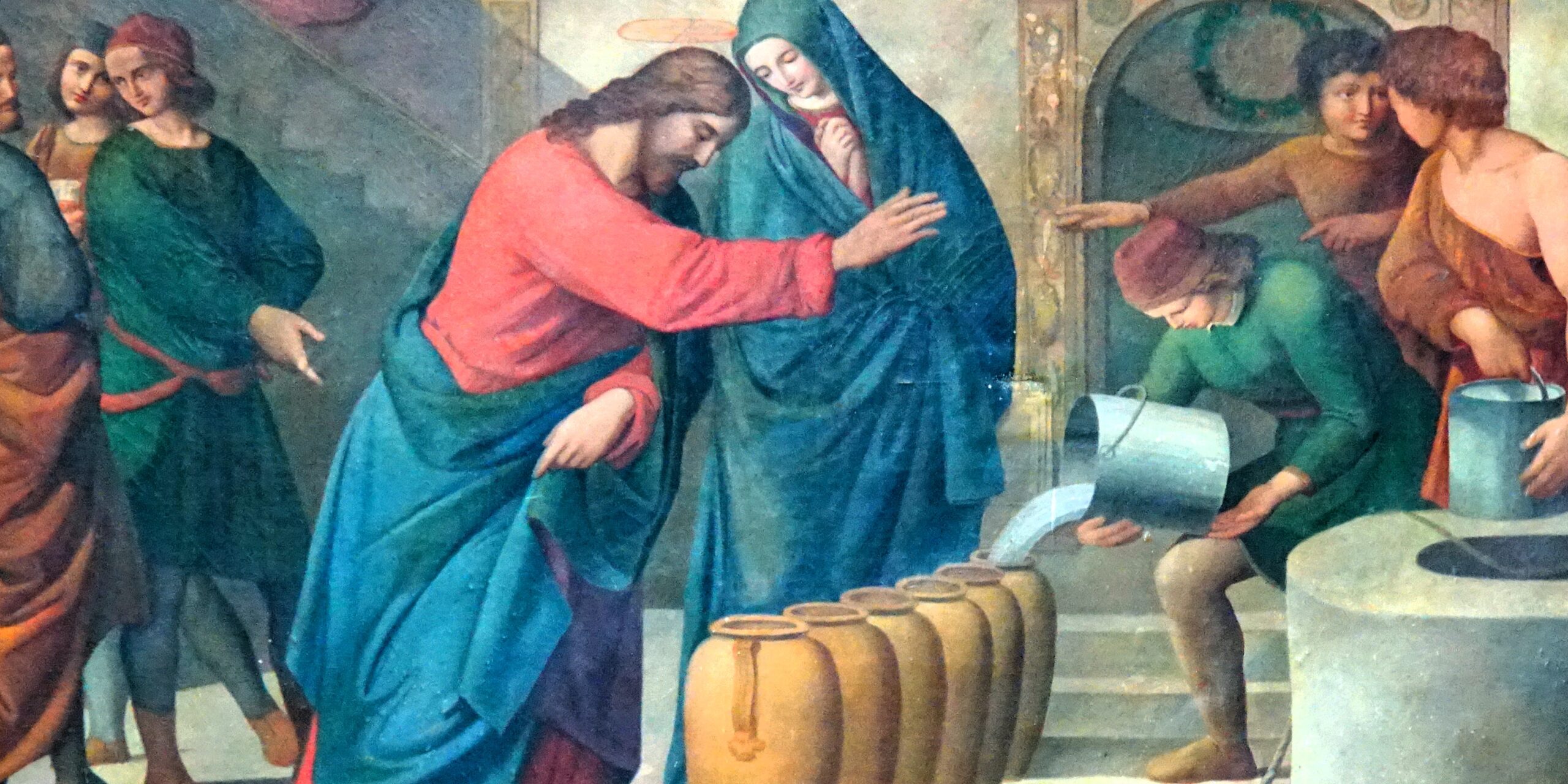
Our conversations with Mary do not replace our need to communicate with Jesus. In the Second Luminous Mystery, the Wedding at Cana, Mary recognized the needs of others and communicated them to her son: “They have no wine.”
Jesus asked how the situation concerned him, explaining that his hour had not yet come. Yet, allowing Jesus to work in his own time, Mary told the servers, “Do whatever he tells you” (Jn 2:3-6). The same is true in our lives. Mary takes our needs, gives them to the Lord, and lets him respond in his own time. Then it is up to us to listen and “do whatever” he tells us.
Praying the Rosary has allowed me to focus on Mary’s life with Jesus, from the Annunciation to her assumption into heaven and her coronation as Queen of Heaven and Earth. The more I reflect on Mary’s journey with Jesus, the more I grow in my own relationship with both of them.
The month of May is dedicated to Mary, the Mother of God, who wants to be a mother to us all. She prays for us to know, love, and serve God the way she did. Because of her close relationship with Jesus, she can take our prayers to him. Then it’s up to us to communicate directly with the Lord by listening and “doing whatever” he tells us.
Your voice matters! Join the conversation by submitting a Letter to the Editor here.







