


You have an abundance of workers: stonecutters, masons, carpenters, and all kinds of artisans without number…
— 1 Chronicles 22:15
I had the pleasure of spending time with my children in the family home recently after it was heavily damaged by a broken pipe which flooded floorboards on two floors and impacted ceilings and walls. As such, I found myself doing a lot of restoration work, which led me to renovate other parts of the house, inside and out. Although I found myself putting in exhausting 8 hour days during my vacation, I actually found that I was restored from the work.
I grew up with a father who was always building, and over the years I have loved to be in my workshop, making furniture, or repairing plumbing and wiring, re-erecting fences and more. This small interlude turned into an unexpectedly therapeutic change of pace from the office work that frames my usual workday.
In an early novel of mine, I dedicated a chapter to my father’s proclivity to build and expand our rickety family home. His default quote was always, ‘measure twice, cut once.’ We were relatively poor, and my father’s old hardware store was precariously perched on the precipice of bankruptcy. To survive, we needed to expand the building so that we could diversify what we sold, but we couldn’t afford the permits or navigate the regulations that prescribed what could or couldn’t be done to an existing building. As such, my dad would wait until the weekend, when the inspectors weren’t working, and we would build as much as we humanly could, always ensuring that whatever extension we began that weekend was ‘finished’ for all intents and purposes. Such were the rules, then, that if it was considered complete, an expansion couldn’t be removed or fined.
In my novel Flying in Silence, the scene unfolds comically. When the inspector cornered my father for building one extension, he simply called it a courtyard. “Very fashionable. We’ll have plants out here.” A month later we threw a roof over the new addition. The inspector ranted. “This is not a courtyard. It has a roof!” My father smiled patiently. “It’s a covered courtyard. Very European.” The inspector fumed. “Where’s your permit?” to which my father, rather logically I thought, responded, “Why do I need a permit? The building is finished.” The inspector always left exhausted. “It’s always finished with you. But it never stops!”
And he was right. The small square of a store that was initially also our home, grew tentacles and limbs, swelling upward and down, a basement here, an apartment there. One year, when we ran out of timber, my father ripped out the second-story balcony. He forgot to tell my mother, so when she went out to hang the laundry her foot went through the roof. We had to make a quick repair. “It’s a skylight,” my father explained to the disconsolate inspector. “For the plants.”
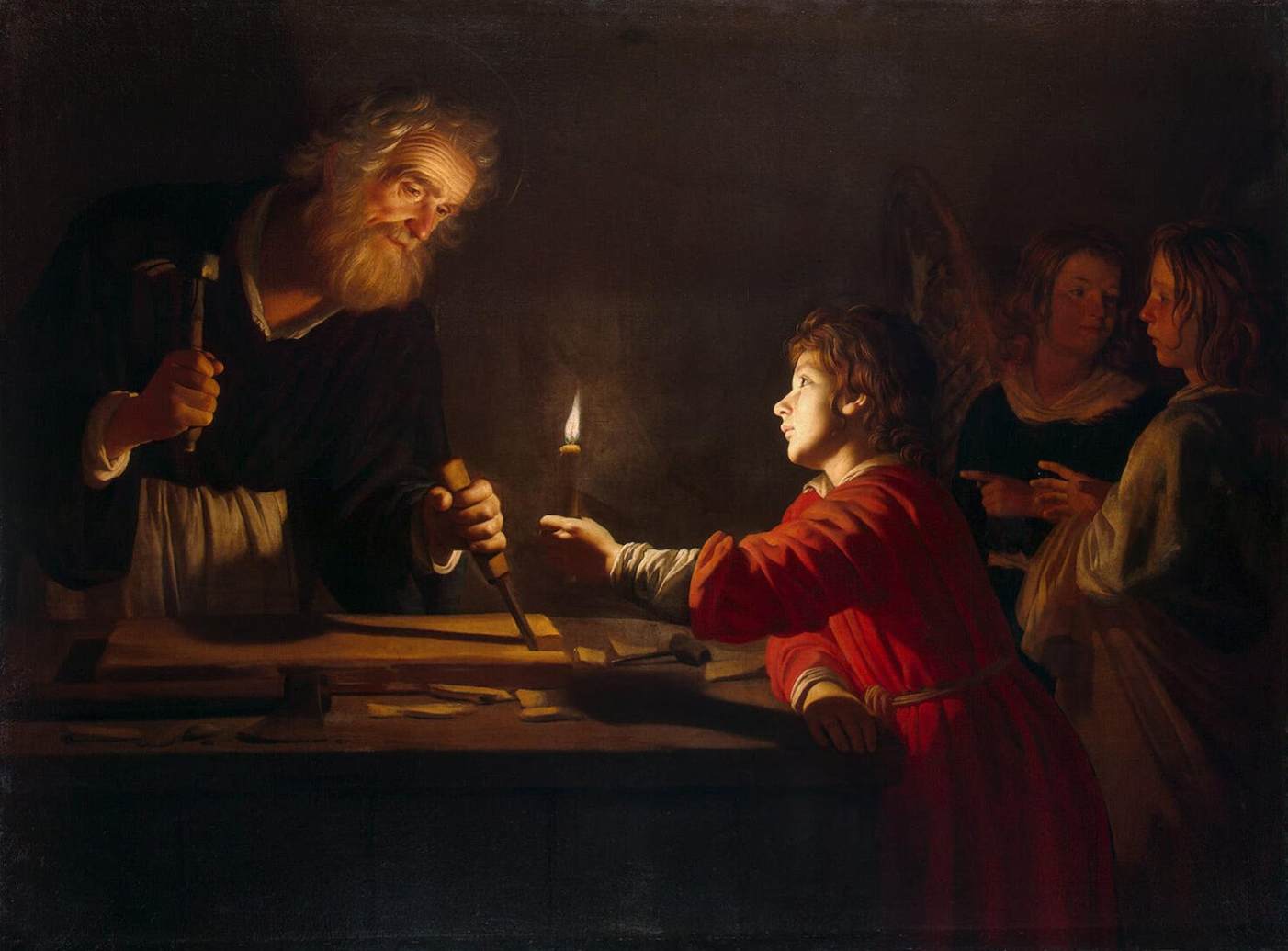
Perhaps because of this quirky upbringing, I always took delight in the fact that Jesus was a carpenter. There is debate about the actual specificity of the term. The Greek word used to describe his profession is tekton, which can be translated to mean an artisan, or a general builder, with some suggesting that Jesus may have been a stone mason, or a labourer. Many commentators have pointed out that trees were in short supply near Nazareth, and that stonework was a far more likely craft. The use of the word carpenter as it pertains to Jesus only occurs twice, once in Matthew (13:55) — “is not this the carpenter’s son?” — and once in Mark (6:3): “Is this not the carpenter?” Both times the question is asked by a crowd to dismiss His viability as a prophet.
Still, it is clear that Jesus was a labourer, and He, together with Joseph, would most likely have been part of building projects in their community, and that He would have been familiar with tools, stone and construction. It also provides context for one of His most quoted lines — “The stone that the builders rejected has become the cornerstone” (Matthew 21:42) — a saying that speaks both of His familiarity with the craft but also addresses the way He Himself was dismissed by His own community.
Whatever the precise definition of Jesus’s trade, what is clear, and what comforted me in early readings, was the value that the Bible places on honest and humble work, on the worth of the labourer, the worker in the field, the ordinary citizen. Indeed, in both the Old and New Testaments, manual labour is defined as noble, and honouring it is akin to celebrating the dignity of the human person. Deuteronomy insists that all workers must be paid fairly (24:14-15); Leviticus warns against defrauding a neighbour and condemns the practice of withholding wages (19:13). This view is repeated in 1 Timothy (5:18): “The labourer deserves to be paid.” Many of Jesus’s own parables centre on workers—the fishermen, the workers in the vineyard, the farmer, and more.
For me, as a young man, and even today, what is powerful about the story of Jesus is His unquestionable care for the dignity of every human being. That one so undeniably majestic should be so uncompromisingly humble is a lesson in grace the likes of which there is no equal, and that is definitely a joyous foundation for all of us to build upon.







