


Pray without ceasing.
— 1 Thessalonians 5:17
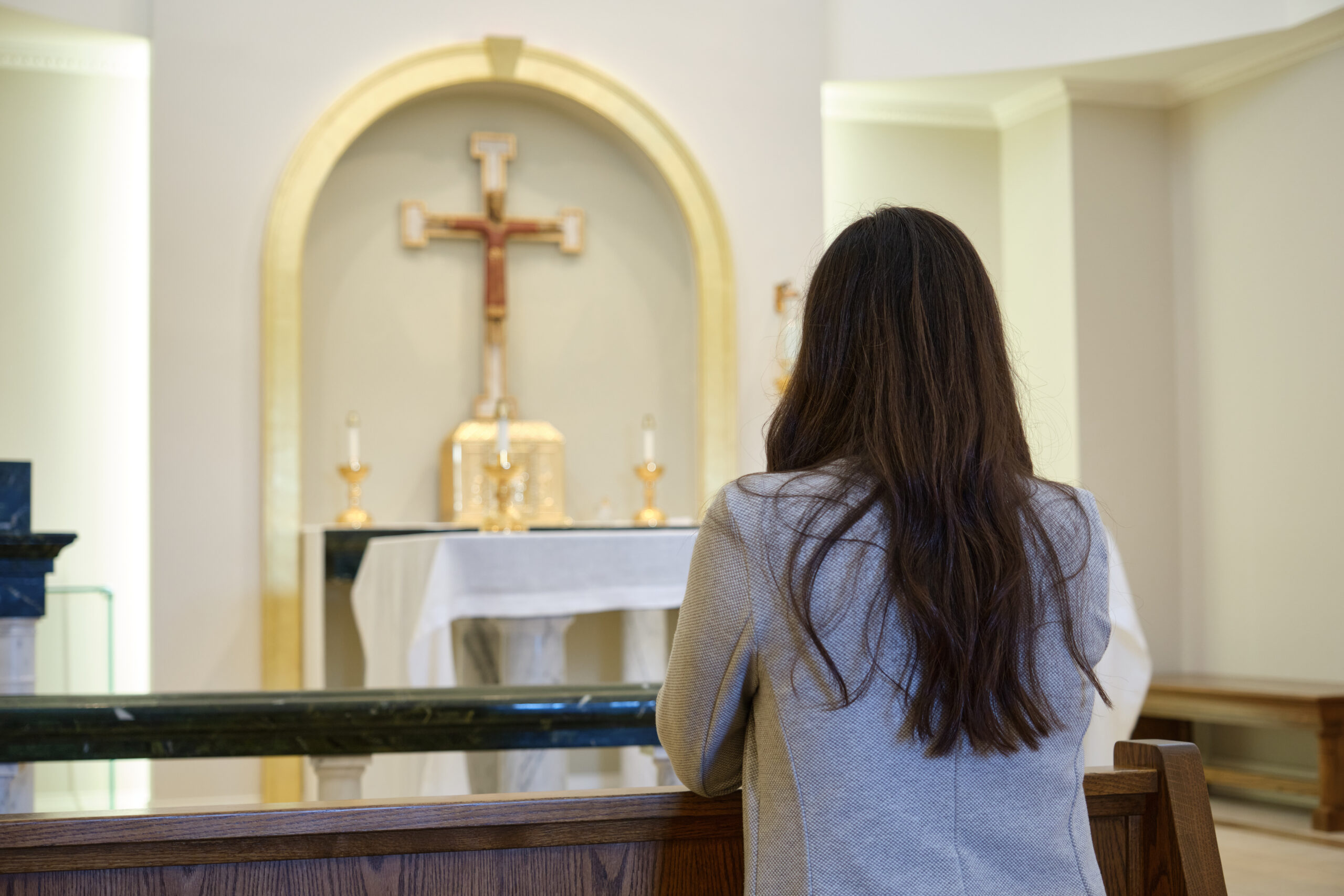
In La Crosse, Wisconsin, there is the tiny Chapel of Maria Angelorum, where, for more than a century, the Franciscan Sisters of Perpetual Adoration have taken uninterrupted shifts, praying in pairs, minute by minute, twenty-four hours a day, rain or shine. Their prayer is perpetual: for world peace, an end to hunger and sickness, social justice, and, of course, blessings for friends and family.
One Sister interviewed in 1978 testified that she had begun participating in the prayer cycle in 1878! When asked whether she was discouraged that so little peace had been generated despite 100 years of prayer, she admitted that it was disheartening. But then she offered what may be one of the great definitions of Christian perseverance: ‘Discouragement is no reason to give up.’ She vowed to continue praying ‘for another hundred years, and another hundred years, till the end of time.’
The practice is not unique. In ancient Christianity, the tradition of laus perennis, or perpetual praise, was followed by monasteries such as the Abbey of Saint Maurice and Bangor Abbey. Monks took turns praying so that the praise of God would never cease. The Moravian Brethren of Herrnhut, Saxony, began a similar prayer watch in 1727 that continued for a century.
The instinct behind all of these traditions is surprisingly contemporary: somebody has to keep watch. But what does this mean for Catholics today?
Prayer is sometimes imagined as something belonging to another age—a nun behind a grille, an elderly woman with a rosary, a monk chanting in Latin while the rest of the world gets on with things. Yet Catholic prayer today is far more varied and alive than that stereotype suggests. There is still the Rosary, the Mass, Eucharistic Adoration, the Divine Office, novenas and traditional devotions. But there is also silent or contemplative prayer, lectio divina, prayer groups, retreats, pilgrimages, music, and informal prayer shared among friends.
There are Catholics who pray in churches and those who pray while commuting. Some have a rosary in their hands; others use a prayer app on their phone. God, apparently, has survived the transition from prayer book to smartphone.
And perhaps that is one of the encouraging things about contemporary Catholic prayer: it does not require us to become someone else before we begin. Prayer can happen in the middle of an ordinary life. It can happen while walking the dog, sitting beside a hospital bed, driving to work, washing dishes or staring at the ceiling at three in the morning. Sometimes prayer is eloquent. Sometimes it is simply, ‘Help me.’ Sometimes it is less sophisticated: ‘Lord, I have absolutely no idea what I am doing.’ That may be prayer enough.
In Canada, prayer is also increasingly being understood as something connected to solidarity, healing and reconciliation. The Canadian Conference of Catholic Bishops has marked December 12 as a National Day of Prayer in Solidarity with Indigenous Peoples, bringing together prayer, remembrance, reconciliation and a commitment to walking together. The Church in Canada has also developed prayers and resources connected with healing and reconciliation, including prayers arising from the encounter between Indigenous and Catholic communities.
This is an important development because Christian prayer cannot simply be an escape from the world. Prayer is not an excuse to close our eyes to suffering; sometimes it is what enables us to open our eyes more fully to it.
In 2002, one national Indigenous prayer initiative invited Catholics across Canada to participate in a continuous prayer vigil, with different regions taking responsibility at different times of the day. The invitation was wonderfully expansive: people could pray through Scripture, Eucharist, the Rosary, meditation, a prayer circle or singing. In other words, there was no single approved Canadian prayer posture. That may be one of the great gifts of Catholic prayer. It is both ancient and adaptable.
We might even suggest that prayer is profoundly countercultural. We live in a world obsessed with productivity. We measure almost everything: outcomes, efficiencies, engagement, growth, impact. Prayer stubbornly refuses to fit the spreadsheet. What is the measurable outcome of an hour spent in silence? Perhaps the answer is that the person praying is changed. Perhaps that is why the Franciscan Sisters’ story matters so much. Their prayer did not magically eliminate war or hunger. They knew that. They prayed anyway.
Prayer is not a guarantee that everything will turn out the way we want. It is an act of trust that our lives—and the world—are held within something larger than ourselves. It teaches us to hope without pretending that suffering does not exist. And sometimes prayer is simply the decision not to give up. The Sister in La Crosse understood that. After a hundred years without the peace she had prayed for, she did not conclude that prayer had failed. She concluded that the world still needed prayer.
Perhaps we need that kind of faith today: not a faith that expects instant answers, but one willing to keep watch.
For another hundred years.
And another hundred after that.
Until the end of time.
(Featured image: Nicholas Elbers photo)







