


18th Sunday of Ordinary Time, Year C
First Reading: Ecc 1:2, 2:21-23
Second Reading: Col 3:1-5, 9-11
Gospel Reading: Lk 12:13-21
This world offers us no security. We will all die, and we do not know when. None of our worldly goods will go with us. As this Sunday’s first reading warns, we who have “toiled with wisdom and knowledge and skill must leave all to be enjoyed by another who did not toil for it.”
Yet the temptation to place our security in “an abundance of possessions” is perennial.
“I will pull down my grain bins and build larger ones,” the rich man says in Jesus’ parable. “All my grain and my goods will go there. Then I will say to myself: You have blessings in reserve for years to come. Relax!”
But God says, “You fool! This very night your life shall be required of you. To whom will all this piled-up wealth of yours go?”
We must “put to death” our greed, “which is idolatry,” St. Paul says in the second reading. But what, then, should we think of as we go about our work? The Penny Catechism gives the answer: “death, judgment, hell, and heaven, and hell” – which are the “four last things to be ever remembered.”
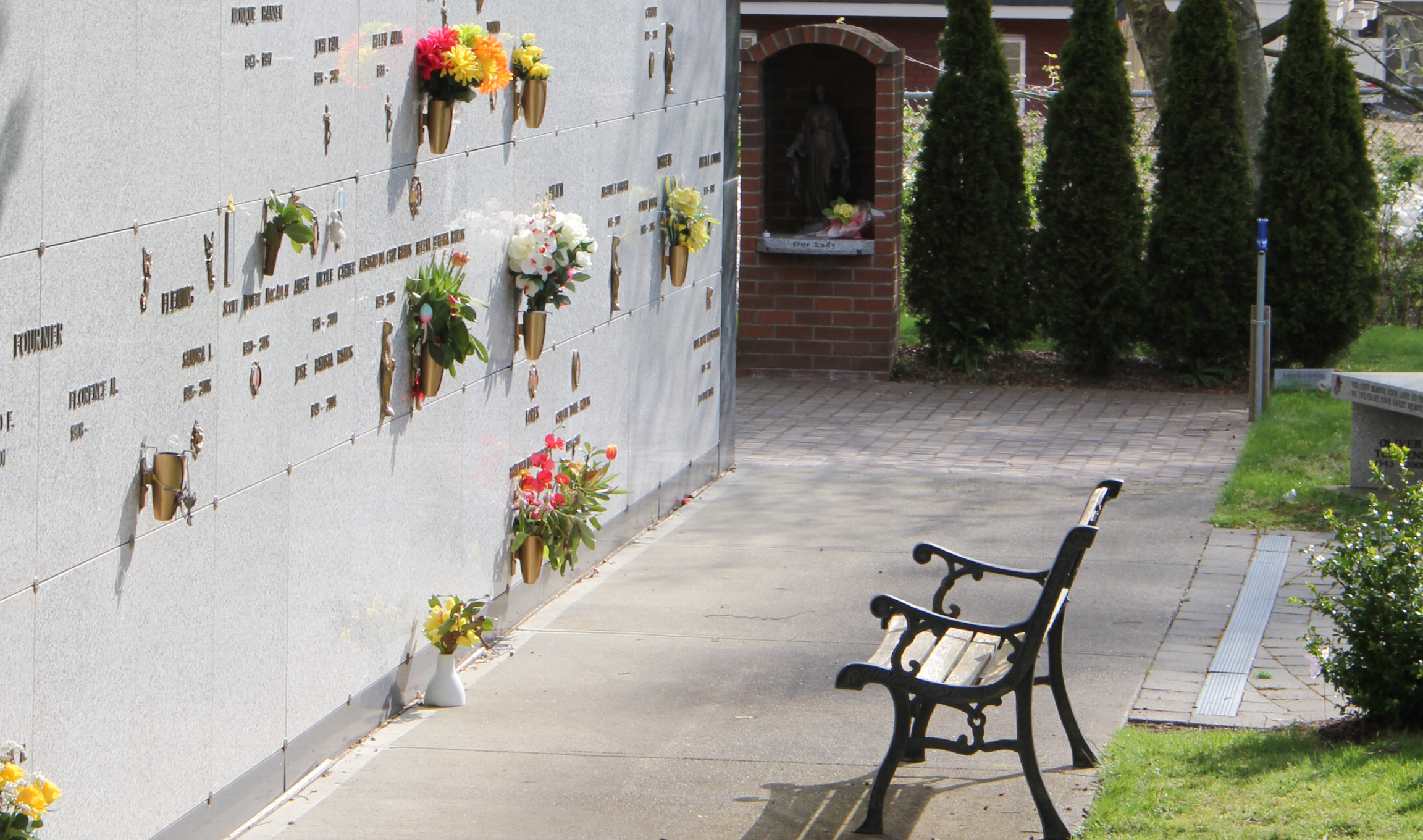
In a sequel to the Canadian novel Anne of Green Gables, Anne’s schoolfellow Ruby Gillis is dying. Everyone knows it, but Ruby will not admit it – until one night she remarks, shuddering, how ghostly the graveyard looks by moonlight.
“Anne,” she says, “it won’t be long now before I’ll be lying over there.”
Anne is speechless.
“Heaven must be very beautiful, of course – the Bible says so,” Ruby continues, “but, Anne, it won’t be what I’ve been used to.”
Ruby’s gay, frivolous life has done nothing to make heaven seem to her anything but alien, unreal, and undesirable, Anne realizes. She has laid up her treasures on earth, forgetting the eternal things that make death a mere passing from twilight to unclouded day. Ruby has ignored eternity, like Jesus’ rich man.
Let us not make the same mistake. Let us think, now, and often, about death, judgment, hell, and heaven.
Death is not what God originally planned for us. It is the intrinsic consequence of Adam and Eve’s fall, the inevitable punishment for their rebellion.
That is why tears spring to our eyes when we view a dead body, even one nicely laid out in a funeral home. We think of what it was: living, breathing, loving. Now it is a cold, still, expressionless corpse, about to be buried or burned.
But death is also a blessing: our opportunity to offer God the “free submission” that Adam and Eve refused by their disobedience, says the Catechism of the Catholic Church. It is precisely what Christ offered his Father by his obedience when he accepted death on the cross. In fact, Christ’s obedience “transformed the curse of death into a blessing.”
Death, then, is not only a punishment for our fallen condition: it is also the medicine. Welcomed with “humility and self-renunciation,” death, our enemy, “becomes our servant,” undoing the rebellion that brought death as a consequence and merited death as a punishment in the first place. “God did not institute death at first, but gave it as a remedy,” St. Ambrose said.
And therefore we should welcome death as a friend. It is not wrong or psychologically unhealthy even to desire death. Various saints have said so, as the Catechism points out: “I long to be freed from this life and to be with Christ”; “I want to see God and in order to see him, I must die”; “I am not dying: I am entering life.”
To give us this security, the Church administers the sacrament of the sick. Then she speaks with gentle assurance: “Go forth, faithful Christian! … May holy Mary, the angels, and all the saints come to meet you as you go forth from this life … May you see your Redeemer face to face.”







