

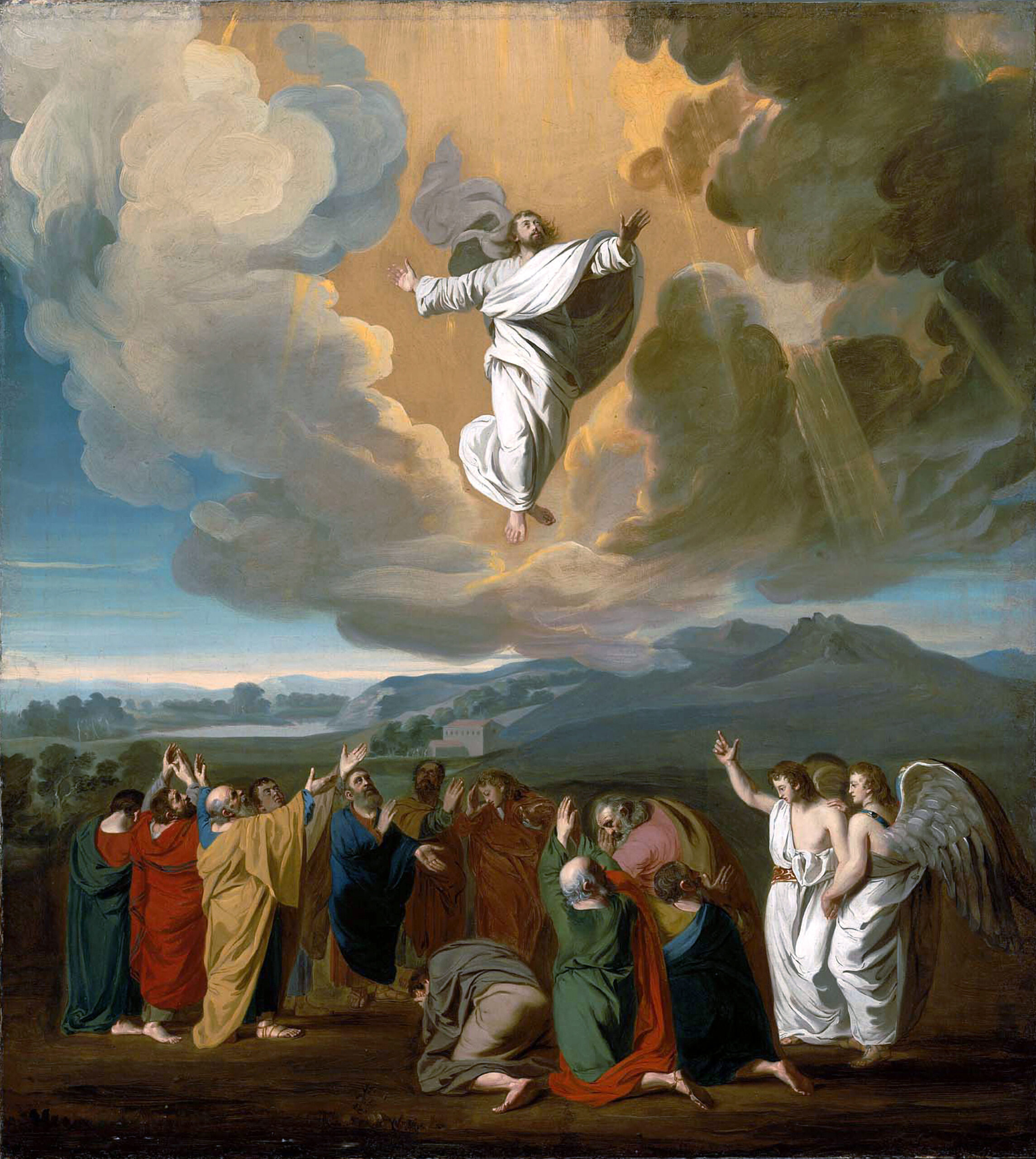

Ascension
of the Lord, Year B
First
Reading: Acts
1:1-11
Second
Reading: Eph
4:1-13
Gospel
Reading: Mk
16:15-20
This Sunday the Church celebrates the Ascension of the Lord – the fact that 40 days after his resurrection, Jesus ascended into heaven, thus completing the Paschal Mystery: his death, Resurrection, and Ascension.
The Paschal Mystery was foreshadowed by the Jewish Passover, or Pasch, which took place in Egypt, where the Jews were slaves, about 1300 B.C. God commanded each Jewish household to sacrifice an unblemished lamb or kid, eat it, and sprinkle its blood on the doorpost. Then he commanded an angel to go through Egypt, killing the oldest male in each family, but “passing over” the Jewish homes without harming them. As a result, the Egyptians released the Jews.
Christians have always seen the first Passover as a foreshadowing of what happened to Christ, whom John the Baptist called the “Lamb of God.” Christ was sacrificed for us like the paschal lamb, and his blood frees us from slavery to sin and death as the blood of the paschal lamb saved the Israelites.
“Consider what sacrifice is,” Frank Sheed says in his book To Know Jesus Christ. In every sacrifice of the Old Testament, the victim (a lamb or bull) was slain “that it might be offered to God, and offered to God that it might be accepted by him. If he did not accept, slaying and offering had accomplished nothing.”
Now in most of the Old Testament sacrifices, only slaying and offering were visible, Sheed notes; acceptance was not. However, occasionally God did make his acceptance known. For example, we read that God “looked with favour on Abel and his offering, but on Cain and his offering he did not.” We also read that “fire came forth from the Lord’s presence” and consumed the sacrifices of Moses, Aaron, and Elijah. This fire, Sheed points out, made the victim holy, not only making it God’s, but also showing it to be acceptable to God.
In the one perfect sacrifice of our redemption, which all others only prefigured or foreshadowed, God the Father showed his acceptance: this time in reality, not just in symbol.
“With the Ascension, God showed that he had accepted the Victim,” Sheed says. “In the Old Testament, there had been no question of acceptance. What could God do with a roasted bull or a slaughtered goat? The animals had been slain as a way of giving up our own use of them, a way of showing that they, like all created things, belonged to God.”
On the cross, Christ the Priest sacrificed Christ the Victim to his Father. With this sacrifice, a real offering, not a symbolic offering, was made for the first time. With the Ascension, the Father showed that he accepted the sacrifice.
Now, “at the right hand of the Father,” Christ lives “to make intercession for us” with his Father. In the Book of Revelation, St. John saw a Lamb standing “looking like one slain”; that is, with the marks of his sacrifice still on him. Thus Christ continuously offers himself, once slain, now risen, to his Father on our behalf.
“In the Mass, this breaks through to the altars of earth,” Sheed says. “The same Christ, through the priest he has empowered, offers the same Self, once slain, now truly present on the altar, to the same God, for the redemption of all. And in this action, all the members of his Body are privileged to have their part.” Accordingly, in the Mass, we pray “that our sacrifice may be acceptable to God, the almighty Father.”
As a parishioner once said, “It’s enough to make you want to go to Mass every day!”
We rejoice this Sunday because Christ has completed his sacrifice: the sacrifice has been made, offered, and now accepted. We express our feelings in the words of the Psalm: “God goes up with shouts of joy; the Lord goes up with trumpet blast. Sing praise for God, sing praise.”







