
Sts. Peter and Paul
First Reading: Acts 12:1–11
Second Reading: 2 Tm 4:6–8, 17–18
Gospel Reading: Mt 16:13–19
This Sunday, the 44th anniversary of my priestly ordination, it seems appropriate to consider the sacraments: the “holy mysteries.”
People who like Latin in the Mass often explain that “it adds to the mystery.” Unfortunately, they confuse the word’s two meanings.
In Greek, a sacrament was called a mysterion (plural, mysteria): “something closed” or “secret.” Originally, for example, only the baptized could attend Mass; even catechumens were dismissed before the Offertory.
Mysterion was translated into Latin as both mysterium (“mystery”), indicating the hidden spiritual reality, and sacramentum (“sacrament”), indicating its visible sign.
In ordinary English, a “mystery” is something “difficult or impossible to understand, explain, or identify”; or “deliberately enigmatic,” having “an atmosphere of strangeness or secrecy”—like Gnosticism, a “mystery cult.”
However, in Christian language, “mystery” transcends that meaning. The holy mysteries are not comprehensible, but they are intelligible.
Sacraments are defined not as “mysteries,” but as “efficacious signs of grace, instituted by Christ and entrusted to the Church, by which divine life is dispensed to us”; or “perceptible signs (words and actions) accessible to our human nature,” which, “by the action of Christ and the power of the Holy Spirit,” make present “efficaciously the grace that they signify.”
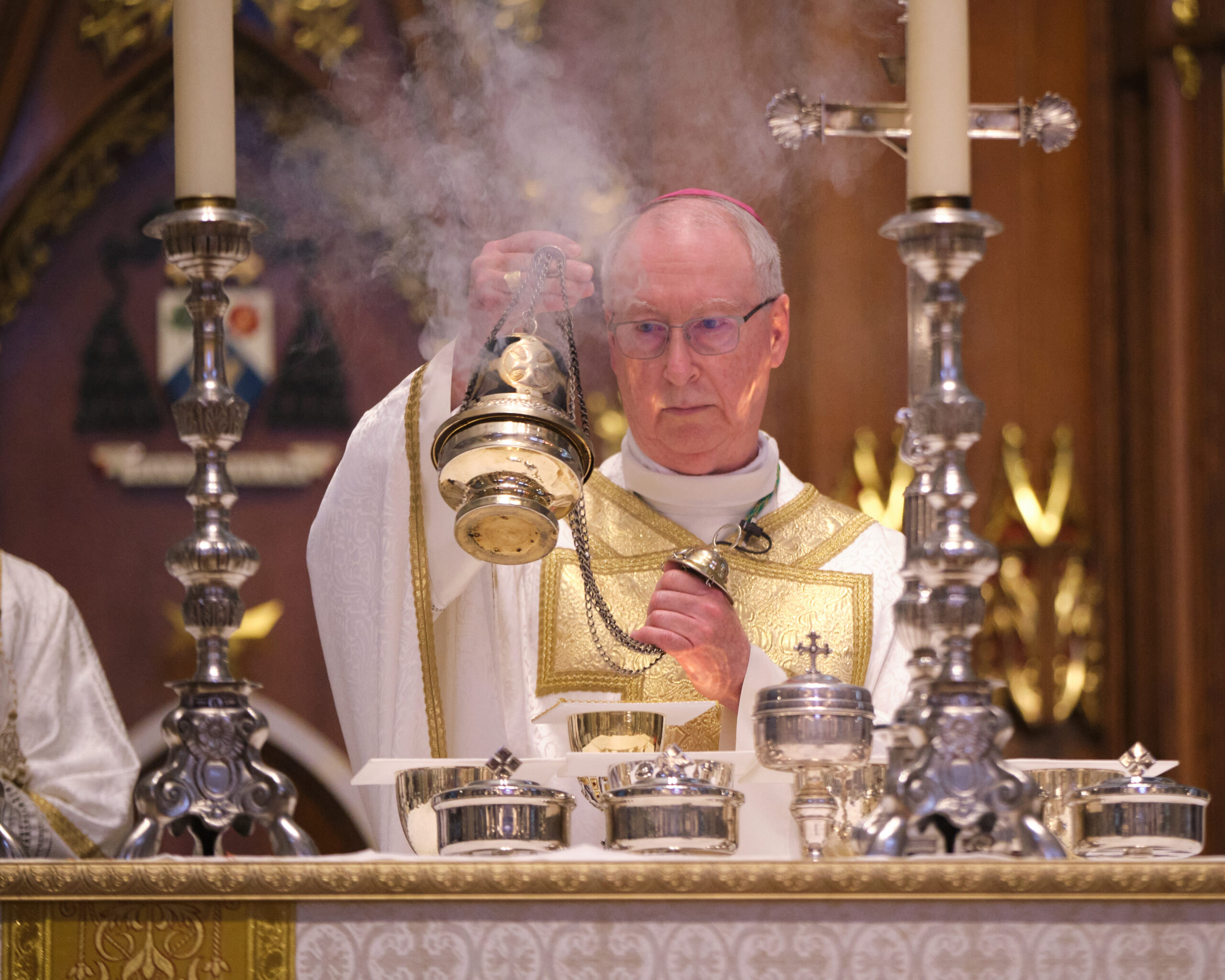
These “signs” are not mysterious “spiritual abstractions,” but “the exact opposite,” Pope Francis noted: “bread, wine, oil, water, fragrances, fire, ashes, rock, fabrics, colours, body, words, sounds, silences, gestures, space, movement, action, order, time, light.”
In instituting the Sacraments of the Eucharist and Holy Orders, Jesus was not “mysterious.” Speaking aloud in his mother tongue, he took bread and wine and said, “This is my body,” “This is my blood,” “Do this as an anamnesis of me.” Already, he had said plainly, “Chew on my body”; “drink my blood.”
At first, the Church celebrated Mass in Hebrew or Aramaic, the language of the Jews. Then, to accommodate the Gentiles, she started using Greek, because it was the most common language, spoken even by Jews. Gradually, in the third and fourth centuries, she switched to Latin, as it became the language of most Christians. Like Christ, she wanted to be understandable, not mysterious.
Over a few centuries, Latin ceased to be a spoken language. In continuity with the Church’s tradition, therefore, Vatican II recommended “the use of the mother tongue” as “often” being “of considerable help” and “great advantage” to the people.
I (and some other priests) won’t say Mass in Latin because for most people, Latin—even when translated—obscures the Mass’ nature, deliberately making it mysterious. Even now, 60 years after Vatican II, few Catholics know why Jesus transubstantiated bread and wine separately, or why the Church speaks of “Host,” “sacrifice,” Pasch, and anamnesis.
The more we understand Mass, the greater our amazement that everyday words, actions, and things bring about supernatural realities. Here is Christian mystery: not the mystification of a language we do not understand, but the power of a sacramental sign, which accomplishes or even becomes what it signifies.
Our resulting “astonishment or wonder” is not “some sort of being overcome in the face of an obscure reality or a mysterious rite,” Pope Francis said. “It is, on the contrary, marvelling at the fact that the salvific plan of God has been revealed in the Paschal deed of Jesus, and that the power of this Paschal deed continues to reach us in the celebration of the ‘mysteries,’ or the sacraments.” If Vatican II’s reform “has eliminated that vague ‘sense of mystery,’ then, rather than a cause for objection, it is to its credit.”
“A believer desires to know better the one in whom he has put his faith and to understand better what he has revealed; a more penetrating knowledge will in turn call forth a greater faith.” That is why I teach The Catholic Faith in Plain English.
“I believe, in order to understand,” St. Augustine said; “and I understand, the better to believe.”
Father Hawkswell has now finished teaching The Catholic Faith in Plain English for the summer. The whole course will remain available in written form and YouTube form at beholdvancouver.org/catholic-faith-course until it starts again, with new insights, on Sept. 7.
Your voice matters! Join the conversation by submitting a Letter to the Editor here.