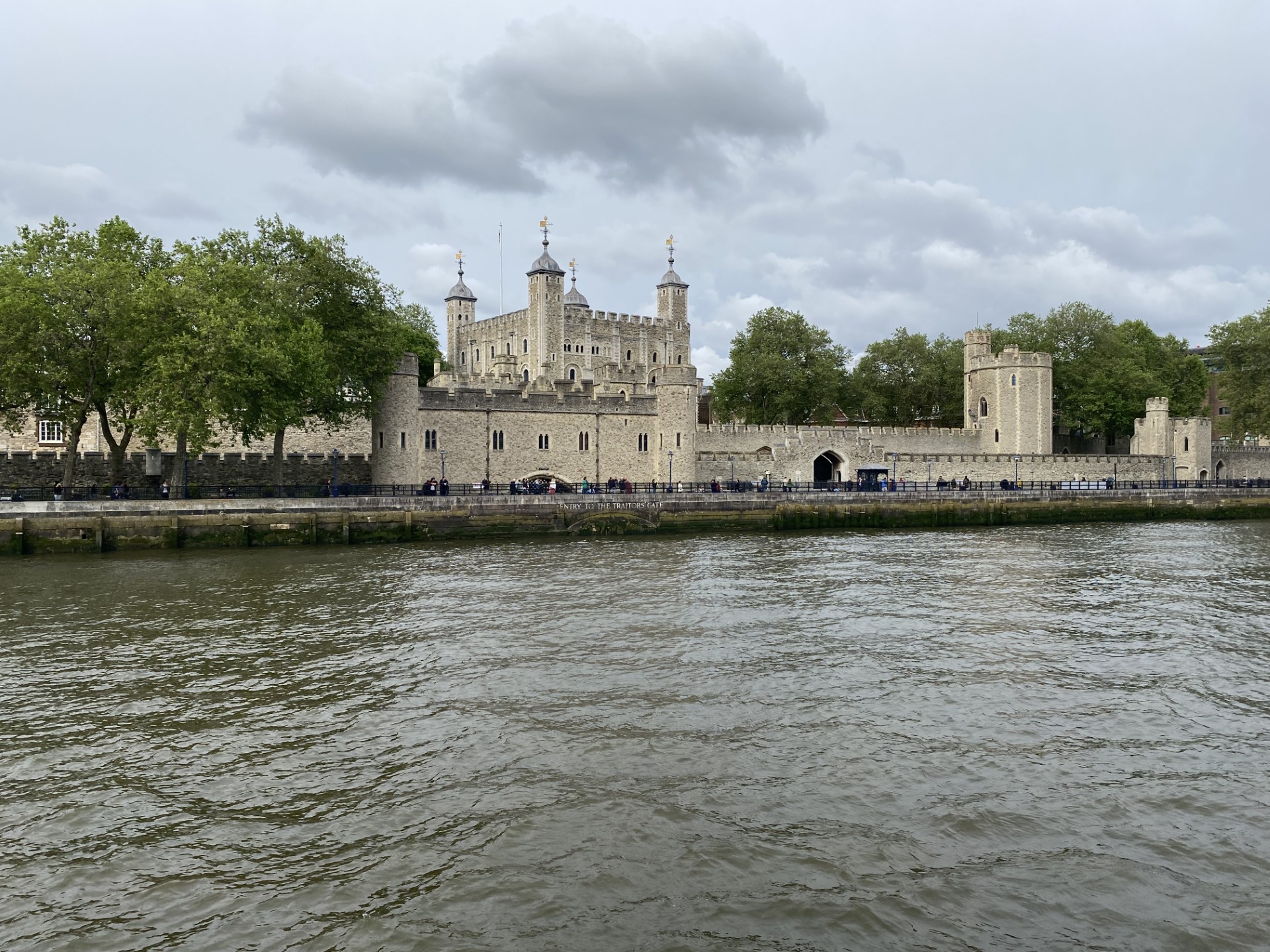

The writing was literally on the wall. Etched into the thick, concrete walls of the Tower of London were names of prisoners, Latin prayers, dates, and symbols, some going back almost a millennium. The cold, grey rooms have obviously been the site of a lot of soul-searching, having been home to many criminals, traitors, and martyrs over the centuries.
Standing in one of those rooms today, looking out through the narrow cruciform window, letting in only the slightest daylight, one can easily imagine St. Thomas More and St. John Fisher contemplating not only the public execution that awaited them on nearby Tower Hill, but the deep faith that got them there.
I recently had the amazing opportunity of traveling to England and standing in the spot where these martyrs, and many others, had their lives cut short by the executioner’s axe. I can’t think of any saints better suited to our time than St. Thomas More and St. John Fisher, whose feast days are celebrated June 22. Both men, one a layman and the other a bishop, lost their lives because they wouldn’t acquiesce to the pressure of the state to betray their faith.
For those who don’t know the story, Thomas More was a husband, father, lawyer, author, and Lord Chancellor in early 16th century London. He enjoyed the favour and friendship of King Henry VIII until the monarch defied the Pope and divorced his first wife, Queen Catherine of Aragon, to marry Anne Boleyn. When Thomas refused to sign the required oath affirming Henry as supreme head of the Church of England, he was taken to the Tower of London. He was imprisoned there until July 6, 1535, when he was beheaded. It was a “less cruel” death than usual and seen as a sign of favour from the king.
St. John Fisher, Bishop of Rochester, was not so “fortunate” as he was hung, drawn, and quartered on Tower Hill on June 22, 1535. Bishop Fisher was one of the most respected prelates in all of Europe, known especially for his preaching ability and his many theological writings. Aged and infirm at the time of his imprisonment, he remained steadfast to the end and highly criticized his fellow bishops who abandoned their Catholic faith and swore allegiance to the king. He was literally the last bishop standing who dared not side with the king, knowing well the consequences.
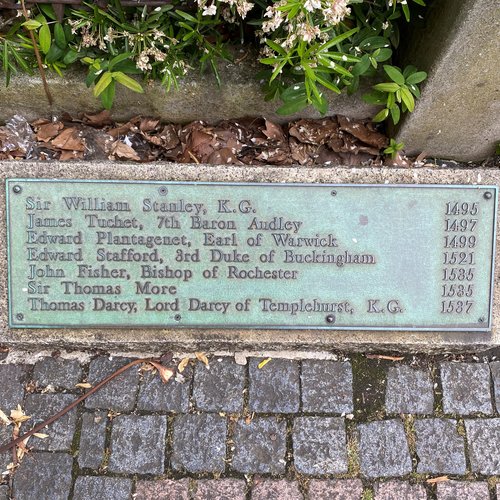
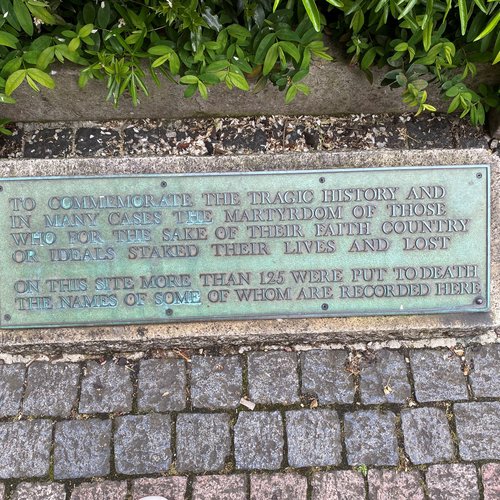
I was actually a little surprised when our guide at the Tower of London spoke so respectfully about Bishop Fisher and St. Thomas More, seeing as they and so many other English martyrs are considered traitors to the monarchy and to the Church of England. Our guide, one of the famous Tower Beefeaters (as the ceremonial guards are popularly called), referred to More’s great bravery in standing up for his beliefs in the face of certain death. She also spoke admiringly of his fortitude in the face of persistent psychological torture while in prison.
I was also surprised at my own reaction to walking in the footsteps of these martyrs. I had approached the Tower as a history buff, and though I’ve known these saints’ stories for decades, I wasn’t expecting to experience the tour on a spiritual level. I wasn’t prepared for the power of their story on their own turf. I’m not sure I ever realized the impact of their example until hearing the Beefeater talk about their courage, almost 500 years after the fact, while pointing up to the tower containing the prison cells that held these men for the last several months of their lives. Suddenly their suffering became more tangible than a story or historical fact learned from a book.
I think the other element that made the sacrifices of these men really take root in my heart is the fact we are currently living in an age when our faith cries out for public witness, perhaps even for martyrdom. It may sound macabre, but without the shedding of blood, faith does not grow – just look at a crucifix. It is well known that the early Church was made strong and fruitful because of so many martyrs willing to die for Christ, who showed them what it was to lay down one’s life for a friend.
Where are our Thomas Mores and John Fishers today? We may not have a Tower Hill with daily public executions but it’s no secret that souls are under constant attack, not unlike the days of Henry VIII. I think Sts. Thomas More and John Fisher would be among the first to point out death to the soul is much worse than death to the body. How far are we willing to go to protect our souls, the souls of our children, and the souls of our neighbours? Are we willing to go to the Tower, in whatever form that takes today?
Lazzuri writes from her home in Nova Scotia, where she lives with her husband, six children, and her mom. She can be reached at clarelazzuri@gmail.com.
Your voice matters! Join the conversation by submitting a Letter to the Editor here.