

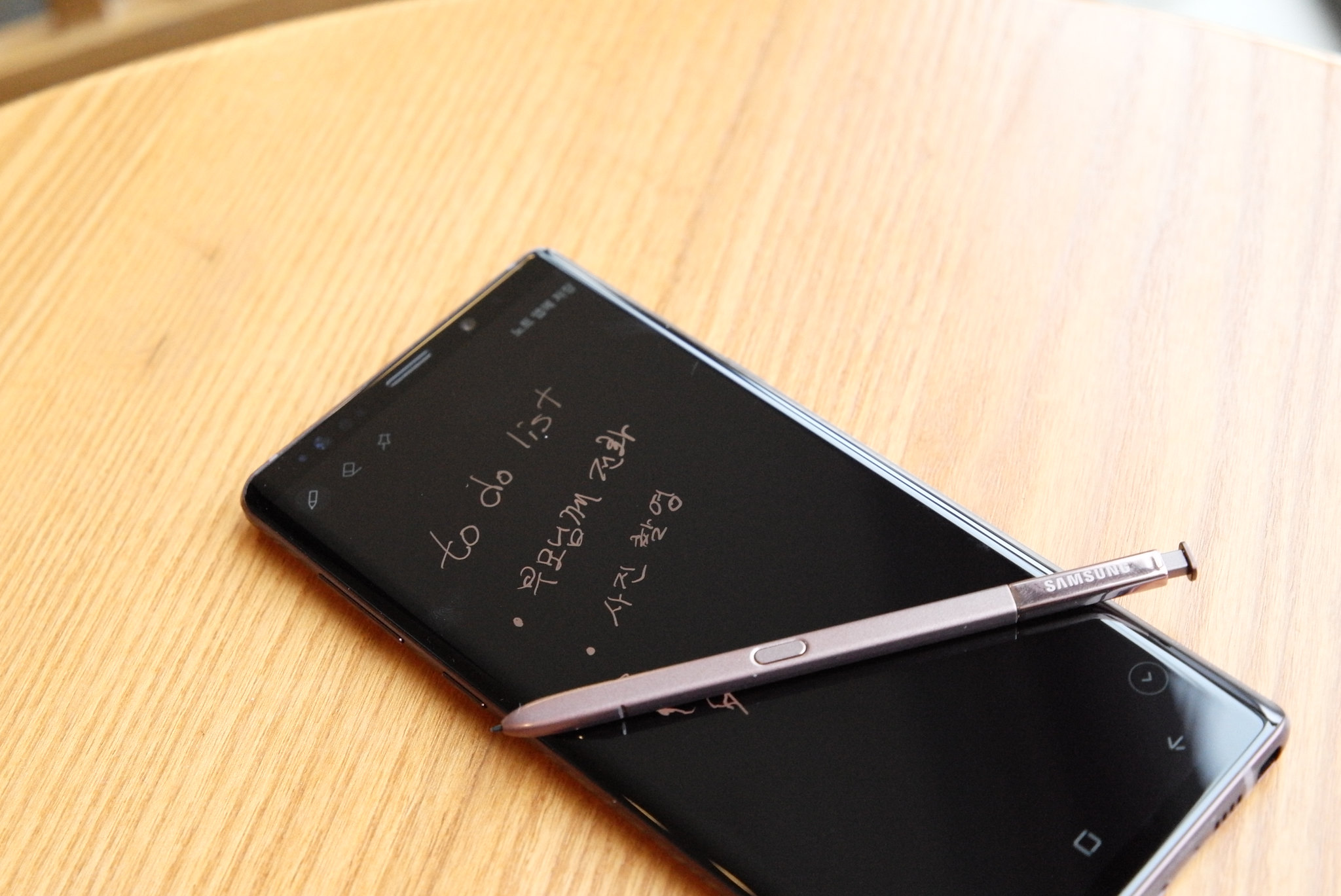

It looks as if 2022 is the year my Android phone goes EOL – end of life. Although I’ve only had this particular phone for a year, in a sense I’ve had it since December 2017.
The phone I currently have is a replacement for the one I lost a year ago when a number of vehicles drove over it following an accidental loss (see my column from October 2021).
Through Samsung’s Note line of phones I became hooked on the S-Pen that Samsung became particularly known for. When my Note 8 was destroyed I wanted to replace it with the same phone but it simply wasn’t available. I settled on a used Note 9, with basically the same form factor (screen size, look, and feel), and, most crucially, that S-Pen.
Fast forward a year and although Samsung hasn’t made a formal announcement, it looks like 2022 will indeed be the final year for the Note 9 to receive security updates. In the mobile phone industry, next to actual operating system version updates, security updates are vitally important. Without them, each passing day raises the ante for some sort of malware or attack.
My Note 9 is already one operating system version behind the latest release but the phone remains every bit the powerhouse it was as a flagship phone of yesteryear, released in August 2018 and widely regarded as the best Android phone of that year. My intention was to hold onto it as a phone as long as those security updates keep coming.
Unfortunately, the end of the line for the Note branding came with the release of the Note 20 and Note 20 Ultra in late 2020. By then the Note units were coming in at almost twice the cost of that 2017 Note 8, and four times the cost of the refurbished Note 9 that replaced it.
Samsung has however continued the S-Pen technology and deployed it to the Galaxy S-line of handsets, notably the Galaxy S21 and Galaxy S22 Ultra. Samsung has also put the S-Pen into some of its Z-fold models.
At least mobiles are beginning to last longer, and be used far longer, than were flagship phones say half a decade ago. Mobile producers such as Apple and Samsung had effectively convinced the general public that phones should be replaced each year. At $2k or more for some handsets, that’s just a bit rich.
That sort of thinking about a new handset each year is fading fast, mostly because today’s phones are so good that any annual improvements or changes are mostly evolutionary rather than revolutionary.
It’s time the phone manufacturers adopted the thinking that has evolved over at Google for its Chromebooks platform. When the browser-based computers were introduced in 2012 they had a stated EOL span of three years. With many of the current crop of Chromebooks, that EOL duration has been pushed to as much as eight years – an amazing increase in effective longevity when you think about it.
There is one wrinkle to keeping older mobiles running. In the United States, at least, some of the big service providers are planning to switch off their 3G networks. In the process, some handsets may stop working. Not only handsets. Some cars have on-board services that depend on 3G communications. The same is true for some home security services. But we’re talking about devices that are much older than typical consumer mobile handsets.
Today’s consumer electronics user is generally much more conscious of the lifespan of devices than was a user of say a decade ago. Horror stories of electronics recycling abuses in distant lands may have begun to resonate here. Discarding a flagship phone, or any phone, within a year of purchase, for the sake of some incremental improvement, is simply not appropriate today. Not that it ever was appropriate, but many of us fell for the marketing spiel that newer is better.
******
Starlink update
Elon Musk’s Starlink service makes no sense in a city environment. Elsewhere though it may be the only game in town. Parent company SpaceX announced recently that some 400,000 customers have signed up for its satellite internet service.
What may appeal to city dwellers though is an RV license for Starlink. Previously, Starlink licenses were tied to a physical address and the service often stopped working a few hundred metres from that location. This new licensing may appeal to you if you are a recreational vehicle user – notwithstanding the price of gasoline.
Follow me on Facebook (facebook.com/PeterVogelCA), on Twitter (@PeterVogel). pvogel@outlook.com







