

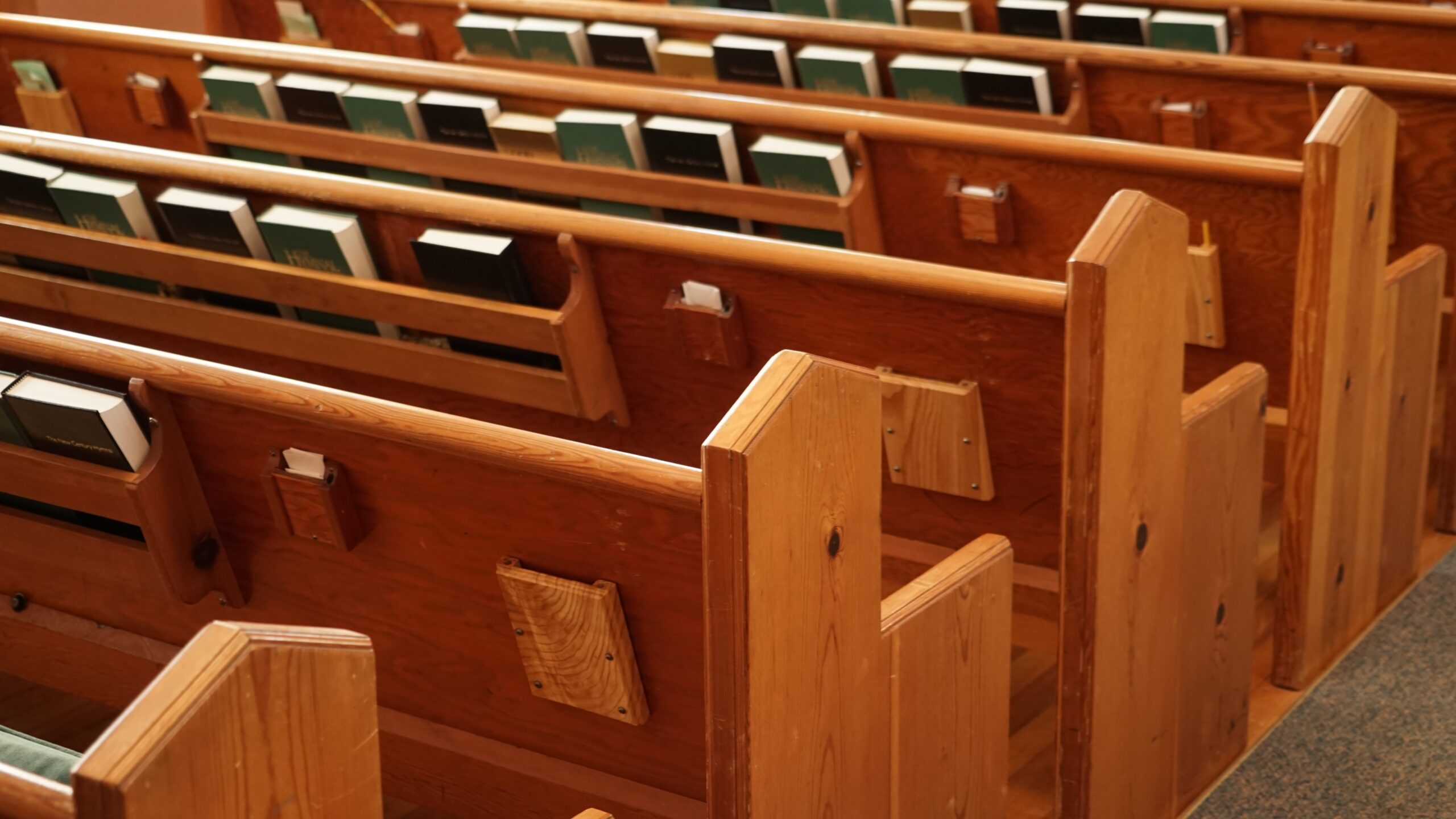

We can attend Mass again, and most headlines are portraying it as a wondrous thing that we’re allowed to publicly worship in a church again … in limited numbers.
Certainly we’re grateful to God, as Archbishop Miller put it, that our many months of prayer for a return to Mass have been graciously answered.
Putting a negative cast on this week’s announcement, however, was the less-than-abounding rollout of details, starting with a mention Tuesday at Dr. Bonnie Henry’s press conference and concluding two days later just in time for a COVID update on Thursday.
It’s not hard to see that B.C.’s houses of worship are not as high a priority as, say, restaurants, which were already reopened and serving meals before the government workday had even started Tuesday.
Thursday afternoon, the new variance allowing 50 people at indoor worship had still not appeared on the government’s website, with weekend Masses just over 48 hours away. We were more fortunate than our Jewish neighbours, whose Shabbat was just over 24 hours away, starting at sunset Friday.
Of course it comes as no surprise that we’re not top of mind for government. If you’ve been reading Brett Powell’s series on the end of Christendom which concludes this week, you already know it’s time to stop thinking like these are the days of Archbishop Fulton Sheen on TV, Sunday store closings, and Major League Baseball avoiding games on Good Friday.
Powell says it’s time for the Church – and of course that means us – to accept we have left a time of Christendom where society reinforced Christian ideals – think Bing Crosby and The Bells of St. Mary’s – and entered a time of Apostolic mission – think the apostles setting out to evangelize ancient Rome.
“The worldview today no longer elevates God and his Church as the guiding force needed to overcome what is plaguing humanity,” Powell says. As our culture pushes society further from the Church’s worldview, it’s replacing it with a new outlook that “the worst enemy approaching against humanity is not sin but ignorance.”
Powell outlines major changes that are necessary for us to move toward Apostolic Mission, including prophetic listening, apostolic preaching, and focussing more on being timeless than relevant.
Powell has an intriguing thought that resonated with me as soon as I saw it. We should have a funeral celebration for Christendom.
It’s quite an idea. Back when we were allowed to attend funerals, we celebrated individuals’ lives with gratitude. We said farewell to them on this side of the living. Then, with closure, we could move forward with life.
Powell believes a funeral event, celebrating all the blessings of Christendom and marking this time of transition, “could be a watershed for the Church, an occasion to mark the shift from Christendom mode to Apostolic mission.”
Similarly, Father Raymond J. de Souza was less than his normally sanguine self this week when he wrote about B.C.’s church restrictions. “From the seven-months-and-counting abolition of religious liberty in British Columbia, to severe restrictions on worship elsewhere, Christian disciples may well feel, as their ancestors did at the first Pentecost, huddled together, fearful of the authorities.”
Father de Souza notes that many Anglican parishes in Canada have been shuttered for the entire pandemic, “even more than was required by public health restrictions.” Will the long-term effects of the pandemic accelerate the Anglicans’ already-precipitous decline, he wonders.
The Catholic Church is in a somewhat better position, bolstered as it is by high levels of Catholic immigration. But absorption is not evangelization, and a church that relies on immigrants bringing their Catholicism from other countries can hardly be called apostolic.
There are many indications that when churches are fully reopened, attendance won’t be anywhere near pre-pandemic numbers. That’s a sombre thought, but Catholics know as well as anyone that a funeral doesn’t have to be a gloomy or disheartening affair. As Powell says, “There is much to celebrate in terms of the impact Christianity made during the time of Christendom.”
But that time is gone. “The Church is no longer society’s trusted lighthouse. It is unhealthy to keep living as if it were.”







