


There is perhaps no more salutary comment on the impact of COVID on our lives than the 93rd Academy Awards.
Coming as it did after a year in which it was virtually impossible to go to a movie theatre, when for most people the only way to see the latest releases was by subscribing to several streaming services, and when many major movie releases were indefinitely postponed, there seemed to be little interest in who got what Oscar.
In fact, many were probably unaware of which films were nominated. Indeed, some films in the running would have been unlikely to receive nominations or much attention in a “normal” year.
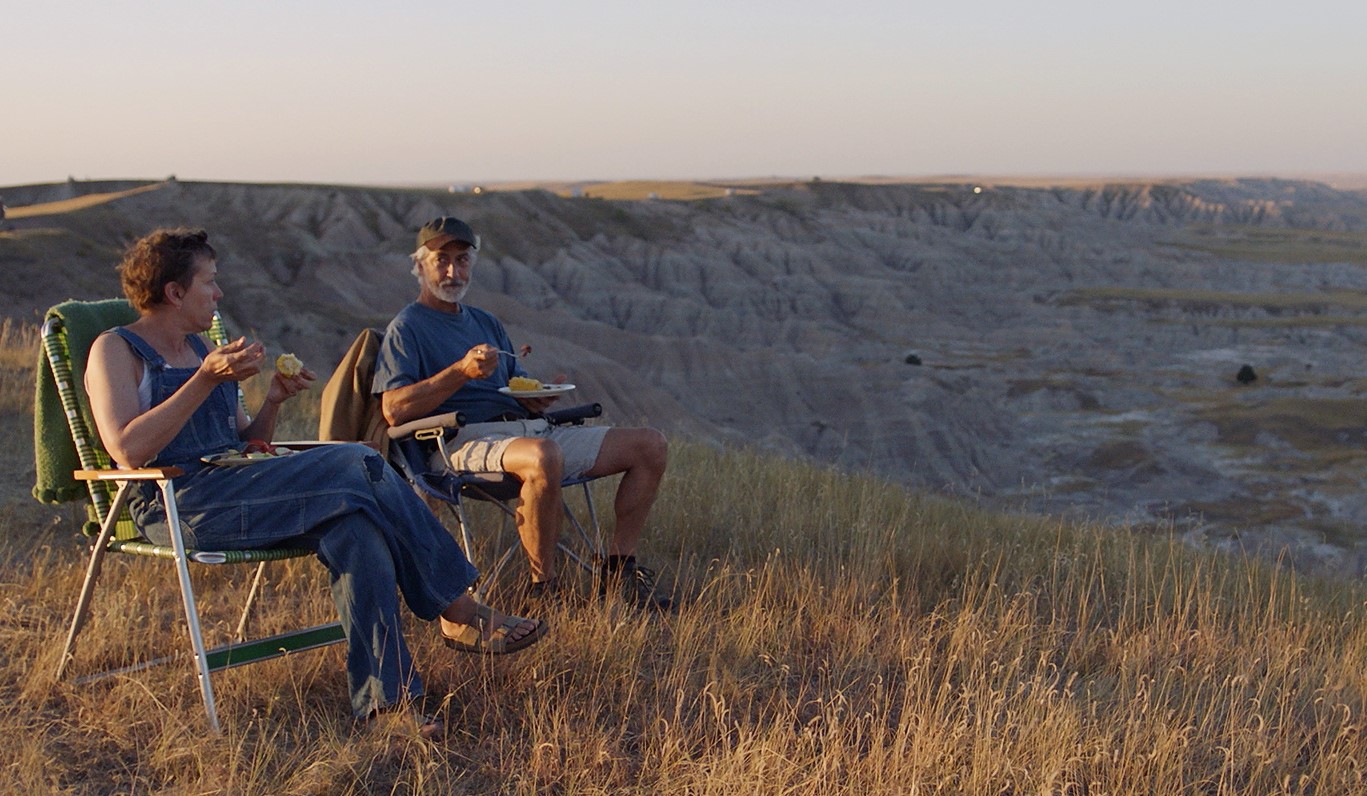
The film that received the best picture award is a case in point. Nomadland is a film which has a particular impact largely because it has a certain relevance to a time when people have largely been unable to travel. It tells of a widow who decides to live in a van, becoming part of a group of people who, as she puts it, are not “homeless” but “houseless.”
Travelling constantly, they are presented in almost documentary fashion as simply choosing to explore the vast beauties of the American landscape, rather than dwell among the communities to which most of us belong.
In fact, many of the characters in the film are actual members of this nomadic community. The film thus becomes an idyllic, indeed somewhat idealized, portrait of people who are essentially free of material possessions but finding consolation in their particular community and in their union with nature.
At a time when people long to travel, this has a real resonance. At the same time, the film may be hailed as a testament to people dealing with poverty in a way nostalgically similar to the pioneers who first opened up the West – a tribute to those who have found an independent way of dealing with poverty.
In this respect, Nomadland is something of a lie. Apparently, for all their rejection of modern materialism, many of these modern nomads rely for temporary income on commercial enterprises such as restaurant chains; indeed, many may be disturbed by the fact that Amazon is presented as a shining light of well-paying and desirable employment.
Moreover, as a testimony to dealing with poverty, the film falls apart in the second half with the discovery that the protagonist has not only always been filled with wanderlust and is able to call on her married sister for a quick loan of $2,000 when necessary.
It is true that Nomadland provides a visually appealing meditation on the glory of creation, from the stars above to the creatures below. In this regard it has a timely appeal to people who have been shut up in their homes for over a year, but one wonders if it would have received much attention but for this.
As to the other nominated films, again one questions whether they would have received much recognition in other years. Mank and Minari would likely appeal only to limited audiences, while The Father might well be deemed not only too puzzling, but also too depressing to gain much popularity, even though they and other nominees are excellent examples of cinema.
The latter, from among those nominated, is my own choice for best film of 2021, although in my ideal world I would choose My Octopus Teacher, which received the award for best documentary.
This brings us back to the main concern. Since for the past year many films could only be viewed through streaming services, it is debatable whether Oscar-worthy films, such as those recognized this year, would normally have been overlooked.
It was a year when few “stars” were included in the best acting categories and well-known directors were largely absent. Many of the nominated films would probably have been ignored and consigned to the art films niche.
It is apparent that the Oscars of 2021 reflect the unusual nature of the times in which they were presented. In any case, as things hopefully return to normal and we can once again go to the cinemas, brace yourself for an onslaught of hugely publicized blockbusters and action films featuring well-known actors.
Such films may not always be great art, but they provide easily accessible entertainment, and there is much that is worthwhile in this. It’s probably what many people want and have missed.







