


5th Sunday of Lent, Year A
First Reading: Ez 37:12-14
Second Reading: Rom 8:8-11
Gospel Reading: Jn 11:25, 26
This Sunday’s Readings are about rising from the dead. But they also apply to rising from sin. Next week is Holy Week, and then we celebrate Christ’s Resurrection after his death for the world’s sins.
In the Gospel Reading, Martha warns Christ, about to raise the body of her brother Lazarus, “Lord, already there is a stench because he has been dead four days.”
How much more stench there must be from our sins! Yet we respond to the Psalm, “With the Lord there is mercy and fullness of redemption.”
God is merciful to us because he loves us. We have heard this frequently, but it is easy to forget. We tend to think God loves us when we are good and stops loving us when we are bad.
Think of the person on earth who loves you most. Then realize that Christ loves you incomparably more than that.
He proved it. Out of love for us, he became Man and suffered death by torture. As St. Paul notes, he did it while we were still sinners.
Christ loves us. He wants us to be with him, even if we have hurt him, running away from his call like a rebellious child. He forgives us because he loves us.
If ever a friend has hurt you badly, you know how hard it is to forgive.
Forgiveness does not mean excusing. Your friend does not need your forgiveness insofar as he has an excuse for what he did; he needs your forgiveness for what had no excuse.
When we ask God for forgiveness, we must not make excuses. If we have any excuse, God knows it—how much we were provoked when we lost our temper, how far we were seduced when we gave in to impurity. He knows how much of our offence was deliberate, inexcusable. That is what he is willing to forgive.
To forgive an offence means to remit a debt—to give up requital, revenge, and resentment; to relinquish “getting even” with the offender, to overcome the temptation to hurt him back, to tell him how much he has hurt us.
God says, “Come back to me. Though your sins be like scarlet, I will make them whiter than snow.”
It is hard not to harbour resentment; it is hard not to feed our resentment, in action or words. The hurt is real, but we must not revel in it. When such thoughts arise, we must ask God to help us expel them.
Repenting a sin is difficult.
First, it means being sorry – saying truthfully, “I wish I had not done it.”
Second, it means resolving firmly not to do it again, not only because it might take us to Hell, but most of all because – to quote the Act of Contrition – it offends God, who is all-good and deserving of all our love.
Resolving not to repeat a sin does not mean pretending we will not be tempted again. It means realizing that we cannot stop repeating it without God’s help: resolving to ask for help at the first sign of temptation.
We hear that we ought to “forgive and forget.” Could Christ forget what Judas did? Can a wife forget a husband’s infidelity? Can we forget that our friend deliberately let us down?
No. Nevertheless, we must forgive. And if forgiveness means remitting debts and relinquishing requital and revenge, then forgiving looks very like forgetting. But we must not think we have not forgiven if we cannot forget.
In all this, I have combined examples of God’s forgiving us with examples of our forgiving others. One reason is that we cannot expect God’s forgiveness unless we forgive others. The other is that only by forgiving others can we begin to realize how much God loves us.
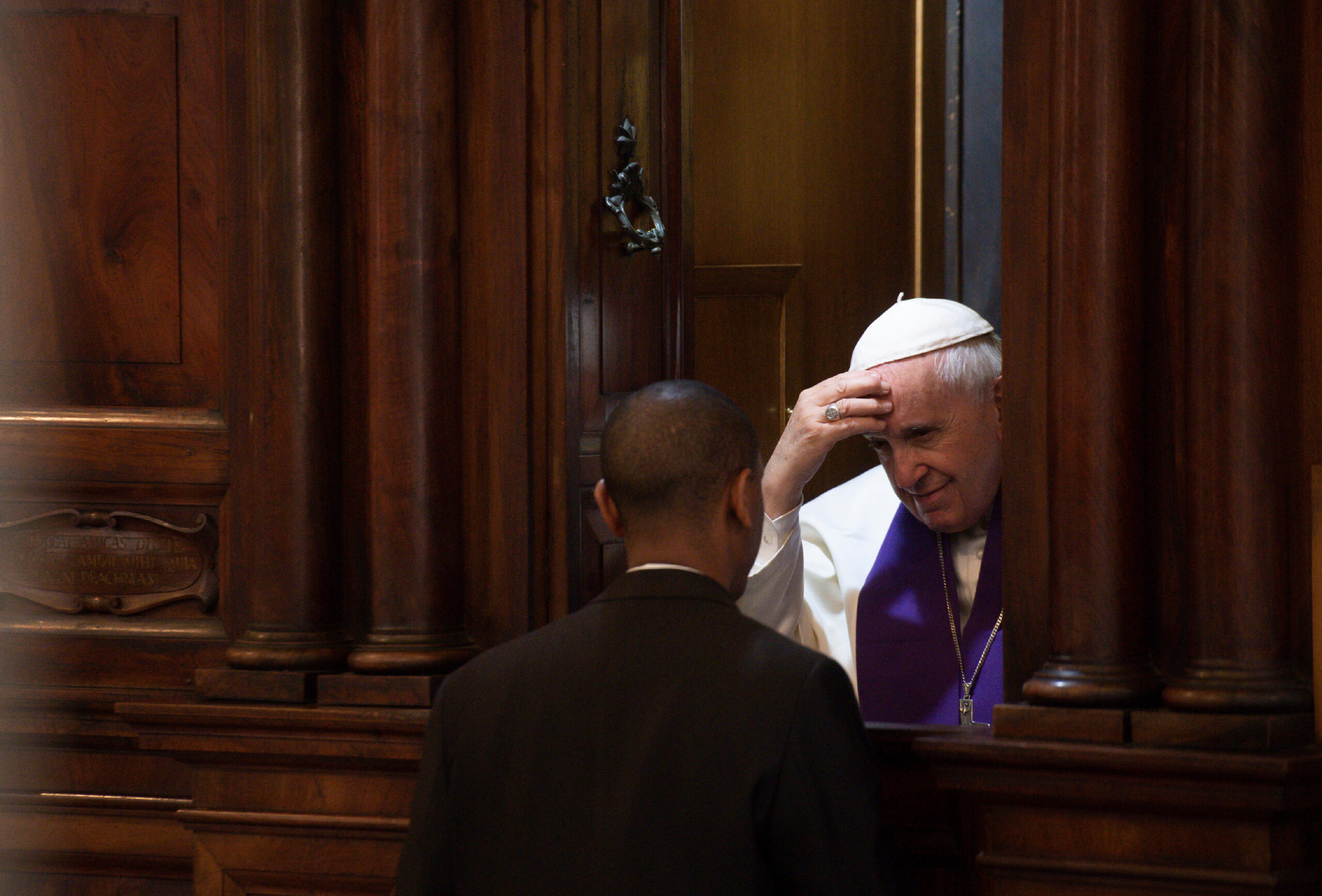
His forgiveness is as near as the nearest confessional. We have two weeks to avail ourselves of it.







