
This article was updated at 10 a.m. PT on Feb. 13.
It goes by a variety of names, it is not well understood, and much of the discussion about it is far from rational, with rumours and facts alike spreading instantly in this internet-connected world.
The “it” in this case is a virus known variously as the Wuhan Corona Virus, or nCoV-2019, the “n” standing for “novel,” as in never seen before, discovered in the last few days of 2019 in the city of Wuhan, China.
As this column goes to press there are four cases of 2019-nCoV in British Columbia, with likely many more to come. The second case here was originally presented as arising from asymptomatic transmission, very worrying if confirmed, as it essentially means the person caught it from someone with no outward symptoms.
Related as this virus is to two previous outbreaks, SARS (Severe Acute Respiratory Syndrome) and MERS (Middle East Respiratory Syndrome), the Wuhan Corona Virus (also written more commonly as one word, coronavirus) has created awareness across the world, and, unfortunately, no shortage of misinformation and irrational behaviour.
Unhelpful newspaper headlines (for example, China Virus), racist remarks at people wearing masks, and a WestJet passenger seeking Instagram fame by proclaiming loudly and falsely that he had been in China and was carrying the coronavirus are just some of the actions that have accompanied the ever-increasing concern over 2019-nCoV.
Amidst all of this turmoil there is a need for basic facts. This is a tall order when dealing with a situation that is most urgent and troubling in a country governed by a totalitarian regime, where even the leader, the usually highly visible Xi Jinping has been keeping a low profile. Perhaps he too is afraid of the virus gripping his country, or perhaps he doesn’t want to appear less than invincible by often being seen wearing a mask.
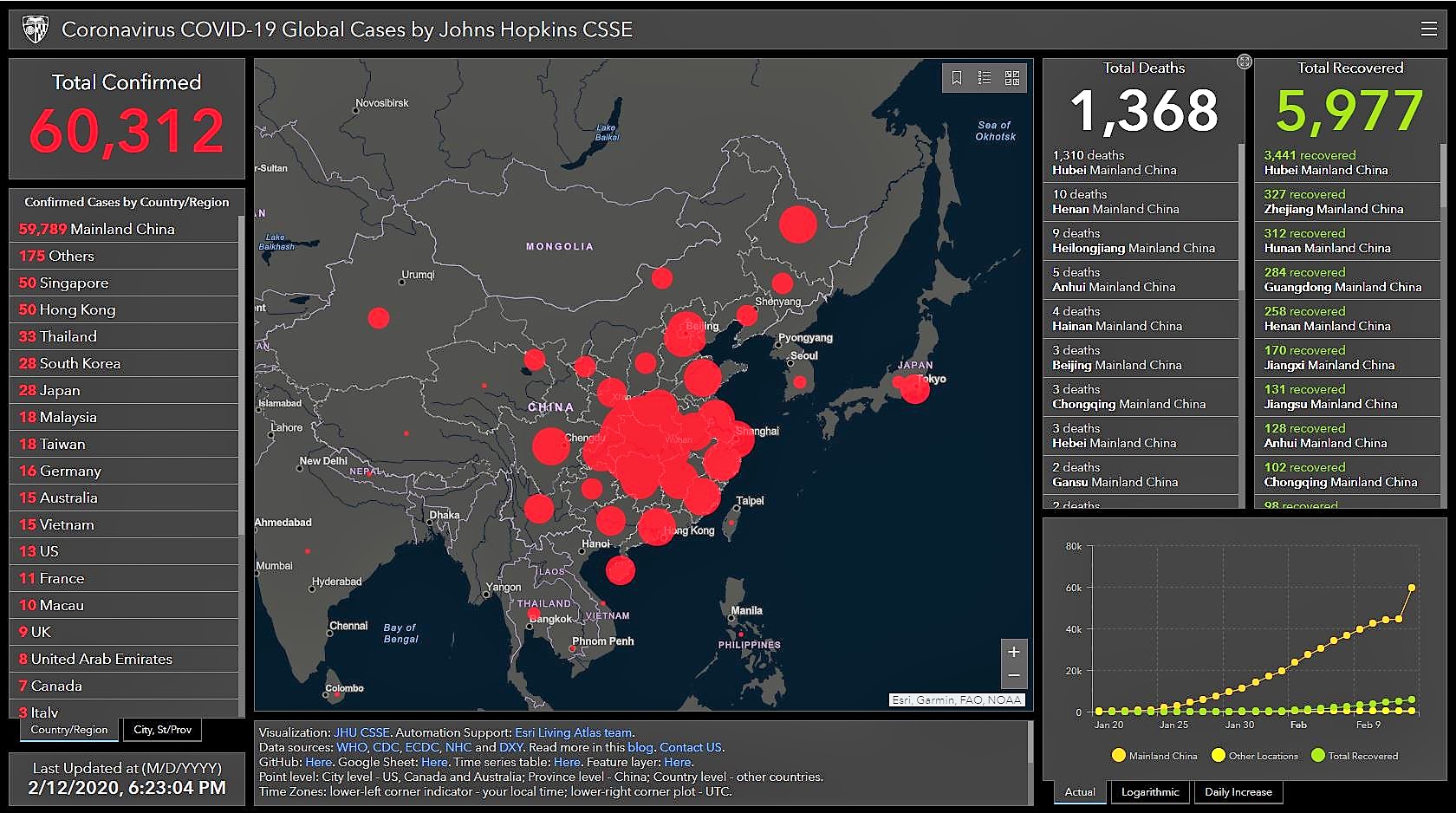
It is into this information vacuum that a simple one-page site from Johns Hopkins University has risen to prominence. Although the site has changed a little over the few weeks that it has been running, its mission has been simple: show the number of confirmed cases, deaths, and, recoveries, based on reliable data from agencies such as the World Health Organization, and the U.S. Centers for Disease Control, along with the likes of DXY, an online health care business backed by Chinese internet giant Tencent.
Produced and maintained by the Johns Hopkins Center for Systems Science and Engineering, the site (https://tinyurl.com/BCCJHU) has become a go-to resource for news outlets around the world. To be sure, the site notes that it “relies upon publicly available data from multiple sources that do not always agree.”
I’ve found it quite compelling to follow the site and at least see trends, irrespective of how absolutely accurate the numbers may be. I began posting simple summaries along with a screenshot to Twitter, several times a day and was surprised to see typically a thousand interactions or views within minutes of posting a tweet.
Sure enough there have been attack tweets saying the Johns Hopkins data is useless, that the real numbers are much higher, that data is being withheld, that many people never make it to a hospital and therefore are not incorporated into the published figures. Undoubtedly all true, but in the absence of such information it is among the most reliable resources we have.
There is still much unknown about 2019-nCoV, recently renamed Covid-19. Whether it can be defeated like SARS remains to be seen, although that seems increasingly unlikely. History will remember Dr. Li Wenliang, the Wuhan ophthalmologist chastised by the state for sounding alarm bells in December about a mysterious new illness, and then succumbing to it himself less than two months later.
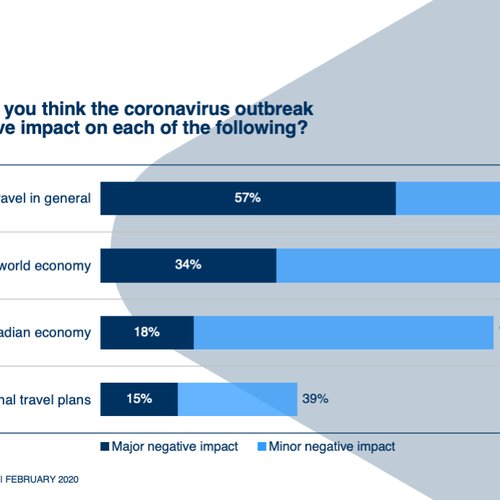
An Insights West poll released Feb. 5 shows there is almost universal recognition of this story, but it also shows that B.C. residents are more concerned about the global impact of 2019-nCoV than they are about any personal impact.
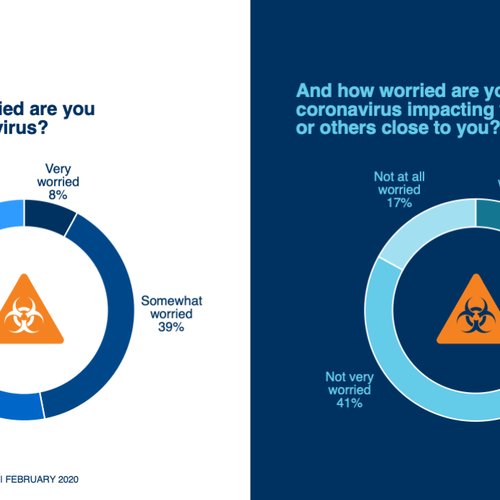
Says Steve Mossop, president of Insights West, “Overall, citizens feel that they are somewhat protected, as only a minority feel personally vulnerable to the virus. More concerning is the high level of worry about the impact on the Canadian economy and the global economy. As residents have already started to take action with respect to their travel plans – this could have a massive trickle-down effect on the overall global economy moving forward.”
Travel restrictions, repatriation flights, N95 masks, cruise ship quarantines, global health emergency, factory shutdowns. Where will it all end? About all we can agree on is there remains tremendous uncertainty about 2019-nCoV.
As for additional background material, here are three very helpful resources you can easily locate with a search:
- Toronto Star: Six Questions About Coronavirus
- Government of Canada: 2019 Novel Coronavirus
- BC Centre for Disease Control: Information on Novel Coronavirus
Follow me on Facebook (facebook.com/PeterVogelCA), on Twitter (@PeterVogel), or on Instagram (@plvogel)
pvogel@outlook.com