

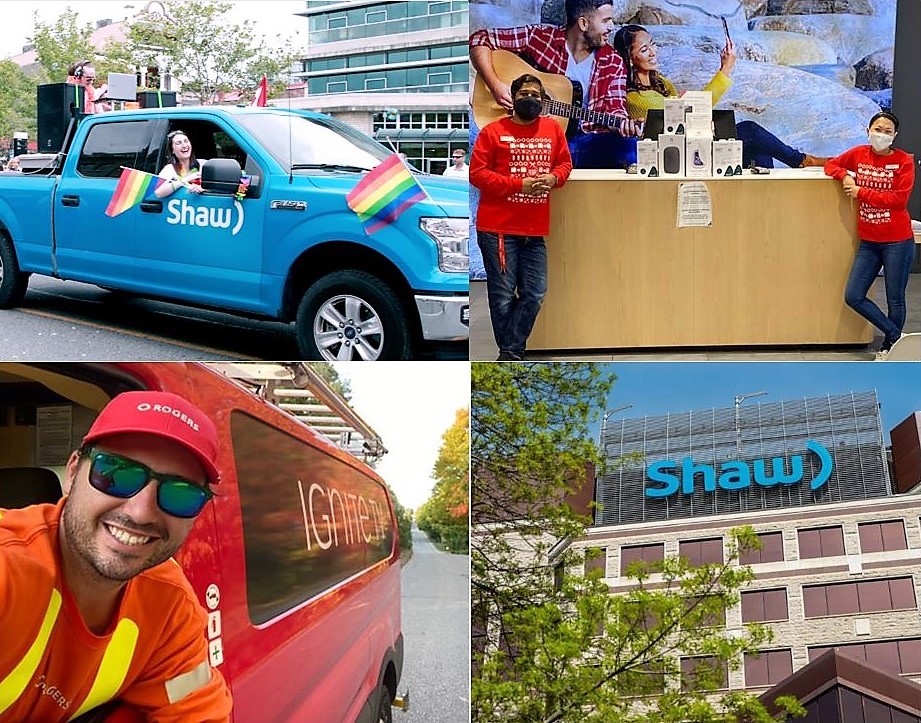

It came out of the proverbial blue. Canadians awoke one mid-March morning to find that Rogers Communications had inked a provisional deal to acquire Shaw Communications.
If there is one business that Canadians have a love-hate relationship with it has to be their telecommunications providers, and in recent years that has primarily come to mean their cellular service provider. The four biggest providers, despite working hard to reduce churn – the fraction of customers who move to another provider in a given year – know that Canadians by and large are not brand loyal when it comes to telecommunications services.
In short, the Rogers takeover of Shaw represents a bleak day for competition in the Canadian telecom sector. At its heart, if consummated, the deal will ultimately reduce the already limited competition in Canada’s cellular marketplace. The reason is that No. 4, Freedom Mobile, is owned by Shaw, and in the past year it has become an increasing threat to the dominance of the big three, Bell, Telus, and Rogers.
In the flowery language that formed part of the takeover deal, there are promises of new jobs and no price hikes for three years at Freedom Mobile.
I’ll believe it when I see it. Takeovers and mergers are all about efficiencies and attrition (why have two sales teams when you can run the show with one, for instance).

Here are three additional examples from the public relations battle Rogers is running in social media and other channels in an attempt to stave off negative reaction to its takeover attempt for Shaw.
Rogers on Twitter
“We’re committed to innovation through 5G in Western Canada. That’s why we will establish a Centre of Technology and Engineering Excellence in Calgary to support the creation of high-skilled jobs and bring new opportunities for customers and businesses.”
Rogers on Facebook
“Our Connected for Success program, the first of its kind in Canada, has helped thousands of seniors and low-income Canadians get high-speed, reliable & low-cost broadband at home. We’re excited to expand this program into Western Canada so even more Canadians can benefit.”
Rogers press release
“Rogers and Shaw to come together in $26 billion transaction, creating new jobs and investment in Western Canada and accelerating Canada’s 5G rollout.”
Anyone remember when some of the telcos were involved in so-called negative-option billing? This scam, er, scheme, involved billing consumers for certain services unless they expressly said no, after the fact.
However, now there is the really big “scam” of Rogers taking over Shaw Communications. While it will undoubtedly go ahead, perhaps in full, or with slight changes, despite a Liberal Party election plank in the last election promising increased competition and a 25% reduction in average cell phone bills, it will be interesting to see the restrictions or requirements placed on the deal.
Both Rogers and Shaw are major players in cable TV and home internet service. However this is not an area in which they compete. Decades ago, the two agreed to swap provincial territories, so that each could operate in a contiguous block. BC’s cable TV and home internet service was at one time delivered by Rogers, before that territorial swap.
Where the two do compete is in the cellular market, although the argument could be made that Shaw is a bit player with its Freedom Mobile service. However, Shaw/Freedom has had influence outpacing its size and it may be this that is behind the proposed Rogers takeover.
In recent months Shaw has further upended the market with its Shaw Mobile service, basically tying a low-cost mobile service to a TV and internet plan. In fact the company even offers a zero-cost option for this service. Rogers cannot compete with this as it has no ground infrastructure here. Neither can Bell. Only Telus can compete in that regard.
We’ve also seen that Telus and Shaw are willing to duke it out in the courts over claims each makes in advertising. A case presently underway centres on Shaw’s use of the term Fibre+ for its service to homes. Telus says this muddies reality and confuses people who see its PureFibre branding.
To get beyond sure-fire regulatory opposition, Rogers claims the proposed deal will see it invest more than $2.5 billion over half a decade to expand 5G networks here in the west. It also says it will establish a considerable fund dedicated to bringing service to remote communities.
Is any of that new money or was the company planning on spending this in any case to build out its 5 G network infrastructure?
Rogers will have to face down the federal competition watchdog, called the Competition Bureau, Canada’s telecom regulator, the CRTC, and finally the federal government at the cabinet level. Meanwhile, consumer groups are already circling to fight the proposed takeover. They will be able to cite the government’s own words, from the last election campaign.
It is hard to see how that promise of lower cell phone bills can now come to pass. Meanwhile, if Freedom Mobile does in fact disappear after the three-year window promised by Rogers, it is essentially a foregone conclusion that monthly bills are going up.
Canada is so far removed from the typical costs for cell phone plans and home internet and television service enjoyed in much of the rest of the world. A Rogers-Shaw merger will ensure that continues to be the case.
If, like me, you are concerned that this deal will stifle competition and ultimately lead to price increases, be sure to let your Member of Parliament know. Regulatory approval will be required and this deal is sure to embarrass a federal government that promised increased competition in the telecom sector.
Follow me on Facebook (facebook.com/PeterVogelCA), on Twitter (@PeterVogel), or on Instagram (@plvogel).
pvogel@outlook.com







