

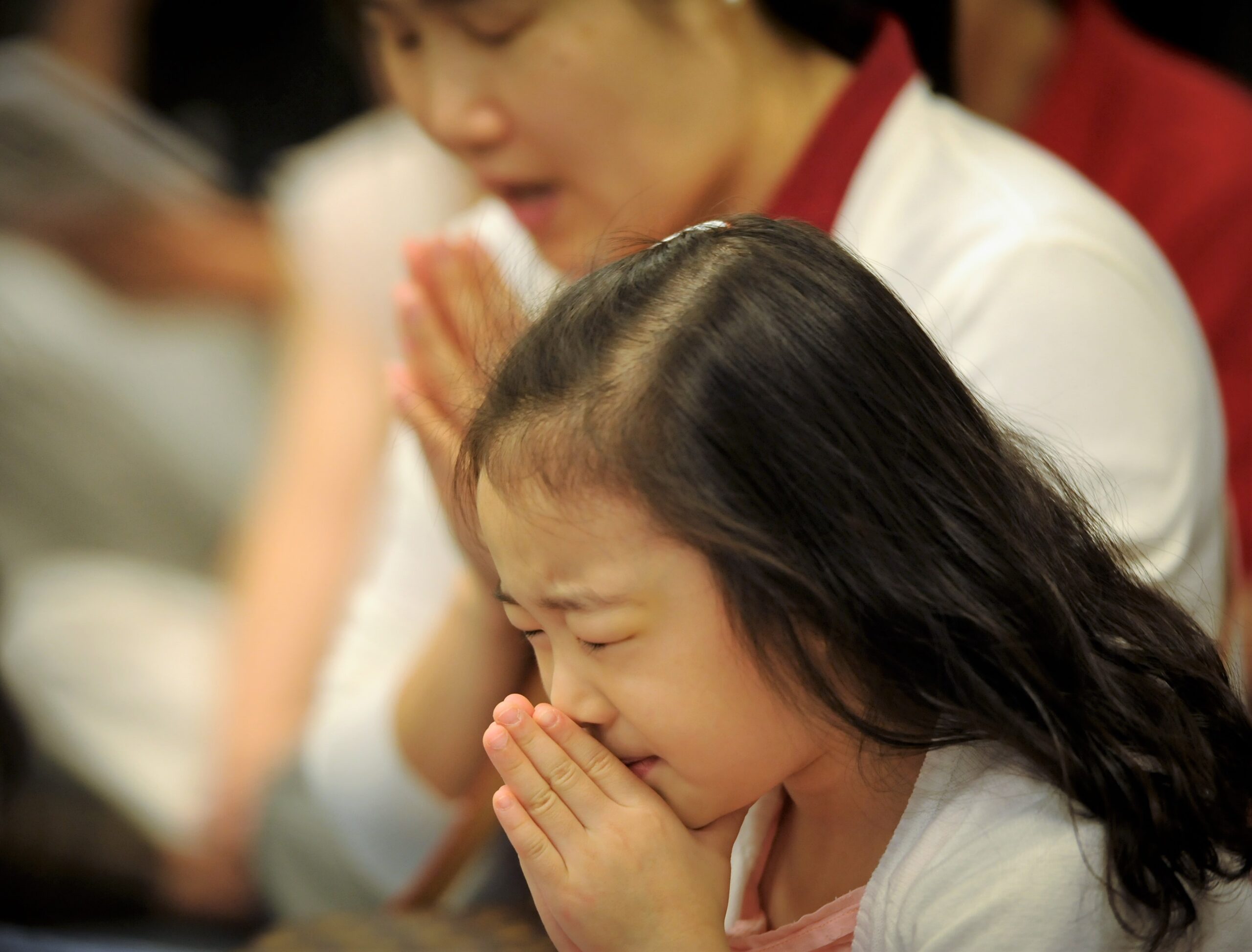

In this past Sunday’s first reading, we heard how the Lord answers the prayers of his faithful. This message is one I believe we need to revisit regularly, particularly when sadness, tragedy, and illness confront us. We need the reminder even more so when those in our lives who lack faith, or have drifted from it, challenge our inclination to pray.
“For the Lord is a judge who is utterly impartial. He never shows partiality to the detriment of the poor, he listens to the plea of the injured party. He does not ignore the orphan’s supplication, nor the widow’s as she pours out her complaint. Whoever wholeheartedly serves God will be accepted, his petitions will carry to the clouds. The prayer of the humble pierces the clouds: and until it does, he is not to be consoled, nor will he desist until the Most High takes notice of him” (Sir 35:12-14, 16-18).
We think we know what we need and what is best for us, but ultimately God knows the outcome of his divine plan. I have written before of many prayers that seemed unheard and yet, years later, the puzzle pieces fell into place. In retrospect, I have been able to see how my own “ideal” would not have had the same ideal outcome as what transpired at the hand of God.
In other circumstances, I am still waiting for God’s answers. I live each day wondering why certain events have taken place and when the good in them will be revealed. I know that I will not always see God’s answers to my prayers in this lifetime, but the message is clear in the above reading: I must never stop praying. I may not find consolation until I meet God face to face, but I need to find comfort in knowing that he hears my cry, regardless of how overwhelming the waiting period seems.
We tell children that God does not always answer prayers in the ways we expect. While I believe in this truth, there are times when I feel like a child myself, unable to understand why God does not seem to hear my prayers. Why are there tragic deaths? Why are there devastating diagnoses? Why is there violence? Why do some people experience so much suffering?
Furthermore, if I – a person who believes in the power of prayer – can ask questions, how can I reach those who lack faith? I find that unbelievers treat me with respect and a healthy distance when I mention I will pray for them. Do they view me as superstitious or naive? Do they wish they had faith, or simply feel sorry for me for holding on to a “crutch” or something that does not provide instant gratification?
The doubts I experience when confronted with others’ dubious glances and changes of topic need to prompt me to pray more deeply. Pope Benedict XVI said it best in Deus Caritas Est, 36: “People who pray are not wasting their time, even though the situation appears desperate and seems to call for action alone.”
Prayer itself must always be the first action we take. Alone, we can do nothing. Even with prayer, we cannot undo an accident, cure every illness, undo natural disasters, or change the past. We can, however, turn to God for inspiration and guidance as we respond to others and face the future with hope and faith.
Perhaps what is missing for those who do not understand the power and comfort of prayer is the realization that, rather than merely asking for miracles, prayer is conversing with God. I do set aside time each day for prayer, but I liken that to a formal exercise routine. Just as I regularly exercise muscles even when not working out, informal prayer takes place regularly throughout my day. I do not only make requests; I pray to thank God for daily miracles or to ask him to simply be with me and give me strength.
Prayer is a relationship – the only way for the faithful to hear and be heard by God. Let us pray for those who have yet to experience the ultimate in communication with our “utterly impartial” judge.







