


My last column detailing the theological and historical background to the practices of Communion on the tongue and hand has generated some good discussion, so I thought I would respond with some additional points for consideration.
Some have suggested that Communion on the hand was actually the primary practice in the earlier centuries of the Church, and there are certainly quotes from some of the Fathers of the Church attesting to this practice.
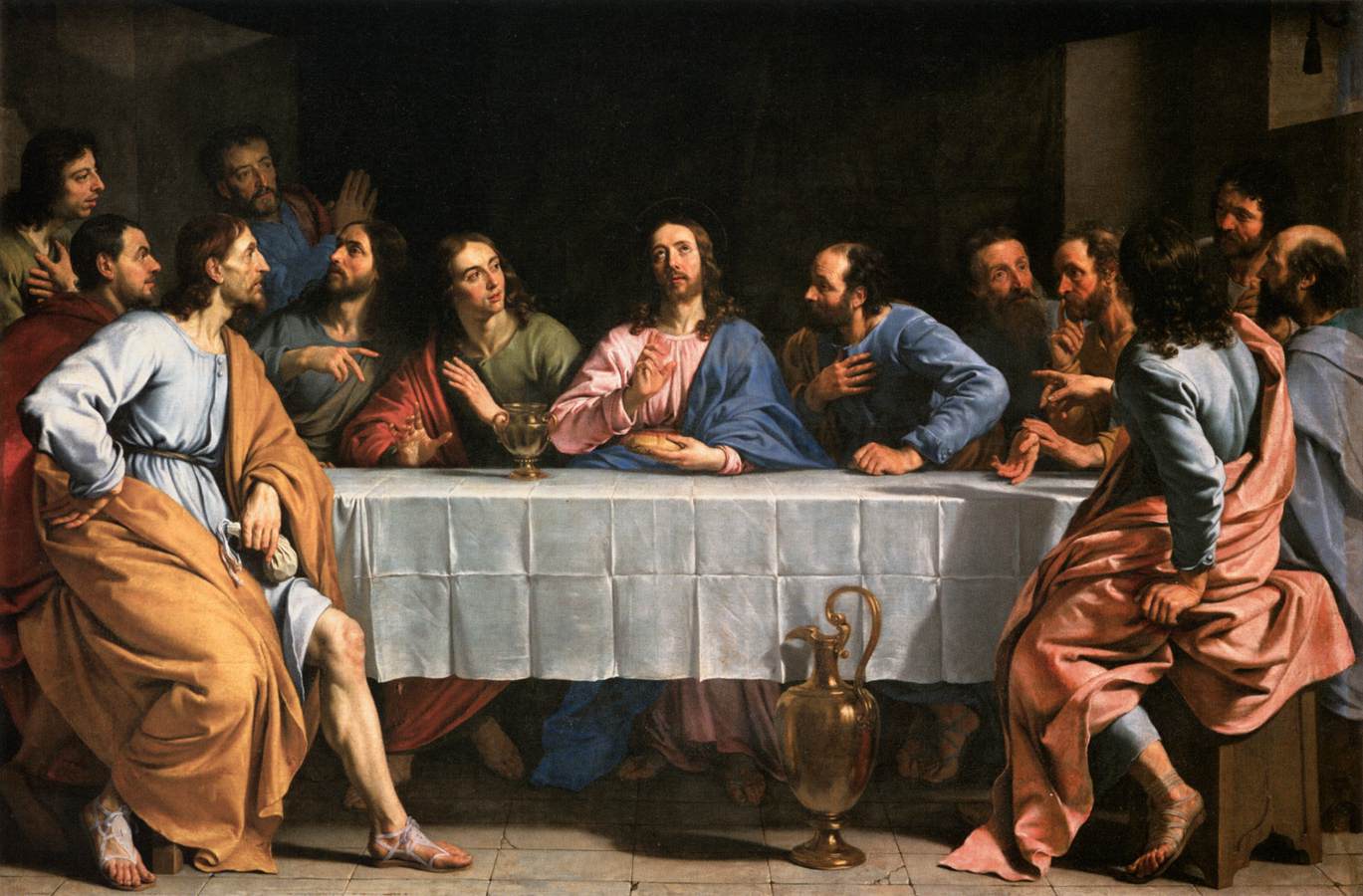
Some even contend that Jesus gave Communion on the hand at the Last Supper. But this is pure speculation. Regardless, the Apostles were ordained priests that night and were permitted to touch the Eucharist.
But as mentioned in my last article, reasonable cases for both practices in the first millennium of the Church can be made. For example, Bishop Athanasius Schneider’s book Dominus Est, It Is the Lord contains some of the most recent scholarship the Church has on this matter, and it argues eloquently on several levels for the historical practice of Communion on the tongue.
Either way, though, the Church eventually moved to disallow Communion in the hand completely, and “on the tongue” has been the universal norm of the Church for centuries now.
But around the 1900s, a handful of countries started to revive Communion in hand – unfortunately, in complete disobedience to the Church’s clear teaching on this matter. Believing this form of Communion to be a return to the primary practice of the Early Church, they reasoned that it should actually be the preferred form of Communion.
They had somehow missed the key reasoning that had, centuries ago, moved the Church away from Communion on the hand in the first place. This decision was not based on which practice was most ancient, but on which Communion form best conformed to the theological reflections of the Church over time on the real presence of Jesus in the Eucharist.
In the end, the Church clearly realized that Communion on the tongue was a superior form of Communion on several theological and practical levels, eventually disallowing Communion on the hand completely. To then argue for a return to Communion on the hand for historical reasons alone, as these countries had done, was, in a sense, a step backward theologically, and contrary to the will of the Church. Just because a practice is of ancient origin doesn’t necessarily make it the best option.
But a deeper look into the early history of the Church on all this is very revealing.
Three theological threads run consistently through all of Church history on this matter, and each profoundly influenced the Church’s decision to eventually limit Communion to on the tongue only.
The first thread is an incredible reverence for the Eucharist and an awareness of its purifying effect on the faithful. St. John Chrysostom, called “the Doctor of the Eucharist,” captures this sense beautifully: “within you … you do not have the ark or the manna or the tablets of stone … but the Body and Blood of the Lord … an unutterable gift.”
Similarly, St. Thomas Aquinas teaches that “out of reverence towards this Sacrament, nothing touches it, but what is consecrated … the priest’s hands … it is not lawful for anyone else to touch it except from necessity.”
But my favourite is St. Ephrem (in the 300s), as he places the prophetic words of Isaiah 6:6-8 on Jesus’ lips. Here, the priest, representing Jesus “in persona Christi,” is the tong of the angel used to touch the burning coal [the Eucharist] to purify the lips of the faithful, represented by Isaiah: “The coal carried [by the seraph] cleansed the lips of Isaiah. It is I [Jesus] Who, carried now to you by means of bread, have sanctified you. The tongs which the Prophet saw and with which the coal was taken from the altar, were the figure of Me in the great Sacrament. Isaiah saw Me, as you see Me now extending My right hand and carrying to your mouths the living Bread. The tongs are My right hand. I take the place of the seraph. The coal is My Body. All of you are Isaiah.” Incredible!
The Liturgy of St. James, the oldest liturgy of the Church, draws from this same imagery. Before distributing Holy Communion, the priest prays: “The Lord will … make us worthy with the pure touchings of our fingers to take the live coal, and place it upon the mouths of the faithful for the purification and renewal of their souls and bodies.” Given its very early date, it also makes a good argument for the prevalence of Communion on the tongue in the first centuries of the Church as well.
The second common historical “thread” running through all the writings of the Church Fathers is an intense concern for the loss of even the smallest particle of the Precious Body.
For example, St. Cyril of Jerusalem (also in the 300s) wrote: “take care to lose no part of It … guard against losing so much as a crumb of that which is more precious than gold.” Similarly, Origen in the 200s warned: “exercise every care lest a particle of It fall … lest anything of the consecrated gift perish.”
The third thread is a profound concern for anything that could potentially lead to a loss of reverence in the faithful.
Memoriale Domini, issued under St. Paul VI’s papacy, summarizes all the historical scholarship and theological study at the Church’s disposal on this subject, concluding: “ancient usage once allowed the faithful to take this divine food in their hands and to place it in their mouths themselves,” but “with a deepening understanding of the truth of the Eucharistic mystery … and of the presence of Christ in it, there came a greater feeling of reverence … a deeper humility was felt to be demanded when receiving it … the minister placing a particle of consecrated bread on the tongue of the communicant.”
It then delineates why Communion on the tongue is preferred by the Church: “first, to avoid, as much as possible, the dropping of Eucharistic particles; second, to increase among the faithful devotion to the Real Presence of Christ in the Sacrament of the Eucharist.”
The Jesuit liturgist Josef Jungmann summarizes these historical/theological reflections in the Western Church succinctly in his 1940s book The Mass of the Roman Rite, concluding: “growing respect for the Eucharist … led to the practice of placing the Sacred Host in the mouth.”
Similarly, Bishop Schneider echoes Jungmann’s conclusion, stating: “The authentic … link uniting the early (patristic) era with the Church of today in these matters is the reverent care for the Body and Blood of the Lord, even in the smallest fragments.”
So again, the rejection of Communion on the hand by the Church was not a decision based on history – which practice best conformed to the practice of the early Church – but on theology – which practice best safeguarded reverence for the Eucharist.
Reflecting further on all the above points, two additional highlights come to the forefront.
First, that Communion in the hand undoubtedly creates a far greater risk of losing individual particles of the Precious Body on the palms and fingers of literally millions of communicants. This alone, in my opinion, is reason enough to restrict Communion to on the tongue. As St. Ephrem attests: “It is His living Body … do not trample underfoot even the fragments. The smallest fragment of this Bread can sanctify millions of men and is enough to give life to all who eat It.”
Second, Communion on the hand with simply a bow of the head while standing is, biblically speaking, a less reverent form of reception of Communion. Scripture is filled with references to both humans and angels kneeling, even prostrating, in worship in God’s presence – and often at his command! And if, “at the name of Jesus, every knee shall bend,” what should we do in his actual presence?!
Now some will insist that reverence comes from the heart and isn’t necessarily bound to a particular external action. There is certainly truth in this. And of course we can’t judge the spiritual intentions of another. But when we receive Communion in the hand in the same way we would eat any other common food, there is always danger of an accompanying loss of the sense of the sacred.
Pope Emeritus Benedict XVI summarizes this spiritual principle for us: “the bodily gesture itself is the bearer of the spiritual meaning … when someone tries to take worship back into the purely spiritual realm and refuses to give it embodied form, the act of worship evaporates.”
But let’s change historical gears here for a moment and consider the revealing testimony from the Protestant tradition. Early in the Reformation, Lutherans still received kneeling, on the tongue, because Luther still believed in a form of the Real Presence. But many Calvinists and other Reformers (who totally rejected the Real Presence) actually prohibited Communion on the tongue while kneeling, insisting via codified church law, on communicants receiving standing, on the hand, while in procession, “in order to avoid any suggestion that the bread was being venerated.” (Things that make you go hmmm …)
But some may still reply that Communion on the hand is a licit/permitted practice in the Church. This is discipline, not doctrine. Why are we even talking about this? People should be able to choose however they want to receive Communion, within the confines of the Church’s directives. In a sense, mind your own business!
My short answer is, yes, the Church has now allowed Communion in the hand – but as an indult. And according to the Church’s teaching, not mine, Communion on the tongue best expresses reverence for the Eucharist, protects against the loss of even the smallest particles of the Precious Body, and best encourages reverence for the Eucharist in believers and non-believers as well.
Many are not aware of the profound theological background to this matter, and I think it is important for every Catholic to at least consider these things, and then make their best decision.







