


30th Sunday of Ordinary Time, Year A
First Reading: Ex 22:21-27
Second Reading: 1 Thes 1:5c-10
Gospel Reading: Mt 22:34-40
The second greatest commandment is “You shall love your neighbour as yourself,” Jesus told a lawyer. In Luke’s Gospel, when the lawyer questioned further, Jesus implied that everyone is our neighbour.
That includes people who have no one to look after them, like widows and orphans; the poor, who have to borrow just to survive; and those who are different from us, like resident aliens, says the First Reading.
In general, Canadian society does not abandon widows and orphans or oppress immigrants. In fact, most emigrants cite Canada as their country of choice. The Church in Canada is truly “catholic” (“universal”), with Sunday Mass celebrated in about 20 languages in our own archdiocese.
However, there is one group of Canadians who are made to feel like aliens in their own country, and that is parents of so-called “large” families.
Kimberly Hahn, mother of six and author of Life-Giving Love, told how one business tried to dissuade mothers from having “too many” children with an ad that said, under the photo of a newborn baby, “Three years of dancing lessons. Eight years of piano. It all adds up.”
Hahn describes how her own doctor tried to trick her into being sterilized; how the grandfather of a “large” family introduced his son-in-law as a “sex maniac;” how, on the birth of his sixth child, a man’s business colleague asked, “Can’t you control yourself?”; and how a pregnant friend and her three children were spat upon by a man who said, “It’s people like you who are causing all the problems in this world!”
“This is our life, our marriage, and our family,” Hahn says. “We must not let family or friends keep us from having another child just because we can’t face the criticism.”
Every year, we participate in Vancouver’s Life Chain, proclaiming that “abortion kills children” and “abortion hurts women.” Does our gratitude for God’s gift stop there, or are we willing to welcome children as coming from God and help others do the same?
If children are brought up properly from their conception – yes, conception, for they can be loved, welcomed, and united with us in prayer even in the womb – they do not have to be the burdens many parents find them.
From birth they can be taught that crying does not get them what they want; they can learn what “no” and “don’t touch” mean; they can discover that they can trust their parents; and, provided they are not subjected to “screens” – television, the internet, and smartphones – they can be taught the Catholic faith.
In watching dog trials recently, I was struck by the contentment – even happiness – of the obedient animals. If we can educate dogs and other pets, surely we can educate children!
Children are not just burdens, Kimberly stresses, but she admits that their care can be burdensome, and she reminds us of St. Paul’s words: “Bear one another’s burdens, and so fulfill the law of Christ.”
We cannot just “remind each other of the Church’s teaching on openness to life and then merely observe each other from the sidelines, judging whether or not others are being faithful to this teaching,” she says. “Rather, we have to be involved in the ongoing struggles” that faithfulness entails in other people’s lives.
Among her suggestions are the following:
- take a meal to a nauseated pregnant woman so that she doesn’t have to smell the cooking.
- pick up groceries for her so that she won’t succumb to nausea in the store.
- help her with tasks that are difficult while she is so big.
- help her get to yard sales, either by looking after her children or giving her a ride.
- offer to carpool older children.
- help her get to confession, Mass, Bible study, talks, or retreats.
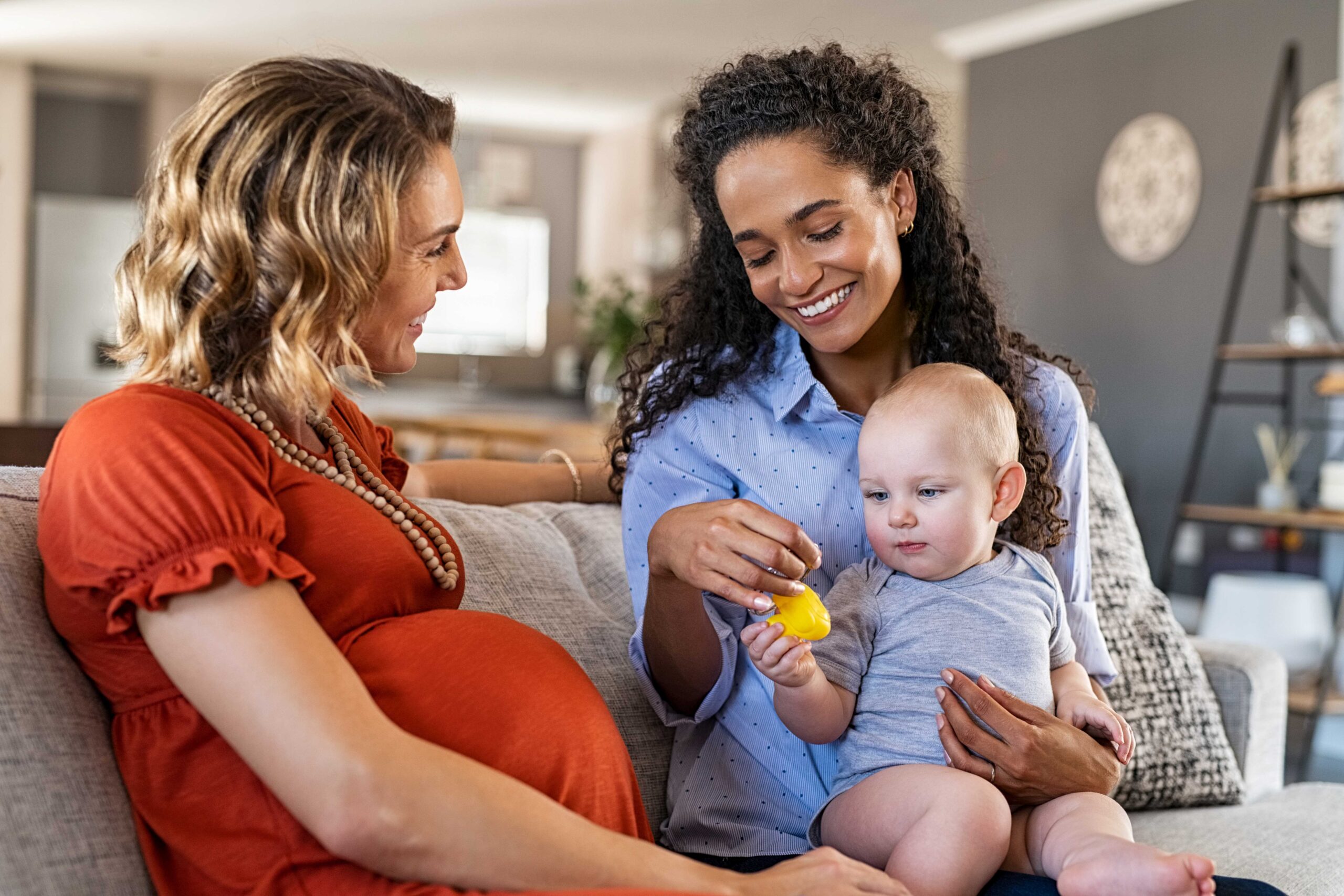
Through practical assistance, “we can be powerful channels of grace to young families who want to live authentic Catholic lives.”
Father Hawkswell is again teaching The Catholic Faith in Plain English with new insights, in both print and YouTube form, at beholdvancouver.org/catholic-faith-course. He is also teaching the course in person on Sundays from 2 to 4 p.m. at the John Paul II Pastoral Centre, 4885 Saint John Paul II Way, 33rd Avenue and Willow Street, Vancouver, and Mondays from 10 a.m. to noon in St. Anthony’s Church Hall, 2347 Inglewood Avenue, West Vancouver. Next week’s topic is The Liturgical Year. The course is entirely free of charge and no pre-registration is necessary.







