


All of us have been massively challenged by the current protests by the “Black Lives Matter” movement. Triggered by exposure to the horrible and widely viewed death of George Floyd, hundreds of thousands of people all over the world have been stirred to march and attack racism, particularly the so-called systematic racism that is felt to be so prevalent in the United States.
Though many Canadians have pointed out that such systemic racism is not confined to the U.S., there is undoubtedly a feeling among many that it is really their problem. Indeed, at times there is almost a feeling of smugness present, a feeling that “we” are better then “them.” Indeed, part of the problem lies in the very title of the movement. I feel strongly that the banners should not read “Black Lives Matter” but “Each Life Matters.” If such a slogan were adopted, people might be more tempted to look at the situation in their own country, rather than seeing it as an American problem. I think, more importantly, that we Canadians might begin to question how we have treated and continue to treat our own marginalized minorities.
One of the main complaints of the American black people is that others, particularly the white people, have made no attempt to understand the history and the realities of the black people. The same could well be said with regard to Indigenous people in Canada. Efforts at all levels of society are being made to promote a better understanding of just how badly the so-called “Native Indians” were and are treated. It is for this reason that British Columbia’s Ministry of Education has required that at all levels, units on the Indigenous experience be included in the school curriculum. Hopefully, this will result in a greater appreciation of what being Indigenous in Canada really means – with all its sad history and all its great glories. This curriculum requirement has been mandated presumably so that it will result in all children being better informed on the issue, but there still remains, I believe, in many adults an unspoken bias against Indigenous peoples – one which is parallel to the way Blacks are viewed in the United States. I believe it is incumbent on all of us as Canadians to educate ourselves about the history of Canada’s Indigenous peoples.
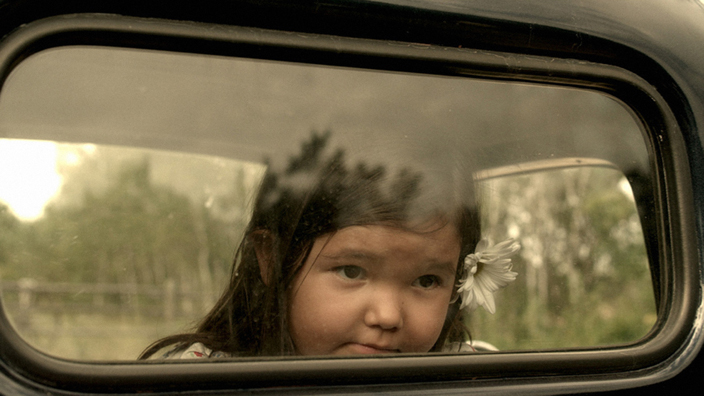
I recall vividly when in one of my last (and still recent) teaching years, I showed a group of Grade 11 students a film about Canada’s residential schools. At the end of it, when I asked the class for a reaction, one student, an intelligent and conscientious student, shocked me by saying, “I had no idea.” I wondered how that was possible, coming from a teenager who seemed to be generally above average in engagement in issues of our society. Sadly, I do not feel that he is alone. Many people seem to have no idea of the history of Indigenous people in Canada. So I wish to recommend the underappreciated National Film Board film We Were Children, which I have mentioned in a previous column.
The film essentially dramatizes the childhood experience of two elders who were “snatched” from their parents and sent to a residential school. Fact-based and convincing, it compellingly presents a stark picture of their experience, which at times was nothing short of horrendous.
We Were Children is easily accessible online, and I think all Canadians should watch it, challenging as this would be, if they are to come to an understanding of the Indigenous experience and its impact on society today. Just as Americans need to come to terms with the realities of black suppression, of the Jim Crow era, of lynchings, if they are to have any real understanding of the deep wounds that a brutalized people have experienced, so too, non-Indigenous Canadians need to understand the total history of their fellow Indigenous citizens.
The residential schools were only a part of the Indigenous experience in Canada, but a truly formative one. Viewing the film might well be a first step for many who are trying to understand the problems that arise as a result of our treatment and attitude to our First Nations people.
It is only an introduction to the issue – and, of course, it is by no means something which deals with the way many other lives are negatively impacted in systemic ways in Canada, from blacks to South Asians to East Asians to the unborn to the elderly and other marginalized people. However, in our process of necessary self-education, it might well be an appropriate first step, hopefully one of many more such steps that people will undertake, towards a total embrace of the idea that Each Life Matters.







