

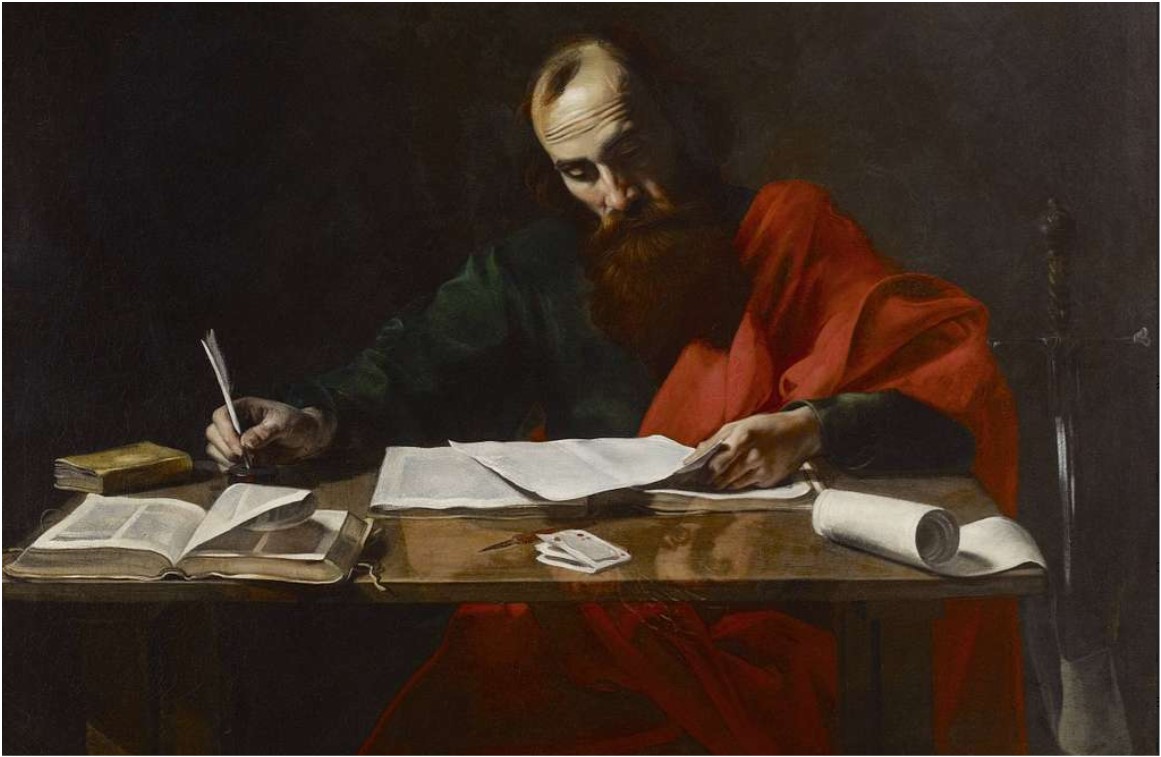

St. Paul wrote the Letters to the Corinthians in response to the many needs and problems in the Church of Corinth.
In the first six chapters, St. Paul rebuked the Corinthians for their divisions, sexual immorality, and legal actions against one another. From chapters seven to 15, St. Paul gave moral instructions. In the last chapter (16), St. Paul expressed his desire to gather financial aid for the Church in Palestine.
The Russian Archbishop Averky (Taushev) wrote, “Inclined to divide along party lines, and evidently keeping to a pagan understanding of the teachers of Christianity being something like philosophers, each of whom established his own school, the Corinthians began to divide into factions, each named after one of the famous preachers of the Gospel: ‘Now I say this, that each of you says, “I am of Paul,” or “I am of Apollos,” or “I am of Cephas,” or “I am of Christ”‘ (1:12).
“Because the leaders of each faction, following the example of pagan philosophers, influenced the people with their oratory and philosophical reasoning, Paul uses the first chapter to characterize the qualities of true evangelical preaching, as compared with earthy wisdom and philosophy.”
In the nine-verse introduction, St. Paul mentioned Jesus Christ nine times. St. John Chrysostom said, “From the very beginning Paul casts down the Corinthians’ pride, in that he speaks of himself as ‘called.’ ‘For what I have learned,’ says Paul, ‘I did not discover myself, but it was while I was persecuting the church that I was called. It was God who willed that you too should be saved in this way.’ We have done nothing good by ourselves, but by God’s will we have been saved. We were called because it seemed good to him, not because we were worthy.”
In 1:10-17, St. Paul appealed for unity. Writer Stephen K. Ray wrote, “Jesus had prayed for unity; now Paul exhorts the Corinthians through this same Jesus to be visibly unified. In Greek, the word united is actually a word used in the gospels for mending nets. The Church is likened in the gospels to a net and the apostles to fishers of men, but if the net is torn, catching fish becomes a problem. Paul is saying: ‘You are torn; get mended.’ A church torn with factions or schisms has a hard time convincing the lost of the truth of Christ.”
St. John Chrysostom said, “The quarrelling at Corinth was not over trivial matters but over something fundamental. Even those who said they were of Christ were at fault, because they were implicitly denying this to others and making Christ the head of a faction rather than the head of the whole church.”
The rest of chapter 1 (1:18-31) is about the wisdom of the cross and the wisdom of the world. Archbishop Averky wrote, “Philosophy – which is cut off from the source of wisdom, God – found itself powerless to order human life, but the preaching of the Gospel, which seems to be madness to those who do not believe, gives people truly everything that is necessary both for earthly life and for eternal salvation.”
St. John Chrysostom said, “The power of the cross is not recognized by those who are perishing, because they are out of their minds and act like madmen, complaining and rejecting the medicines which bring salvation.” St. Augustine said, “There is no way that this gospel truth could have been made acceptable to some philosophers and debaters. They follow a way of life that does not stand in the truth but is only an imitation of it. They deceived themselves and others.”
St. John Chrysostom also said, “The folly and the wisdom spoken of here are more apparent than real. For the philosophers could not achieve what a few unlearned men accomplished, namely, the conversion of the whole world. The philosophers spoke about trivialities and convinced only a few. The apostles spoke about God, righteousness and judgment and converted a great many.”
Your voice matters! Join the conversation by submitting a Letter to the Editor here.
十字架的智慧使人皈依
聖保祿在致格林多人書中,回應了格林多教會面臨的諸多需求與問題。
在書信的前6章,聖保祿責備格林多人內部分裂、不道德性行為、以及彼此訴諸法律。從7章到第15章,聖保祿給予道德操守說明。在最後一章(第16章),他表達了為巴勒斯坦教會募集經濟援助的願望。
俄羅斯總主教Averky(Taushev)寫道:「格林多人傾向於按黨派劃分,顯然以異教徒的方式去理解基督教義老師,視為類似於哲學家的角色,每位哲學家都建立了自己的學派。於是,格林多人分裂為各種派別,每派以一位著名福音傳播者命名:『我的意思是說,你們各自聲稱:我是屬保祿的,我是屬阿頗羅的,我是屬刻法的,我是屬基督的。』(1:12)…。由於每派的領袖,效仿異教哲學家的例子,以其辯才和哲學推理影響民眾,保祿在第一章中著重描繪了真正福音宣講的特質,與世俗智慧和哲學相比。」
在格林多前書的首九節序言中,聖保祿提到耶穌基督九次。金口聖若望說:「保祿從一開始就擊碎了格林多人的驕傲,因為他稱自己是『蒙召的』。保祿說:『根據我所知道的』,『我沒有發現我自己,而是在我迫害教會時被召叫的。是天主的旨意使你們也得以如此得救。』我們並沒有靠自己做出任何好事,而是因著天主的旨意得救。我們是因祂的喜悅被召叫的,而不是因我們配得。」
在1:10-17中,聖保祿呼籲合一。Stephen K. Ray寫道:「耶穌曾為合一祈禱;如今,保祿通過同一位耶穌敦促格林多人在外在上達致合一。在希臘文中『合一』這個詞實際上在福音中指補網的動作。教會在福音中被比喻為一張網,而宗徒們則是漁人的漁夫;然而,如果網破了,捕魚就成了一個問題。保祿說:『你們中不要有分裂,但要同心合意。』一個因派系或分裂而四分五裂的教會,很難說服迷途的人相信基督的真理。」
金口聖若望說:「格林多的爭吵並非出於瑣事,而是關乎根本的問題。甚至那些聲稱自己『屬於基督』的人也是錯誤的,因為他們在暗示其他人不屬於基督,並將基督當作一派的領袖,而非整個教會的頭。」
第1章的其餘部分(1:18-31)討論了十字架的智慧與世俗的智慧。Averky大主教寫道:「脫離智慧之源 – 天主的哲學,發現自己無力安排人類生活;而福音的宣講,對於不信的人來說似乎是愚昧,卻真正賦予了人們一切所需,無論是今生還是永生的救贖。」
金口聖若望說:「那些滅亡的人不承認十字架的能力,因為他們失去了理智,行為如同瘋子,抱怨並拒絕能帶來救恩的藥物。」聖奧斯定說:「這種福音的真理,無法讓某些哲學家和辯論者接受。他們追隨的生活方式不是真理,而是模仿。他們既欺騙自己,也欺騙他人。」
金口聖若望還說:「這裡所談的愚昧和智慧更多是表面意義,而非真實的愚昧與智慧。因為哲學家無法達成一些未受過教育的人所完成的事業 – 即是全人類的皈依。哲學家們談論瑣碎之事,只說服了少數人;而宗徒們談論天主、公義與審判,卻使許多人皈依。」
Your voice matters! Join the conversation by submitting a Letter to the Editor here.







