

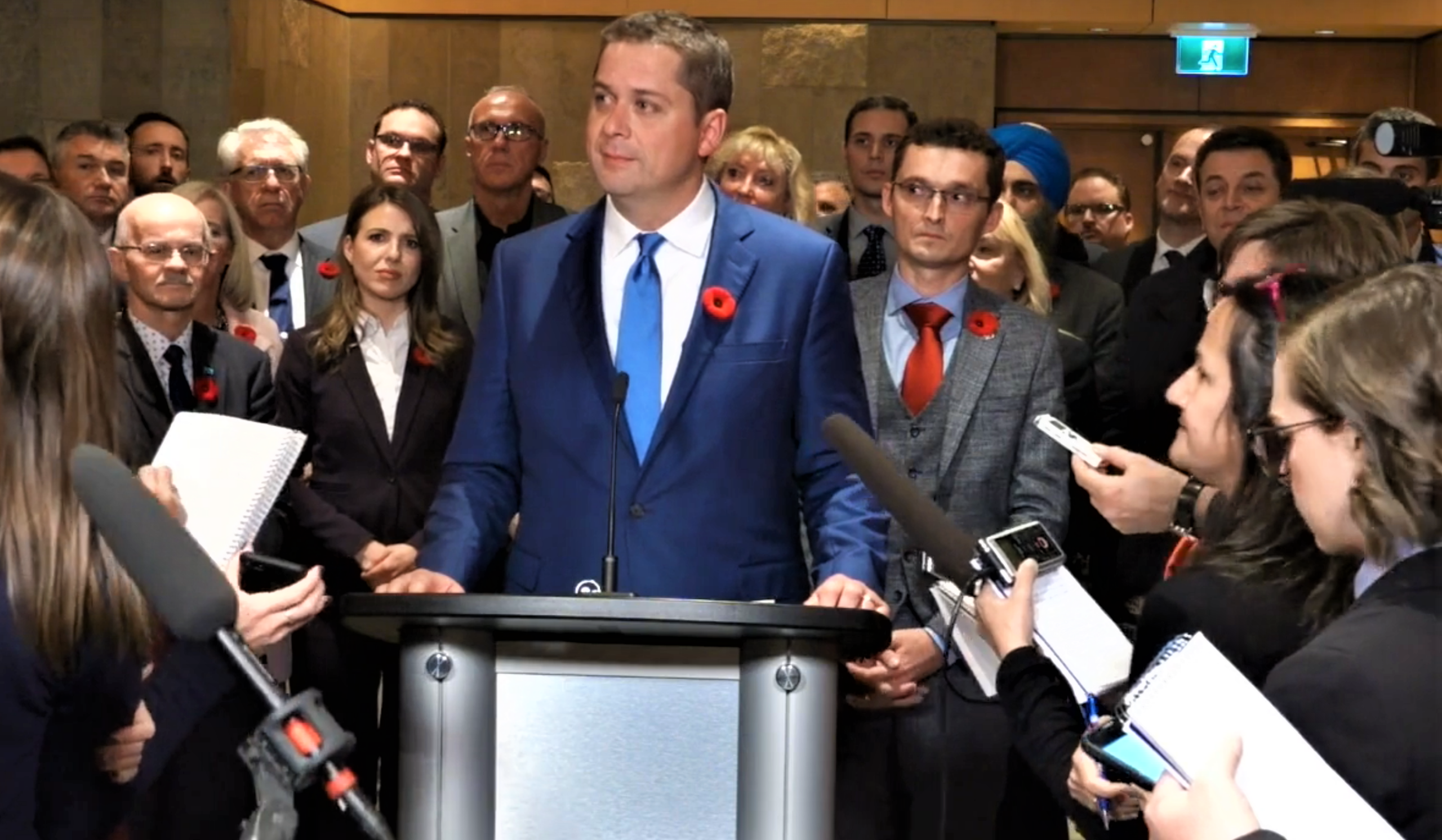

Everyone has an opinion on the Conservative Party of Canada these days: Why the Conservatives lost. What they should do about it. What a respectful length of time is before throwing Andrew Scheer out.
Underlying the discussion is the future of conservatism in Canada and what it means to be conservative.
It should come as no surprise that most of the pundits weighing in on the topic appear to be less interested in the nature of conservatism than in molding it into something they’re comfortable with. For them, the Conservatives need to become another centrist party little different from the half dozen already dominating Canada’s political landscape.
The consensus among media experts is the party is too right wing for Canadian conservative voters, who want a leader who attends gay pride parades and has evolved sufficiently on abortion, gay marriage, and other progressive issues.
The left-leaning media advising conservative Canadians what they’re doing wrong is like the fox telling the farmer how to build a better henhouse. The media have nothing to gain from a strong conservative movement since, in the words of English philosopher and writer Roger Scruton, conservatism is “true but boring,” while progressive views are “exciting but false.”
That which is boring amounts to kryptonite for the media, while anything novel and progressive gets their attention. As a result, conservativism suffers from a kind of “rhetorical disadvantage” compared with liberalism, says Scruton.
For people of faith, however, conservatism is vital. Regardless of what party religious people actually vote for, they tend to be more conservative than their non-believing neighbours. They lean more toward traditional notions of family, marriage, social behaviour, tradition, and a limited relationship with government. As Scruton observes, “Conservatism is about conserving things: not everything of course, but the good things that we admire and cherish, and which, if we don’t look after them, we might lose.”
Which makes the current debate about conservatism so suffocating. It starts with a false premise of what conservatism is or ought to be, and it argues for taking the movement, the party, the leader, and the nation there.
The National Post ran a post-election series on the state of conservatism in Canada. What could have been an enlightening series turned out banal and stifled with contributions from a think-tank director, poli-sci and public policy profs, an historian, and a newspaper columnist. They concluded we need a new economic program for the new challenges facing society, a rethinking of the Laurentian model of Canada that includes the West, and revised liberalism emphasizing limited government and “social market” redistribution rather than regulation.
Needless to say, this will hardly stir the passion of Canadians. It also sounds like something that could come from any of the federal party leaders trying to sound as middle of the road as possible.
In the five essays, the word family didn’t appear a single time. Neither did faith. Or marriage. Or any reference to inherent dignity of life from conception to natural end. The closest was a nod to Canada’s “civil freedoms of speech, religion, conscience and assembly” and a line lamenting the loss of our traditions and institutions.
Commenting on a similar debate among Conservatives in England, Scruton pointed out that conservative people are “not all brought up to think that economics is the only thing that matters.”
Conservatives believe, he said, “the family is the core institution whereby societies reproduce themselves and pass moral knowledge to the young.” The primary institutions of civil society – marriage and the family – “have no clear endorsement from our new political class,” which focuses on “abstract ideas and utopian schemes” and “discrimination that can be used to control what we say and what we do in ever more intrusive ways.”
Politicians who are afraid to wade into the essentials, and so focus on the ephemeral and trivial, reminded me of the words of Cardinal Thomas Collins at the Archdiocese of Toronto election debate.
He lifted up St. Thomas More, patron saint of politicians, as a model of integrity, someone whose life was “not divided like a fraction into two parts, with the personal part of him being guided by faith and reason to seek the truth, but with the public part of him conforming to the shifting whims of his monarch or public opinion.”
St. Thomas said what he believed, and what he did had an inner consistency, said Cardinal Collins. “He did not personally believe one thing while publicly doing the opposite.”
Our political leaders are in serious need of St. Thomas More’s intercession.







