


Divine Mercy Sunday, Year A
First Reading: Acts 2:42-47
Second Reading: 1 Pt 1:3-9
Gospel Reading: Jn 20:19-31
This Sunday, the second of the Easter Season, is “Divine Mercy Sunday.”
It is not by coincidence that Jesus gave us the sacrament of reconciliation as his first gift after his resurrection, said Cardinal Timothy Dolan of New York. When Jesus appeared to his apostles that evening, he did not say, “I promise you eternal life!” or “I have conquered Satan for you!” No; “what he most wanted to give his Church was mercy for sins.”
“Peace be with you,” he said. “If you forgive the sins of any, they are forgiven them; if you retain the sins of any, they are retained.”
We proclaim our belief in the forgiveness of sins every Sunday. However, we may have become immune to the wonder and the gratitude it should inspire in us.
In fact, we may even out of pride reject God’s forgiveness. Literature is full of examples, such as Anthony Trollope’s Can You Forgive Her? When Alice broke her promise to marry John, John forgave her and wanted to renew the engagement. However, Alice refused, knowing that she had no right of her own to be taken back after the evil she had done, and she did not choose to be taken back as an object of pity and forgiveness.
“I cannot forgive myself what I have done,” she told John, and “you ought not to forgive me.” In pride, she magnified the wrong she had done until, in despair, she convinced herself that there was no pardon for her.
Despair is the sin we commit when we deliberately give up all hope of salvation on the grounds that we are too wicked to be saved, or that God has cast us away. It is a grave crime against God’s goodness.
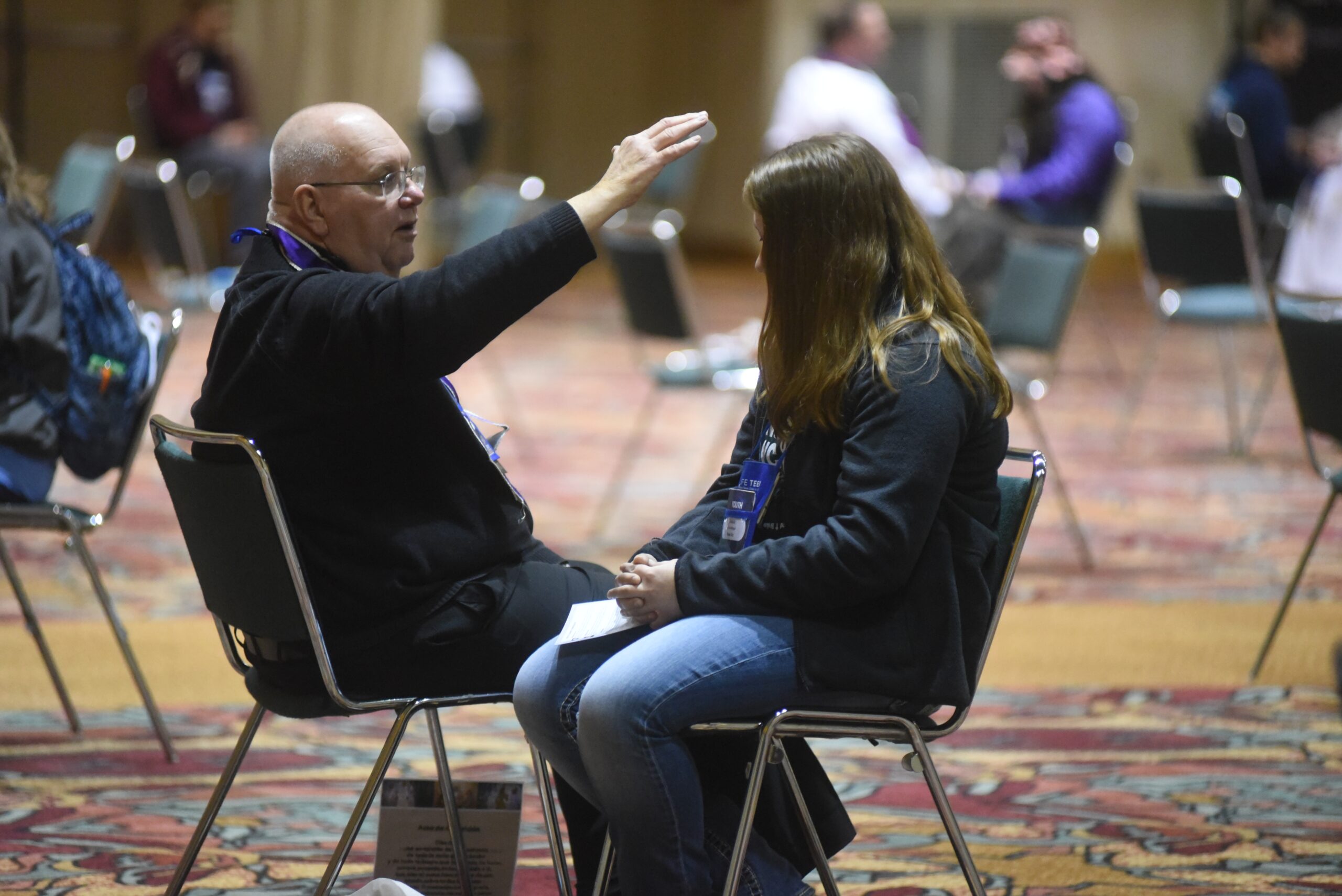
Accepting forgiveness requires humility, especially in the verbal confession of our sins in the sacrament of penance.
But can we not just confess them to God in our hearts?
No, for “God who has reconciled us to himself through Christ” has given “the ministry of reconciliation” to his Church, St. Paul says. For the Church to exercise this ministry, she must be told what those sins are, and she must know that we are sorry for them and intend to amend our lives.
There are also human reasons for confession.
Mental acts, like forgiveness, can be solitary or social. For example, remembering is a solitary act because we can perform it alone. However, promising is a social act because we make the promise to another person.
A solitary mental act need not be verbalized; it may exist without being expressed or known to anyone else. However, a social mental act must be verbalized; it cannot exist without being expressed by words or signs that make it known to the other party concerned.
Now forgiveness is a social act, for it is offered by one person and accepted by another. It must, therefore, be expressed: “I’m sorry” and “I forgive.” Moreover, for the forgiveness to be complete, the offence must be mentioned explicitly: it is not enough to say “I’m sorry for anything I may have done to offend you.”
(It is significant that one of the 12 steps to healing in Alcoholics Anonymous is to admit “to God, to ourselves, and to another human being the exact nature of our wrongs.”)
By disclosing our sins in words, we look at them squarely and take responsibility for them. It is humbling, but humility is appropriate when we are asking for forgiveness. Even psychologically, it frees us and facilitates our reconciliation with God and the Church.
We experience many temptations to stay away from confession: pride, shame, discouragement, or reluctance to avoid the occasions of sin. Overcoming them can be part of our reparation for our sins.
Priests know how difficult confession can be, and Pope Francis has urged them to make it as easy as possible: an experience of “forgiveness and mercy,” not of “a prosecuting court.”
Father Hawkswell is again teaching The Catholic Faith in Plain English, with new insights in both print and YouTube form at beholdvancouver.org/catholic-faith-course. Father is also teaching the course in person on Sundays from 2 to 4 p.m. at the John Paul II Pastoral Centre (4885 Saint John Paul II Way, 33rd Avenue and Willow Street, Vancouver) and on Mondays from 10 a.m. to noon in St. Anthony’s Church Hall, 2347 Inglewood Avenue, West Vancouver. Next week’s topic is “Bearing Witness: Living as a Catholic.”







