


One of the most popular forms of fiction, whether cinematic or in book form, over the last hundred years has been the “whodunnit.” For many, introduction to the genre came through the novels of Agatha Christie. After all, as the “Queen of Crime,” her books sales have passed two billion.
In the same vein, movies as famous and diverse as the iconic The Maltese Falcon and the brilliant Blowout have ensured that this particular genre of crime stories will continue to be enjoyed by movie audiences. Indeed, the success in 2019 of the vastly entertaining Knives Out guarantees that other whodunnit films will follow.
The fact is, however, that in its classic form, the whodunnit, set in an isolated country house with a small group of people, all of whom have a motive to murder, is a formula which almost demands to be satirized. The most popular screen example of such a satire is the 1976 film Murder by Death, though others might prefer 1988’s Who Framed Roger Rabbit? The latest example of a spoof to hit movie screens is See How They Run.
This particular whodunnit takes as a starting point the 1953 opening of Christie’s play, The Mousetrap. In reality, the play is a theatrical phenomenon, one which denies all theatrical logic, in that, other than an interruption because of the COVID pandemic, the play has remained in performance in London’s West End ever since. It has become almost as much an essential tourist destination as the Tower of London, despite the fact that it is simply another standard variation of a familiar formula.
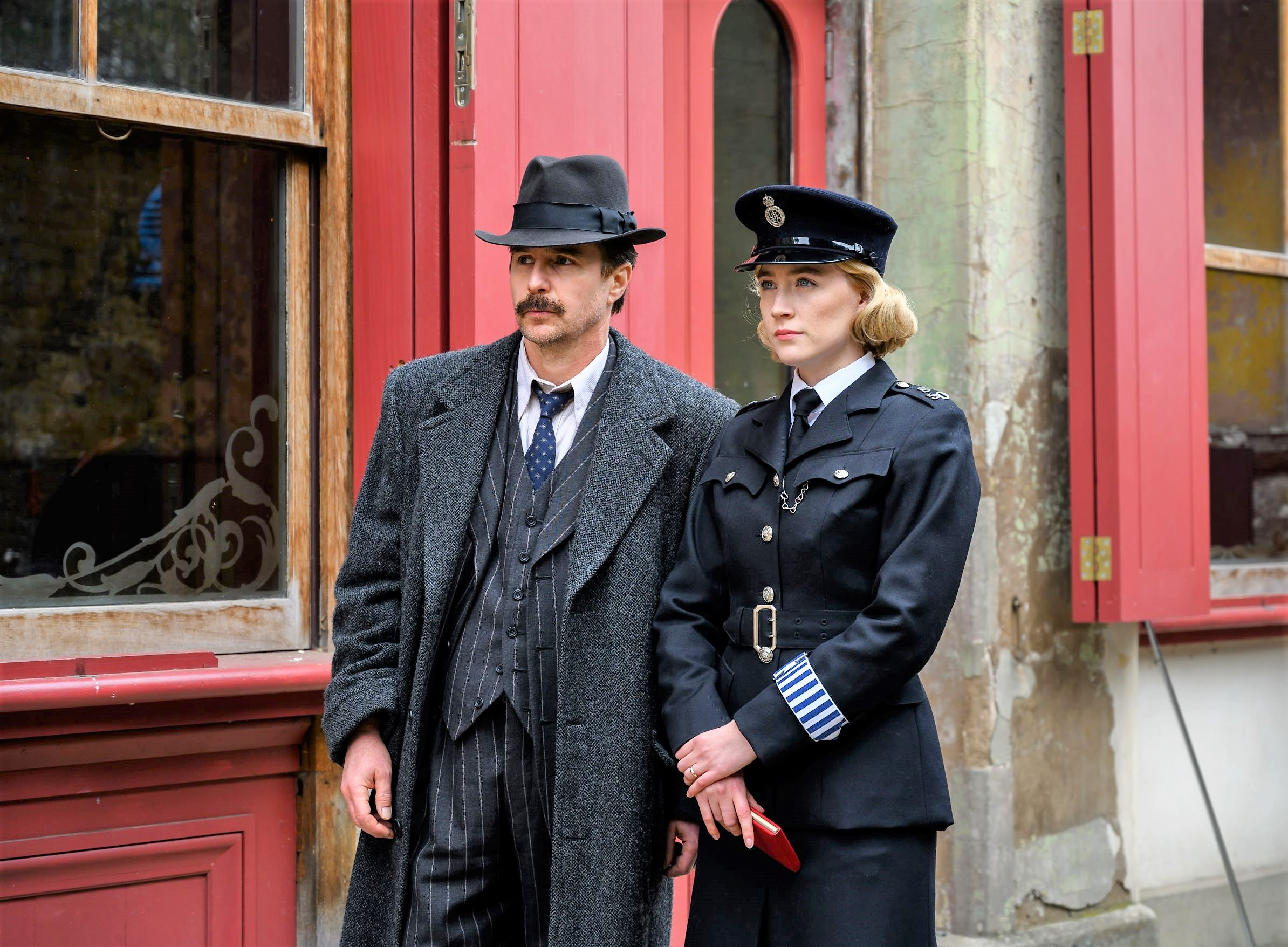
Firmly and obviously set in the period of the play’s opening, See How They Run is laden with what can only be described as cultural references. Not only does its plot purportedly open in the actual theatre where The Mousetrap was premiered, but there are several jokes arising from the fact that one clause of the copyright was that no film version could be undertaken until six months after the stage production closed. As a result, it was only recently that a film version of the play was produced.
Then, too, as a further inside joke, among the characters included are Richard Attenborough and his wife Sheila Sim. Attenborough did play a lead role in the original production of The Mousetrap, before going on to a successful career as a movie director – most notably of Gandhi, and far less successfully of the film version of A Chorus Line. Many will have forgotten that these two actors of the 1940s and ‘50s prominently starred in several films, many of them the product of Shepperton Studios.
Other refences may be less obvious. Surprisingly, there is no mention of Sandy Wilson’s The Boyfriend, the musical which brought Julie Andrews to fame and which for many years seemed destined to equal the staying power of The Mousetrap. Among the many that are included is the fact that Christie’s husband was an archaeologist and that Tom Stoppard, the brilliant playwright, wrote a wonderfully comical spoof of The Mousetrap, The Real Inspector Hound.
And while all of these and other such references can engender smiles of recognition, as well as providing a game of “spot the reference,” See How They Run (the title is yet another cultural reference) is less than successful as a satire of the whodunit form in general and The Mousetrap in particular.
It is true that the film follows (and blatantly mocks) the whodunnit formula, starting with a murder backstage in the theatre where The Mousetrap is celebrating its 100th performance, while talk of a movie version is rife. This, of course, allows for references to Hitchcock, Grace Kelly, and, of course, the movies Rear Window and Stage Fright. It attempts to satirize the detectives, particularly in the form of a young, bumbling police sergeant, rather awkwardly played by Saoirse Ronan – no Hercule Poirot here, though there are obvious references to Christie’s Belgian detective. It does sport a convoluted, perhaps too convoluted, plot line, in which most of the characters become suspects in turn. Unfortunately, the whole thing becomes laboured, too clearly reaching for laughs, and ultimately more tiresome than comical.
It is true that the film sports a talented cast, does engage in some diverting filmic approaches, including a split screen and much removal of the “fourth wall.” It is impeccably set in the period, with some humorous references to the British class system, and, with the aid of a multitude of red herrings, keeps the audience guessing until the ultimate (and, here, totally implausible) climax—itself a reference to at least one of Christie’s novels.
Whether this is enough to warrant an outing to the theatre, one must decide for oneself. At the moment the film is not available in Canada on any streaming services, despite (or because of?) at least a month-long run in theatres. See How They Run doesn’t quite live up to its promise, though it is an amiable enough diversion, perhaps suitable to fill an empty afternoon. However, the whodunnit deserves a better spoof than this!







