


Trinity Sunday, Year B
First Reading: Dt 4:32-34, 39-40
Second Reading: Rom 8:14-17
Gospel Reading: Mt 28:16-20
“There is only one God,” says The Penny Catechism, but “there are three persons in God: God the Father, God the Son, and God the Holy Spirit.”
The Holy Trinity is a “mystery”: a truth which is “revealed by God,” but “above reason.”
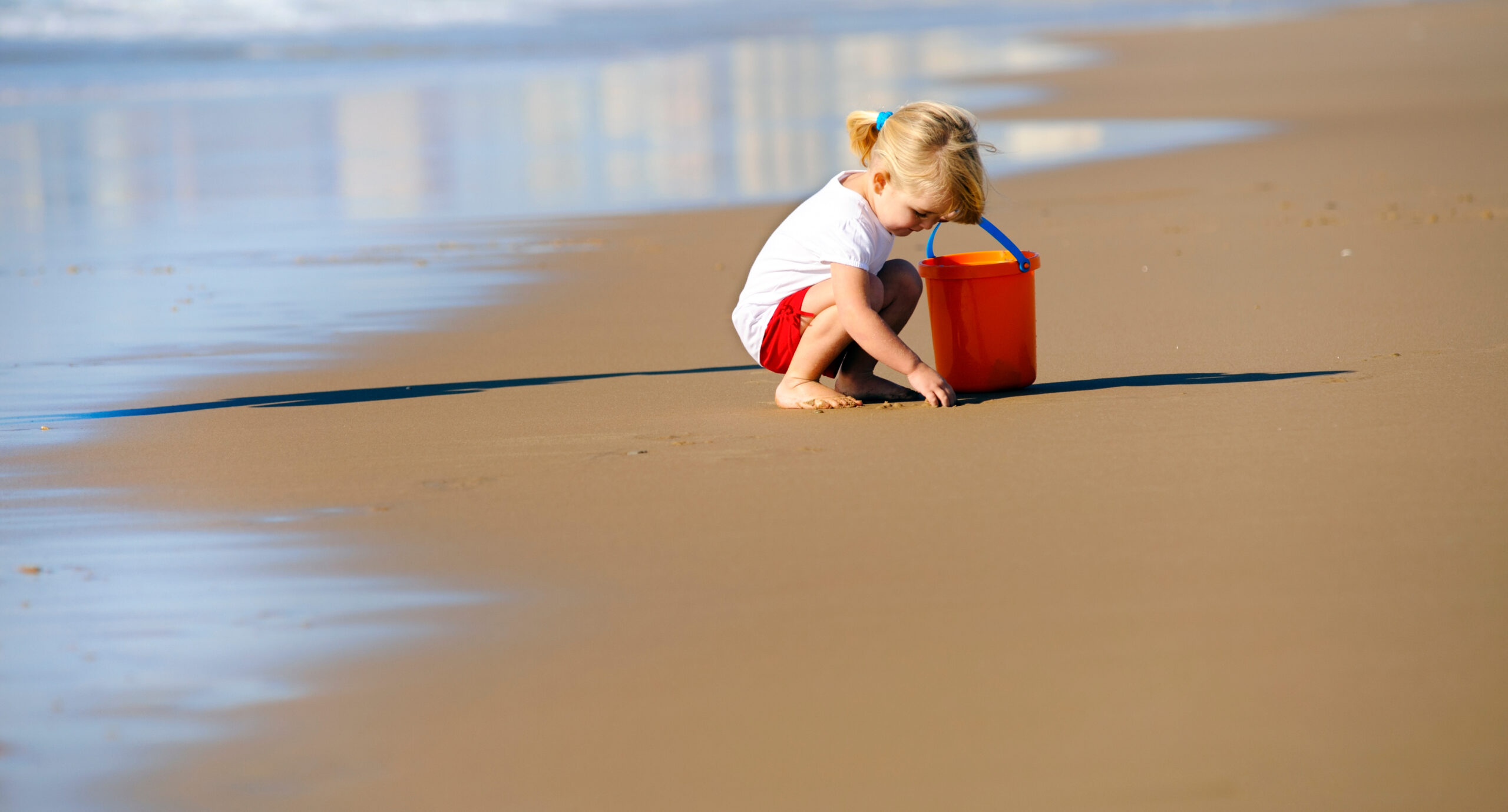
That does not mean that we cannot know anything about it. Unfortunately, a story about St. Augustine trying to understand the Trinity by watching a child pouring water into the sand, sometimes pictured in art but not found in his writings, often discourages us from thinking about the Trinity at all. Should we think about it? Does it matter?
The answer is yes: more than anything else in the world.
So let us think about it.
“God is eternal blessedness, undying life, unfading light,” says the Catechism of the Catholic Church. In himself, he is “an eternal exchange of love: Father, Son, and Holy Spirit.”
Now comes the amazing part, and the reason why the doctrine of the Holy Trinity matters to us: God “has destined us to share in that exchange.”
Beyond all imagination, “God freely wills to communicate [to us] the glory of his blessed life,” says the Catechism. “Such is the plan of his loving kindness, conceived by the Father before the foundation of the world.” There was no “necessity whatever” for God to create; he simply “wanted to make his creatures share in his being, wisdom, and goodness.”
“In God there is no hunger that needs to be filled, only plenteousness that desires to give,” C.S. Lewis explains. “God, who needs nothing, loves into existence wholly superfluous creatures.”
In other words, God created humans for their own sake, not for his, the Catechism says: for their own happiness, not to increase his.
The Holy Trinity, then, is our destiny. Surely we want to know something about it!
“At the heart of the divine act of creation is the divine desire to make room for created persons in the communion of the uncreated persons” of the Trinity, says the International Theological Commission.
However, it is only as God’s children that we can take our places in the Holy Trinity. To accomplish God’s plan, therefore, we must “be conformed to the image of his Son,” says the Catechism. That plan “unfolds in the work of creation, the whole history of salvation after the fall, and the missions of the Son and the Spirit, which are continued in the mission of the Church.”
Carrying out this plan “is the common work of the three divine persons, for as the Trinity has only one and the same nature, so too does it have only one and the same operation. The Father, the Son, and the Holy Spirit are not three principles of creation, but one principle.”
However, each divine person performs the work according to his unique personal characteristic. The Church says that there is “one God and Father from whom all things are, and one Lord Jesus Christ, through whom all things are, and one Holy Spirit, in whom all things are.”
“The whole Christian life is a communion with each of the divine persons, without in any way separating them,” the Catechism says. Those who glorify the Father do so “through the Son in the Holy Spirit”; those who glorify Christ do so because the Father draws them and the Spirit moves them.
Whatever we can conceive of the Father’s “eternal and unchangeable glory,” we must also understand “of the Son and of the Holy Spirit, without any separation or difference,” said Pope Leo the Great.
Similarly, we might add that whatever we know of the mercy and compassion of Jesus, who is God the Son, we must also attribute to God the Father and God the Holy Spirit; whatever we experience of the fire, passion, and strength of the Holy Spirit, we must also attribute to the Father and the Son.
Father Hawkswell has now finished teaching The Catholic Faith in Plain English, however the course remains available in both print and YouTube form at beholdvancouver.org/catholic-faith-course. Starting Sept. 22, he will again teach the course in person on Sundays from 2 to 4 p.m. at the John Paul II Pastoral Centre, 4885 Saint John Paul II Way, 33rd Avenue and Willow Street, Vancouver, and Mondays from 10 a.m. to noon in St. Anthony’s Church Hall, 2347 Inglewood Avenue, West Vancouver. The course is entirely free of charge and no pre-registration is necessary.







