

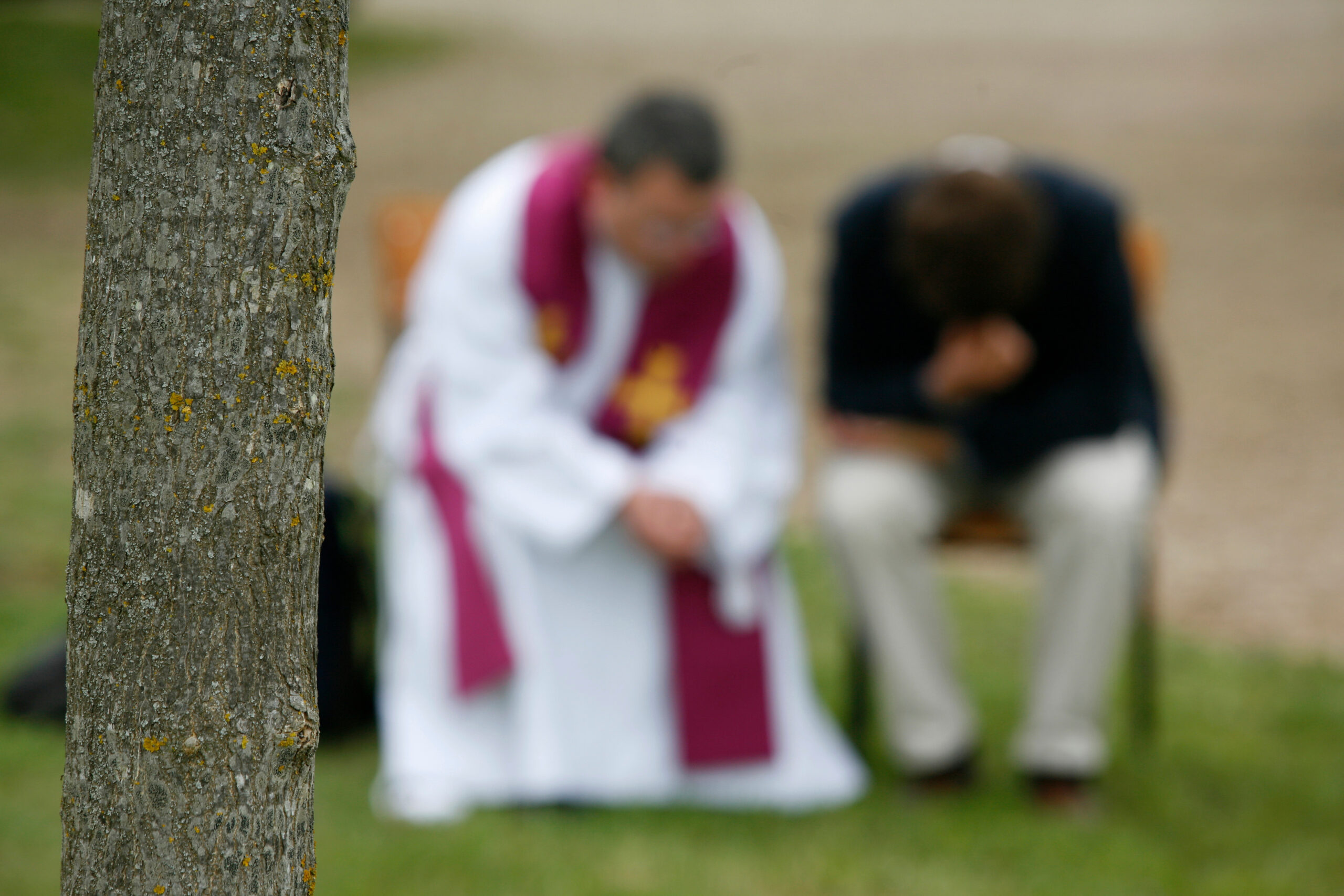

Towards the end of the Second Letter to the Corinthians, St. Paul expressed his concern for the Corinthian Church: “For I fear that perhaps when I come I may find you not as I wish, and that you may find me not as you wish — that perhaps there may be quarrelling, jealousy, anger, hostility, slander, gossip, conceit, and disorder.” (2 Cor 12:20)
St. Paul corrected the sin of the flesh in the First Letter to the Corinthians, but there were still many spiritual sins which were directly opposed to charity. St. Thomas said, “Now charity does two things: first, it makes men’s hearts consent to one another; secondly, it induces men to mutual progress. Spiritual sins, on the other hand, set men disagreeing and make them offend one another. First, therefore, he lists the spiritual sins which pertain to dissension; secondly, those which make for offence.”
The spiritual sins which pertain to dissension listed by St. Paul are quarrelling, jealousy, anger, and hostility. According to St. Thomas, “quarrelling” is the same as “contention.” St. Ambrose said, “Contention is an attack on the truth, accompanied by the confidence of shouting.”
The spiritual sins which make for offence listed by St. Paul are slander, gossip, conceit, and disorder. St. Thomas commented: “Because such evils consist mainly in injuries from words and not from deeds, he passes over injuries from deeds and lists those from words.”
The Navarre Bible states: “The profound pain which St Paul feels on account of the sins of others — they make him weep — should make the Christian eager to atone to God our Lord for all the offences offered him.”
St. Josemaría Escrivá wrote, “Don’t ask Jesus to forgive only your own faults: don’t love him with your heart alone. Console him for every offence that has been, is, and will be done to him. Love him with all the strength of all the hearts of all the men who have loved him most.”
St. Paul warned the sinners to repent before his third visit to Corinth. He wrote, “For he was crucified in weakness, but lives by the power of God. For we also are weak in him, but in dealing with you we will live with him by the power of God.” (2 Cor 13:4) Paul came earlier with weakness, but now he would come with the power of God.
According to St. John Chrysostom, weakness can mean “persecutions, trials, plottings and the like. Christ was not weak in body or in spirit, but he was persecuted and put to death. It was not because of any inherent weakness that he went to the cross; on the contrary, he chose to die in that way in order to give us life in the power of God.”
St. Paul exhorted the Corinthians: “Examine yourselves, to see whether you are in the faith. Test yourselves. Or do you not realize this about yourselves, that Jesus Christ is in you? — unless indeed you fail to meet the test!” (2 Cor 13:5)
Catholic author Stephen Ray commented: “Now Paul is working toward the close of his letter. He exhorts the Corinthians to test themselves. This is not an easy thing to do. We experience the difficulty of honestly examining ourselves as we sit in line at the confessional. We are not the best judges of ourselves because we tend to sit at the bench of the defence attorney — justifying our every action. It takes a work of the Holy Spirit and the word of God to reveal our inner thoughts and discern our motives.”
The Navarre Bible states: “This advice to the Corinthians to make a searching examination of conscience reminds us of the critical importance of the practice of daily examination of conscience in the Christian life. The saints have always recommended this practice.”
St. Paul concluded the Second Letter to the Corinthians with a Trinitarian greeting: “The grace of the Lord Jesus Christ and the love of God and the fellowship of the Holy Spirit be with you all.” (2 Cor 13:14)
St. Thomas commented: “The grace of Christ, by which we are justified and saved; the love of God the Father, by which we are united to him; and the fellowship of the Holy Spirit, who distributes the divine gifts to us.”
In the 1980s, c taught this affirmation: “God saves me, Jesus enlightens me, the Holy Spirit is my life, thus I fear nothing.”
Your voice matters! Join the conversation by submitting a Letter to the Editor here.
保祿警告靈性上的罪過
在格林多後書後段,聖保祿對格林多教會表達了憂慮:「因為我怕我來到的時候,見你們不合於我所想望的,你們也見我不合於你們所想望的:就是怕有爭端、嫉妬、憤怒、分裂、譭謗、挑唆、自大、紛亂。」(格後 12:20)
聖保祿在格林多前書中糾正了肉性上的罪,但在教會中仍然存在許多與愛德相對立的靈性罪過。聖多瑪斯亞奎納指出:「愛德有兩種效能:一是使人的心彼此契合;二是激勵彼此共同進步。而靈性罪過卻使人彼此不合,互相冒犯。因此,保祿首先列出導致不和的靈性罪過;其次列出導致冒犯的罪過。」
保祿所列導致不和的靈性罪過有:爭端、嫉妬、憤怒和分裂。聖多瑪斯解釋說「爭端」就是「爭吵」。聖安博補充:「爭吵是一種對真理的攻擊,並伴隨著自信地大聲喧嚷。」
保祿接著列出導致冒犯的靈性罪過有:譭謗、挑唆、自大和紛亂。聖多瑪斯指出:「因為這些罪大多來自言語的冒犯,而不是行動上的冒犯,他便跳過行動上的傷害,專注於言語的傷害。」
納瓦爾聖經(Navarre Bible)註解提到:「聖保祿因別人的罪而感到深切的痛苦 – 這些罪令他痛哭,這應激勵我們基督徒努力向我們的主天主為所有對祂的冒犯作補贖。」
聖施禮華寫道:「不要只求耶穌寬恕你的過犯;不要只是用你自己的心去愛祂。要為所有曾經、現在和將來對祂的冒犯安慰祂。用所有曾最深愛祂的人之心,去全心全力地愛祂。」
聖保祿在第三次前往格林多之前警告罪人悔改。他寫道:「他雖然由於軟弱而被釘在十字架上,卻由於天主的德能仍然活着;我們也是一樣,雖然我們在他內也成了軟弱的,但對於你們,我們卻也要由於天主的德能同他一起活着。」(格後 13:4)保祿前次來時顯得軟弱,如今將以天主的德能來臨。
根據金口聖若望的解釋,「軟弱可以指迫害、磨難、陰謀等。基督在身體或精神上並不軟弱,但祂卻遭受迫害並被釘十字架。祂甘願走上這條路,並非出自本身的軟弱,而是為了使我們因天主的德能而獲得生命。」
聖保祿勸勉格林多人:「你們該考查考查自己,是否仍站在信德上,你們要考驗考驗自己!難道你們自己認不出耶穌基督就在你們內嗎?若不然,你們就是經不起考驗的!」(格後 13:5)
天主教作家Stephen Ray評論道:「保祿在書信即將結束時,勸勉格林多人自我省察。這並非易事。我們在辦告解時往往難以誠實審視自己,因我們不是判斷自己的最好審判者,因為我們自己把一切行為辯解 – 把一切行為合理化。唯有藉著聖神的工作和天主聖言的光照,才能洞察我們的內心與動機。」
納瓦爾聖經指出:「保祿勸勉格林多人作深入的良心省察,這提醒我們每日省察在基督信徒生活中極為重要。眾聖人一向強烈建議這項靈修實踐。」
聖保祿以聖三祝福結束格林多後書:「願主耶穌基督的恩寵,和天主的愛情,以及聖神的相通,常與你們眾人相偕!」(格後 13:13)
聖多瑪斯解釋:「基督的恩寵使我們成義得救;天父的愛使我們與祂合而為一;聖神的共融則分施於我們神聖的禮物。」
在1980年代,於敘利亞Soufanieh聖母顯現的訊息中教導這句話:「天主拯救我,耶穌光照我,聖神是我的生命,因此我無所畏懼。」
Your voice matters! Join the conversation by submitting a Letter to the Editor here.







