

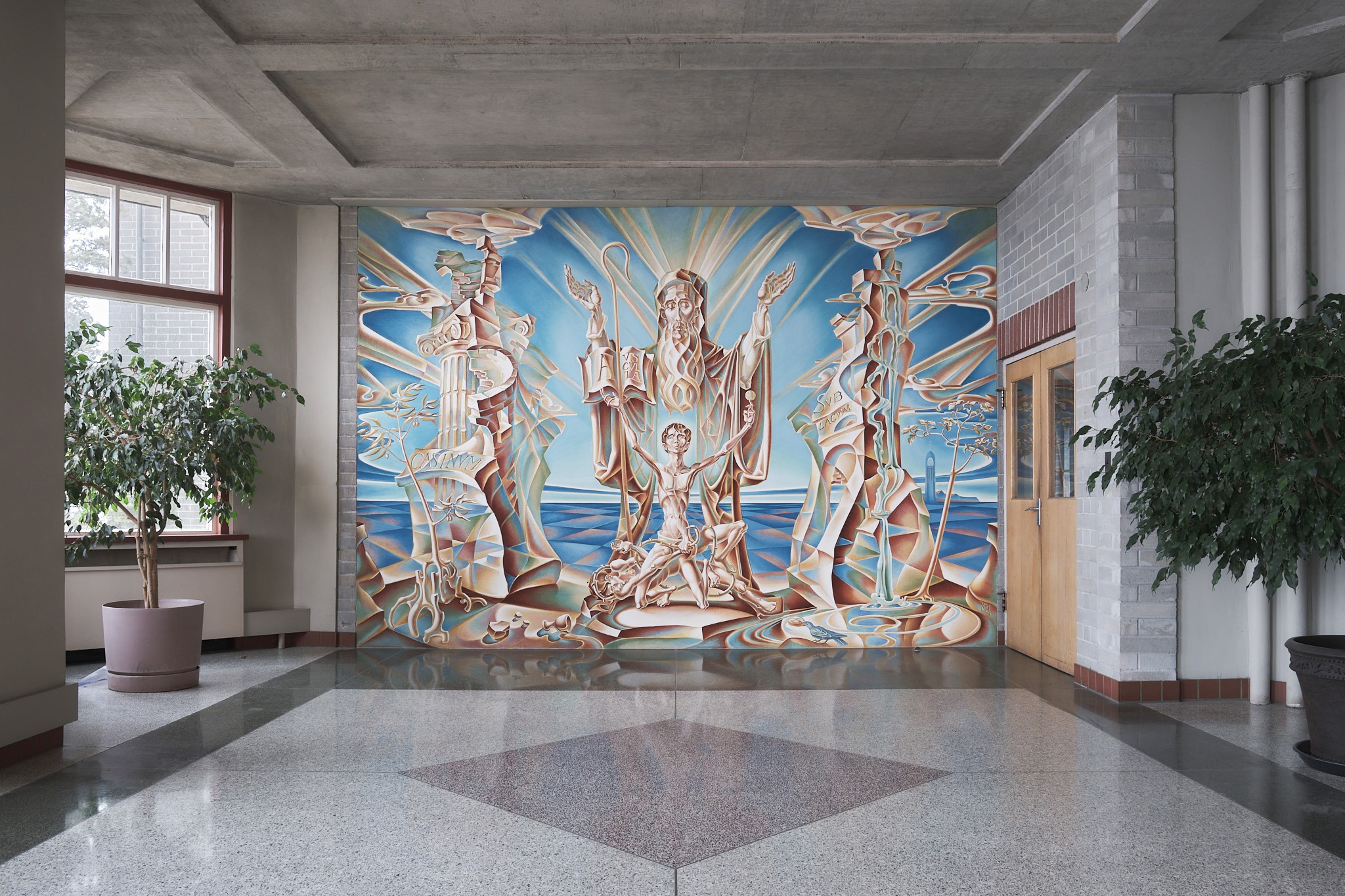

The Path of Paradise (or Of Interior Peace) is a classic 16th-century Christian devotional by Venetian priest Lorenzo Scupoli, most commonly published as a companion to his celebrated masterpiece The Spiritual Combat. The work explores the pursuit of inner stillness, humility, and worldly detachment as the royal road to spiritual perfection and union with God.
Scupoli begins with a foundational conviction: the human heart was made for God, and its deepest restlessness is nothing other than the mark of this origin. All genuine peace flows from living in accord with the heart’s God-ward direction, and every lesser resting place is, in the end, a form of exile. Saint Augustine gave this truth its most celebrated formulation: our heart is restless until it rests in Thee.
The Christian life on earth consists in nothing less than continual warfare and temptation, a combat that endures until death. The Catechism teaches soberly that “The way of perfection passes by way of the Cross. There is no holiness without renunciation and spiritual battle. Spiritual progress entails the ascesis and mortification that gradually lead to living in the peace and joy of the Beatitudes.” (CCC, §2015)
A believer is a soldier who must “put on the whole armour of God to stand against the wiles of the devil.” (Ephesians 6:11) Scupoli insists that this combat is primarily interior: the struggle against disordered thought, disordered passion, and self-will is more decisive than any outward conflict. Victory here produces a peace which the world cannot give and cannot take away.
Since the battlefield is the heart, the first practical duty is interior vigilance. In The Soul of the Apostolate, Dom Jean-Baptiste Chautard presents “custody of the heart” as the keystone of the interior life.
It is not a tense self-surveillance, but a peaceful and habitual attentiveness that keeps one’s intentions, thoughts, and actions ordered to God. Like an alert sentry, the soul watches over its inner movements, striving to “do what you are doing” fully in God’s presence.
In the Eastern tradition, “Nepsis” — prominently taught by the Fathers of The Philokalia — means watchfulness, vigilance, or sobriety of soul. It is the guarding of the mind and heart against intrusive thoughts and disordered passions, intercepting them at the “door of the heart” before they can take root in the will.
While “custody of the heart” emphasizes fidelity to God amid action and “Nepsis” stresses interior stillness and immediate rejection of harmful thoughts, this vigilant attention to the inner life is considered the foundation of true prayer and the path to inner stillness, enabling continuous communion with God.
Scupoli’s image for the goal of this vigilance is architectural: interior peace is a city of God being built within the soul, a stable interior atmosphere in which God can act freely. This city of peace is not built in a day. It rises stone by stone through countless small acts of trust, self-denial, and fidelity, often invisible to the person performing them.
Christian peace is not the absence of conflict but the fruit of ordered charity — a deep, unshakeable rootedness in the God who is faithful.
When peace cannot be regained by a simple act of the will, Scupoli directs the soul to persevering prayer as its surest refuge, and takes Christ’s threefold prayer in Gethsemane as the definitive model.
In desolation especially, the short, heartfelt cry is among the most powerful forms of spiritual combat, uniting the soul’s own anguish to Christ’s and drawing on the strength of His obedience in the garden.
Scupoli points out that humility is the “whole foundation and main support” of interior peace. Humility is nourished by true self-knowledge. The monastic and mystical tradition insists that self-knowledge, especially honest knowledge of one’s weakness and susceptibility to sin, is indispensable if the soul is to rely on God rather than on its own resources.
Humility guards every other virtue against pride and vainglory, enables the soul to accept its poverty without despair, and teaches it to rest quietly in God’s mercy after each fall.
Where humility is genuinely deep, peace becomes remarkably difficult to disturb, because the soul has ceased to cling to its own performances, spiritual achievements, or judgments about itself. Humility is indeed the foundation of the interior city of peace.
在靈魂內建造天主之城
「天堂之路」(又譯「內心的平安」)是十六世紀威尼斯司鐸斯庫波里神父(Lorenzo Scupoli)的經典神修著作,常與他最著名的作品「神修戰鬥」一同出版。作品探討如何藉由追求內在的寧靜、謙遜與超脫世俗,走上通往靈性成全與與天主結合的王者之路。
斯庫波里神父首先提出一個根本信念為起點:人的心是為天主而受造的,而其最深層的躁動,正是這個神聖來源在靈魂上留下的印記。唯有順從內心朝向天主的方向,真正的平安才得以湧流;凡是較低層次的安息,最終都只是一種流放。聖奧思定以最著名的語句表達了這個真理:我們的心靈若不安息於祢,便不得安寧。
基督徒在世的生活,不外乎不斷的戰鬥與受試探,是一場持續至死的爭戰。「天主教教理」莊重地教導說:「走向完美的道路是通過十字架。沒有犧牲、沒有屬靈的戰鬥,就沒有聖德可言。靈性的進步要求靈修功夫與克己,這些會逐漸引領人生活在真福的平安與喜樂中。」(天主教教理2015 條)
信徒是一名士兵,必須「要穿上天主的全副武裝,為能抵抗魔鬼的陰謀」。(厄弗所書 6:11)斯庫波里神父強調,這場戰鬥主要是內在的:與紊亂的思想、紊亂的情慾與自我意志的鬥爭,比任何外在衝突都更具決定性。在此得勝,便能獲得世界不能給、也不能奪去的平安。
斯庫波里神父指出,既然真正的戰場在於人的心靈,首要的實踐責任便是內在的警醒。若翰蘇達(Dom Jean-Baptiste Chautard)在「宗徒事業之靈魂」中更將「守護內心」視為整個內在生活的基石。
這並非緊繃而焦慮的自我監視,而是一種安詳而恆常的留心,使人的意向、思念與行動都保持朝向天主。猶如警醒的哨兵,靈魂守望著自身內在的動向,努力在天主面前「做你正在做的事」。
在東方基督徒靈修傳統中,「涅普西斯」(Nepsis) – 由「聖愛靈修事工」(The Philokalia)諸聖父重要教導 – 意指心靈的警醒、守望與清醒的節制。它是一種對心思與情感的守護,使心與意志不受外來的雜念與無序的偏情所侵襲;並在這些念頭尚未在意志中扎根之前,於「心門」將之攔截。
「守護內心」強調在行動中對天主的忠誠,而「涅普西斯」則著重於內在的靜默與對有害思想的立即拒絕。這種對內心生活的警醒關注,被視為真正祈禱的根基,也是通往內在平安的道路,使靈魂得以與天主保持不斷的共融。
斯庫波里以建築的意象來描述這份警醒的目標:內在的平安是一座在靈魂深處興建的「天主之城」,是一種穩固而持久的內在氛圍,使天主能自由行動。這座平安之城並非一日可建成,而是藉著無數細微的信賴、自我否定與忠誠之舉,一塊石頭一塊石頭地疊起,往往連實踐者自己都未察覺其成長。
基督徒的平安不是沒有衝突,而是有序之愛的果實 – 深深紮根於忠信的天主之中,因而不可動搖。
當平安無法藉著單純的意志行動恢復時,斯庫波里神父指引靈魂以持久的祈禱作為最可靠的避難所,並以基督在山園的三次祈禱為最終典範。
尤其在靈性枯竭與神枯的時刻,那發自內心、簡短而真摯的呼求,是最有力的神修爭戰方式之一。這樣的呼喊,把靈魂自身的痛苦與基督的苦楚結合在一起,並汲取祂在山園中順服天父旨意所彰顯的力量。
斯庫波里神父指出,謙遜是內在平安的「整個基礎與主要支柱」。謙遜由真正的自知滋養。修道與神秘傳統一再強調,自知 – 尤其是誠實地認識自己的軟弱與易於犯罪的傾向 – 是不可或缺的;唯有如此,靈魂才能依靠天主,而非倚賴自己的能力。
謙遜守護其他一切德行,使其不致墮入驕傲與虛榮;使靈魂在承認自身貧乏時不至絕望,並教導人在每次跌倒之後,仍能安然憩息於天主的仁慈之中。
當謙遜真正深植於心時,平安便極難被動搖,因為靈魂已不再執著於自己的表現、靈修成就或對自身的評價。謙遜確實是內心和平之城的根基。
Your voice matters! Join the conversation by submitting a Letter to the Editor here.







