

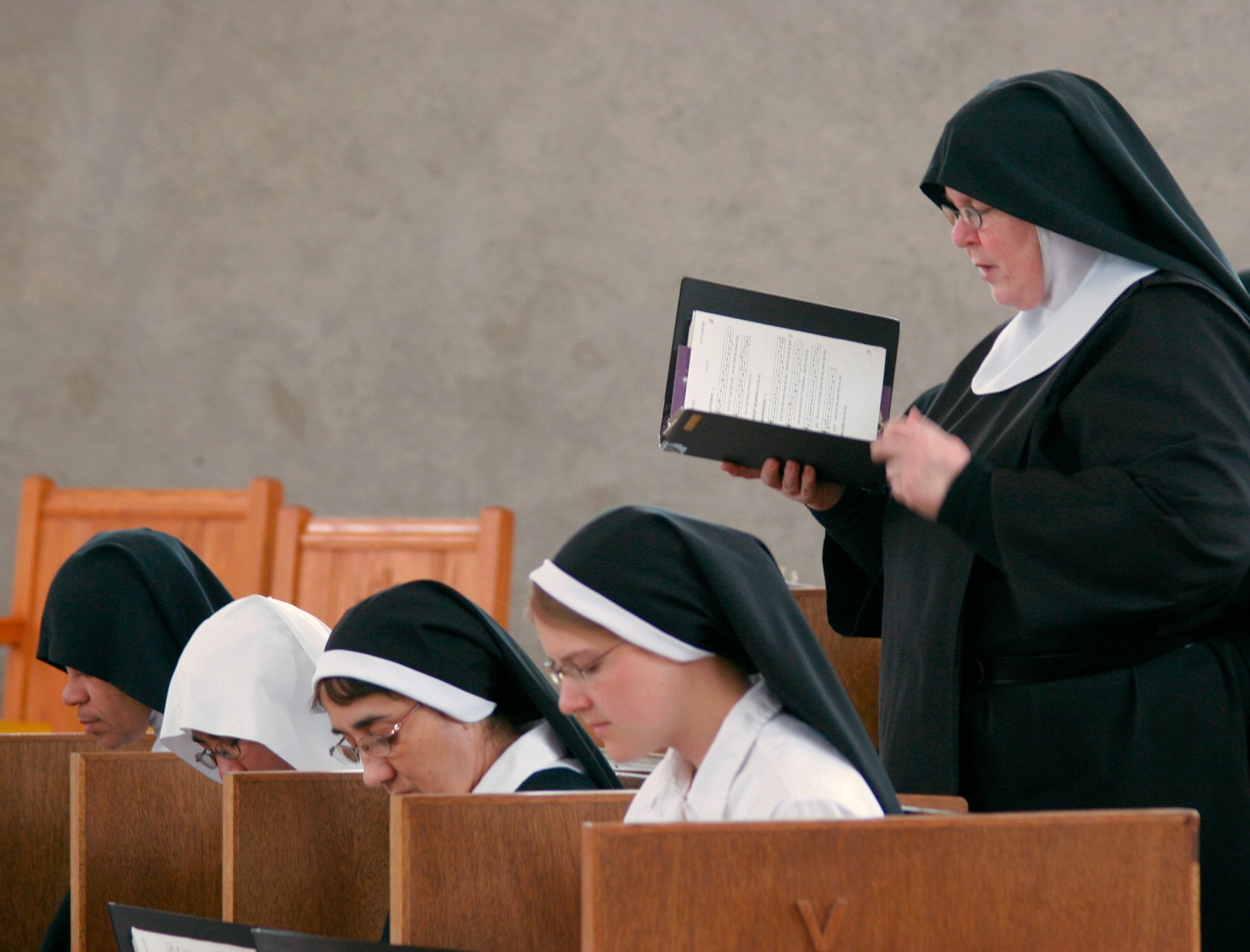

In his encyclical letter Mediator Dei, Pope Pius XII stated: “The sacred liturgy is the public worship given to the Father by our Redeemer as Head of the Church; and it is the worship which the society of the faithful render to their Head and through Him, to the eternal Father”
Dom Jean-Baptiste Chautard wrote, “As a member of the Church, I must have the conviction that when I take part in a liturgical ceremony, I am united to the whole Church not only through the Communion of Saints, but by virtue of a real and active co-operation in an act of religion which the Church, the Mystical Body of Christ, offers as a society to God. And by this notion the Church like a true Mother helps dispose my soul to receive the Christian virtues.”
Father Pius Parsch explained the difference between private prayer and liturgical prayer: “In private prayer I pray, mostly, for myself and my own affairs. It is the isolated person who stands in the centre of the action, and the prayer is more or less individualized. But in liturgical prayer, and therefore in the breviary, it is not primarily I who am praying, but the Church, the bride of Christ. The object of her prayer is broader, too: all the needs of God’s kingdom here on earth. In liturgical prayer, I feel more like a member of a great community, like a little leaf on the great living tree of the Church. I share her life and her problems. The Church is praying through my mouth, I offer her my tongue to pray with her for all the great objectives of redemption, and for God’s honour and glory.”
The clergy and the faithful celebrate the liturgy each day at Holy Mass and the liturgy of the Hours (also known as Breviary and Divine Office). Father Parsch pointed out that the two chief objectives which the breviary fulfills are: 1. it is the prayer of the Church as a body and, 2. it is a guide to genuine spiritual growth for the individual soul. He added: “Breviary and Mass belong together; they form a unity, the liturgical day. We might compare the relationship to the sun and the planets. The Mass is the sun about which the planets, that is, the canonical hours, gravitate. The canonical hours prepare for the Mass, they surround the Mass, they try to realize and retain the fruits of the Mass, and spread them over the day.”
The Bible contains many beautiful materials for prayer. The Liturgy of the Hours helps and guides us regularly to use those scriptural materials in prayer. Nowadays, the faithful can pray the Liturgy of the Hours daily by using applications such as iBreviary and Divine Office. I warmly recommend the praying of Morning Prayer (Lauds), Evening Prayer (Vespers), and Night Prayer (Compline) when possible.
The theme of Morning Prayer is praise. Father Parsch wrote: “It was at this beautiful hour that our Saviour burst the bonds of death. Resurrection – that is the background theme of Lauds. And the two pictures together, dawn and resurrection, remind us of a third arising from slumber, the spiritual awakening of the human soul.” The psalms at Morning Prayer are hymns of praise and frequently with nature themes.
The theme of Evening Prayer is thanksgiving. Father Parsch wrote: “The Magnificat is the climax, the great thanksgiving song of the Church. The canonical-hour theme is this: thanks be to God for the day just passed, both in the soul and in the Church, thanks for all His saving graces.”
At Night Prayer we pray for protection through the night and for a holy death. Night Prayer concludes with a Marian antiphon.
Dom Jean-Baptiste Chautard wrote, “Mental prayer and the liturgical life are two sisters who help each other. Mental prayer, before my Mass and Office, puts me in a supernatural atmosphere. The liturgical life makes it possible to transmit the fruits of my mental prayer to all the actions of the day.”
教會在禮儀通過我們祈禱
在通諭中,教宗庇護十二世宣稱:『神聖的禮儀是我們的救主作為教會的首領向天父公開的朝拜; 它是教友社團向其首領並通過祂,向永生之父獻上的朝拜。』
若翰肖塔爾院牧寫道:『身為教會成員之一,我應該有這堅定的信念,當我參與一教會禮儀的時候,我是跟整個教會結合一起,不單是諸聖相通功,但真的和活躍地與教會—基督奧體—-社團奉給天主的宗教行為合作。按照這個觀念,教會一如一位真正的母親幫助我們準備我們的靈魂去接受基督的德行。』
庇護帕爾施神父解釋私人祈禱和禮儀祈禱的分別:『在私人祈禱中,我祈禱,主要為我自己和我自己的事。這是個被隔離了的人,他站在行動的中心,祈禱或多或少是單獨化的。但在禮儀祈禱中,所以在日課中,它不是主要地為我祈禱,但卻是個教會,基督的淨配。她祈禱的目的也是廣闊一點:所有在世天主王國的一切所需。在禮儀祈禱中,我感覺多一點是整個團體的成員,像是活樹教會的一片小葉。我分享她的生命和她的困難。教會經我的口,我獻上我的唇舌跟她一起為救贖的一切大目標並為天主的光榮而祈禱。』
神職人員和信眾們在每日彌撒和日課。帕爾施神父指出日課兩個主要的目標是:1.它是教會團體的祈禱,2.它是一個別靈魂達到靈修成長的一個指引。他補充說:『日課和彌撒是同屬於一起的;它們形成一體,禮儀日。我們可以以它與太陽和行星關係作比較。彌撒是太陽,行星,就是時辰誦禱為之吸引而轉。時辰誦禱為彌撒做準備,它們環繞著彌撒,它們嘗試去體認和保留彌撒的果實,並散播果實於一天。』
聖經包含很多美麗的祈禱資料。日課幫助和帶領我們有規律地在祈禱中應用聖經內的資料。現在信眾們可以每天用“iBreviary”(中文: 『我靈讚頌主』)和“Divine Office”應用程式作日課的祈禱。我熱烈地推薦盡可能每日誦念晨禱,晚禱和夜禱。
晨禱的主題是『讚美』。帕爾施神父寫道:『就是在這美麗的時間我們的救主衝破死亡的束縛。復活—–這是晨禱背景的主題。黎明和復活兩圖象,提醒我們睡眠中一個第三次的蘇醒,人類靈魂的蘇醒。』晨禱在聖詠中是讚美的詩歌並經常是自然的主題。
晚禱的主題是『謝恩』。帕爾施神父寫道:『這謝主曲是高潮,教會最好的感恩歌曲。這時辰的主題是:在靈魂和教會中,為這一天的過去,感謝天主,感謝祂一切救贖恩寵。』
我們在夜禱祈求晚間的保護和一個聖善的死亡。夜禱以聖母對經完結。
肖塔爾院牧寫道:『心禱和禮儀生活是兩姊妹,她們互相幫助。在彌撒和日課前的心禱把我致於超自然的氣氛中。禮儀生活使心禱的果實能夠傳達到每日的一切行動中。』







