


“My God, my God! First my husband, and then my son committed suicide!” cried the woman at the funeral home where I was called to help her.
Her spouse had died with the assistance of a doctor who helped him end his life, and a week later, her son hanged himself while in a severely depressive state. She was a non-practising Catholic and both her husband and son were declared atheists. She asked me: “Father, can I have a funeral for both of them?”
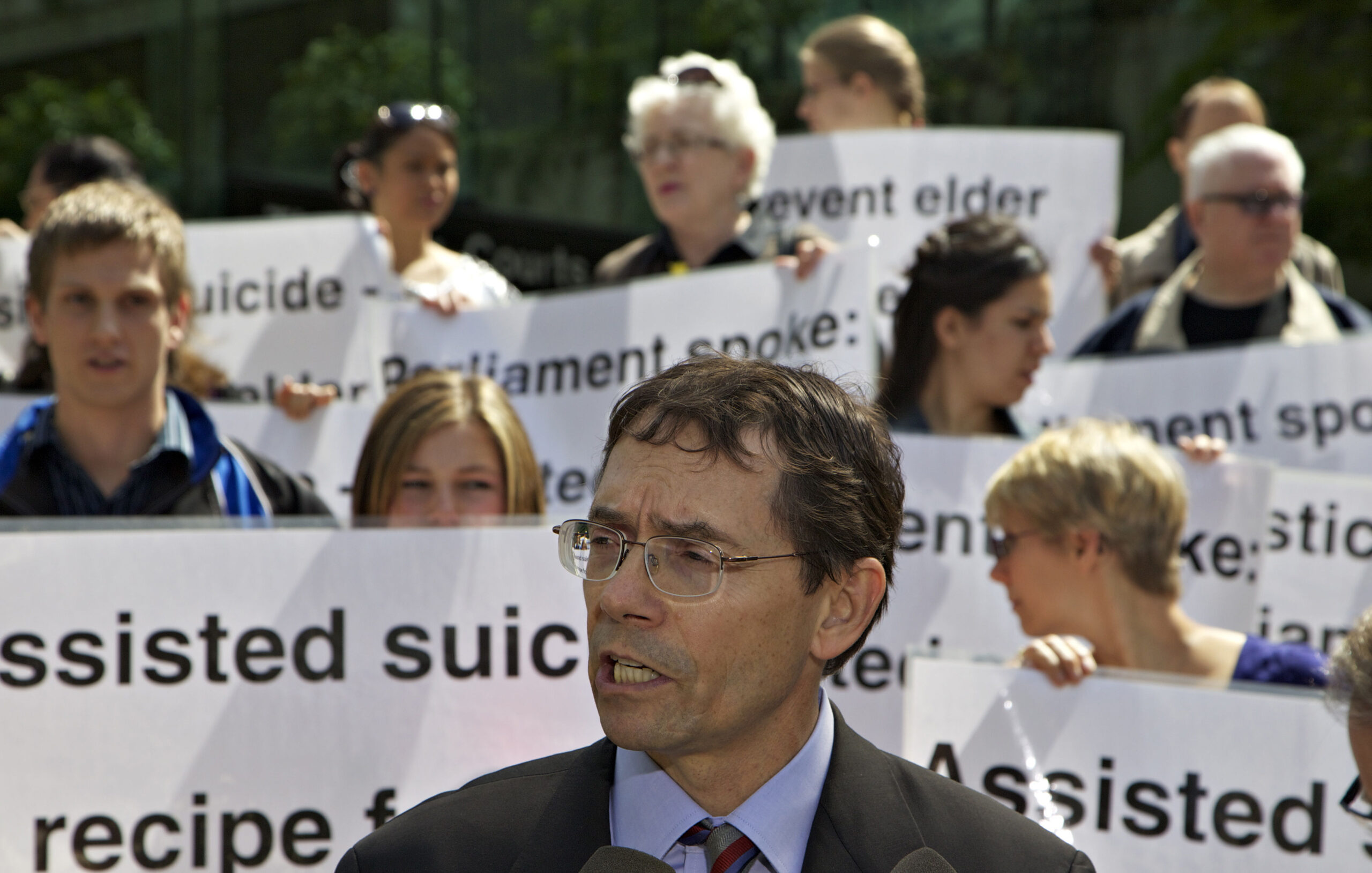
Now that euthanasia and physician-assisted suicide is legal in Canada, Catholics and non-Catholics alike are wondering what to do when the family wants to have ritual prayers for a loved one who has died under these circumstances.
The importance of the situation is so grave that Archbishop Miller sent a pastoral letter to all parishes on Pro-Life Sunday, June 17, to call our attention to three crucial issues affecting all of us in British Columbia.
Euthanasia as well as assisted suicide strongly affects families and friends emotionally as well as spiritually, therefore, I feel readers should be better informed of the canonical rules to be mandatorily applied in our diocese.
Let me start by mentioning the three crucial issues mentioned by the archbishop in his letter. First, he writes: “We lack the capacity to provide good palliative care that helps people die in comfort and peace. At the same time … there is increasing pressure for patients to end their life by choosing euthanasia or assisted suicide.”
“Second,” the Archbishop adds, “… doctors and other health care workers are being pressured into taking part in abortions, assisted suicide and euthanasia, and other practices that violate their consciences. This could force pro-life doctors and nurses out of their professions and thus make it difficult for patients to access the kind of health care provider that they prefer.
“Third … young people are not receiving accurate information and sound moral teaching about the meaning of love, relationships and their own dignity. We know that when they are taught to value their own worth and the dignity of others, including women and unborn children, they are much more likely to choose life.
“Fortunately, there are many organizations in the Lower Mainland that are addressing each of these issues. I urge you to support them financially and with your prayers. Please be generous and go to the RCAV website (www.rcav.org) to donate. All the funds will be used to support organizations that protect the right to life, freedom of conscience, and vulnerable women, children, the elderly and dying persons.”
New legislation in Canada permits the deliberate taking of human life, striking down the divine law of the Fifth Commandment: “You shall not kill,” thus causing great confusion about the morality of such choices.
On June 14, clergy of the Vancouver archdiocese gathered in All Saints Parish in Coquitlam for a study day concerning funeral rites for those who have asked for euthanasia or physician-assisted suicide. The liturgical guidelines concerning these were written by Archbishop Miller last September and he addressed this by answering five questions. I will quote these in my columns.
The first question: “What does the Church teach about legalized euthanasia and physician-assisted suicide?”
Even if our society recognizes suicide as an evil, modern cultures agree that it should no longer be viewed as a criminal act. The Archbishop wrote: “A human life comes to an end; but the suffering continues and is passed on to others. Experience demonstrates that people who are vulnerable or easily influenced may in turn become victims of another’s suicide. We see this especially among young people … Euthanasia and assisted suicide are now being presented as ‘morally acceptable,’ expressions of ‘free choice,’ and even ‘socially responsible solutions’ to the suffering caused by terminal disease and perhaps long-term disability. These false views can place subtle and not so subtle pressure on individuals weakened by pain and suffering, coercing them to make an immoral choice.
“The Church defends and respects all human life from conception to natural death as a magnificent gift of God. Her mission is to proclaim the Gospel of Jesus Christ … The Church proclaims that there is a Christian meaning to our suffering and that the Cross of Jesus transforms the crosses of our lives and gives significance to what might otherwise bring hopelessness and despair. As a result, death, the natural end of our human life, becomes for believers an act of confident surrender to God and its acceptance expresses sorrow for sin and our trust in His merciful forgiveness.”
Transforming our human suffering into the Cross of Jesus will result in our glorious resurrection and eternal union with God, the giver of life.
[To be continued.]







