


Third Sunday of Easter, Year A
First Reading: Acts 2:14, 22b-28
Second Reading: 1 Pt 1:17-21
Gospel Reading: Lk 24:13-35
This Sunday’s Gospel Reading begins “with two people going the wrong way,” says Bishop Robert Barron in his book The Priority of Christ. Until now, in Luke’s Gospel, everything has moved toward Jerusalem, the site of the cross, the Resurrection, and the descent of the Holy Spirit. Now these two are walking away.
They are discussing Jesus’ passion and death and the reports of his Resurrection. However, because they are moving away from Jerusalem, they do not understand what has happened.
At this point, Jesus, who had come to gather the lost sheep, seeks them out, walks with them, and joins their conversation. They do not recognize him, partly because his body is glorified, but even more, Bishop Barron says, because “they are in the wrong spiritual space,” seeing Him through “a faulty interpretive lens.” Their frame of reference has no room for Him.
At Jesus’ question, they stop: the Lord’s presence, “even disguised, serves to arrest their negative momentum.” However, they look “sad.” At the Last Supper, Jesus had said that he would give his disciples the joy of the Holy Trinity, but these two are walking away from Jerusalem, the site of Jesus’ total self-offering to his Father.
“Are you the only stranger in Jerusalem who does not know the things that have taken place there in these days?” Cleopas asks. Ironically, Jesus is precisely the only one who does know!
“Oh, how foolish you are, and how slow of heart to believe all that the prophets have declared!” Jesus replies. Then, quoting the Old Testament, he reveals the pattern of his life, death, and Resurrection. He shows that Scripture as a whole is about him, providing the lens through which to look at what has happened to him.
“Was it not necessary that the Christ should suffer these things and then enter into his glory?” he asks. The disciples have been walking away from Jerusalem because the cross had convinced them that Jesus had been deluded, but Jesus shows them that the cross is the solution to the puzzle.
Throughout this explanation, they have been walking the wrong way. Jesus “has walked all the way with them, just as he had accompanied sinful humanity all the way to the limit of sin and death,” even “God-forsakenness,” Bishop Barron says. “As always, the Bible tells the story not so much of our quest for God as of God’s passionate quest for us.”
When Jesus makes as if to go further, the disciples press him to “stay” with them, using the same word Jesus had used in urging them to “remain” in him as he “remains” in his Father. The disciples have begun to sense that without Jesus, they will not be able to see.
We can compare the first part of this narrative to the Liturgy of the Word, Bishop Barron says; the second, to the Liturgy of the Eucharist. The risen Lord takes bread, blesses it, breaks it, and gives it to them. “Then their eyes are opened, and they recognize him.”
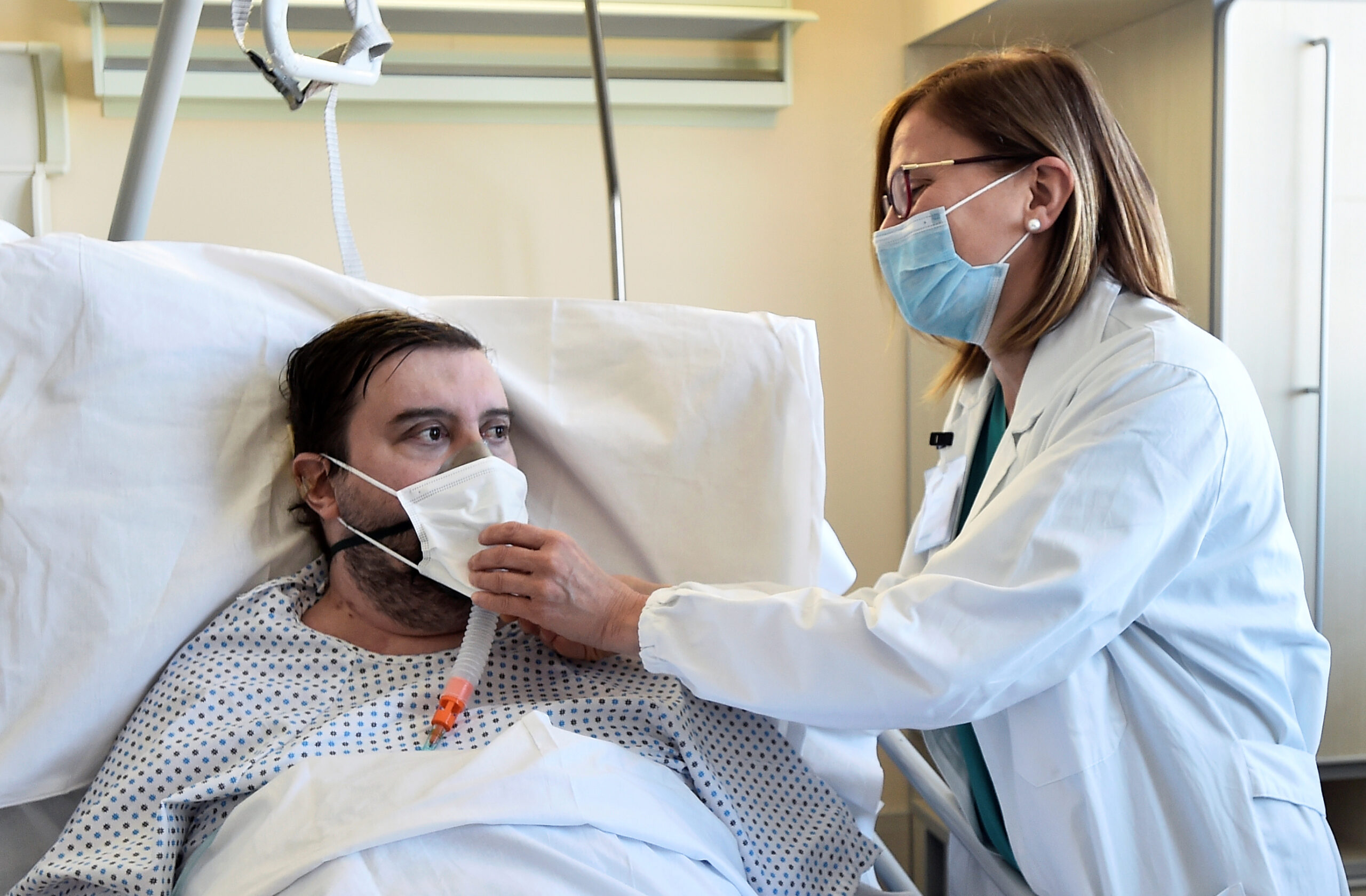
Perhaps we can apply all this to our own situation today. The Catechism of the Catholic Church notes that illness has always been “among the gravest problems confronted in human life.” There we experience our powerlessness, limitations, and finitude. “Every illness can make us glimpse death.”
There are two ways to respond. Like the disciples, we can try to walk away from it, into “anguish, self-absorption, sometimes even despair and revolt against God.”
Alternatively, we can embrace it. Illness can make us “more mature,” helping us discern what is not essential in our lives so that we “can turn toward that which is.” Indeed, illness often “provokes a search for God and a return to him.”
Through Christ, let us set our faith and hope on “God, who raised him from the dead and gave him glory.”







