
LANGLEY—A new organization has sprung up in the Lower Mainland to unite Catholics and evangelicals in the common goal of evangelism.
“In John 17:21, Jesus is recorded as saying he wants us Christians to be one, as he is one with the Father,” said Tom Hamel, a Catholic and executive director of the Fellowship of Catholics and Evangelicals and Project 17:21.
“The purpose is so the world will believe that God the Father sent Jesus, his Son, to this earth to bring salvation to all,” he said. “We’ve been given a mandate, particularly as lay people, to get out there and tell the world about Jesus Christ.”
That mandate is not unique to Catholics. “Our brothers and sisters in Christ are part of that church. Part of this goal is to join together with others who believe in Jesus, who want to please him, who want to follow him, and to bring that message to the rest of the world.”
Dialogue between pastors and theologians of two Christian denominations is ongoing, but too few lay people, who make up “99 per cent of the church,” are involved in the discussion.
“Our vocation as lay people is to go out into society and change the world for Christ.”
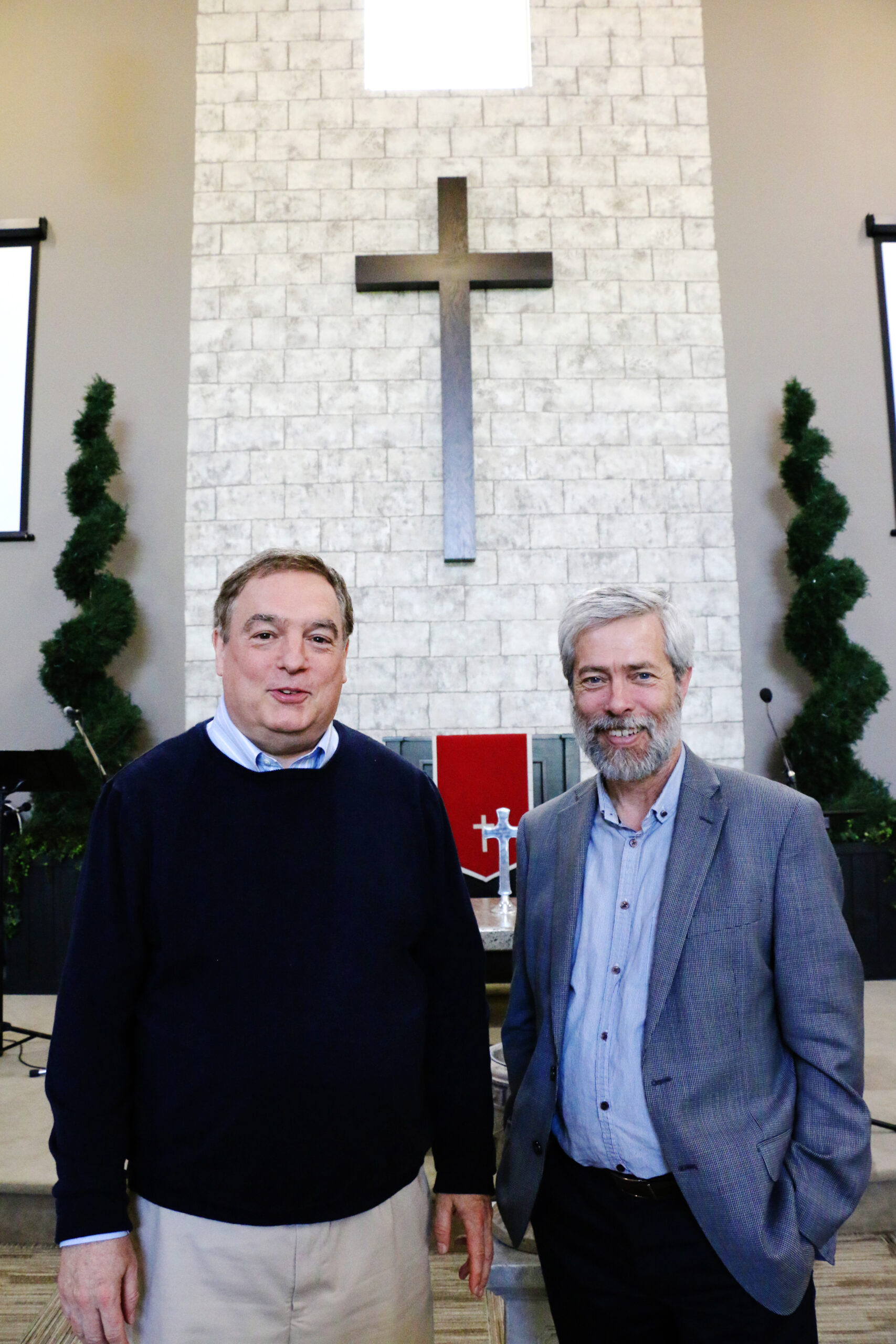
The Fellowship of Catholics and evangelicals hosted its first event at Christ Covenant Church in Langley June 10. The conference featured devout members of both churches discussing what they have in common and what they have learned from their brothers and sisters in Christ.
Among them was Robert Stackpole, a Catholic theologian at St. Therese Institute in Bruno, Sask. “One thing Catholics can learn from evangelicals is to keep the main thing (as) the main thing,” he told participants.
“As St. Paul put it, ‘I deliver to you as of first importance what I also received: that Christ died for our sins, that he was raised on the third day.’ Evangelicals spend much more time and attention than Catholics usually do pondering, preaching, and spreading that main thing.”
Christianity is healthy when it is built on knowing and spreading the Gospel with others, he said. “It’s Christianity, not ‘Churchianity.’”
Gordon Smith, a pastor and president of Ambrose University of Calgary, said evangelicals can learn something from Catholics when it comes to ecclesiology, sacraments, and liturgy.
“The fundamental matter separating Catholics and evangelicals is not tradition versus Scripture,” he said.
“It’s not faith versus works-righteousness. It’s not Mary. It’s not celibacy. It’s not the sacraments, or their meaning, or the centrality of Christ in worship and piety. We might all differ to some degree in all of these matters, but they are not the most fundamental point of divide between us. The most pressing issue is: what does it mean to be a Church? In this regard, we evangelicals need to listen twice as much as we speak.”
After hearing presentations from several other lay people and pastors, participants discussed how their beliefs influence social justice and evangelizing efforts.
“I really believe in what we’re doing here with the Fellowship of Catholics and evangelicals,” said Hamel. “This is something that the Lord wants us to do. It’s in the documents of the Church and it’s in our hearts.”
More information is available at Project1721.org.