

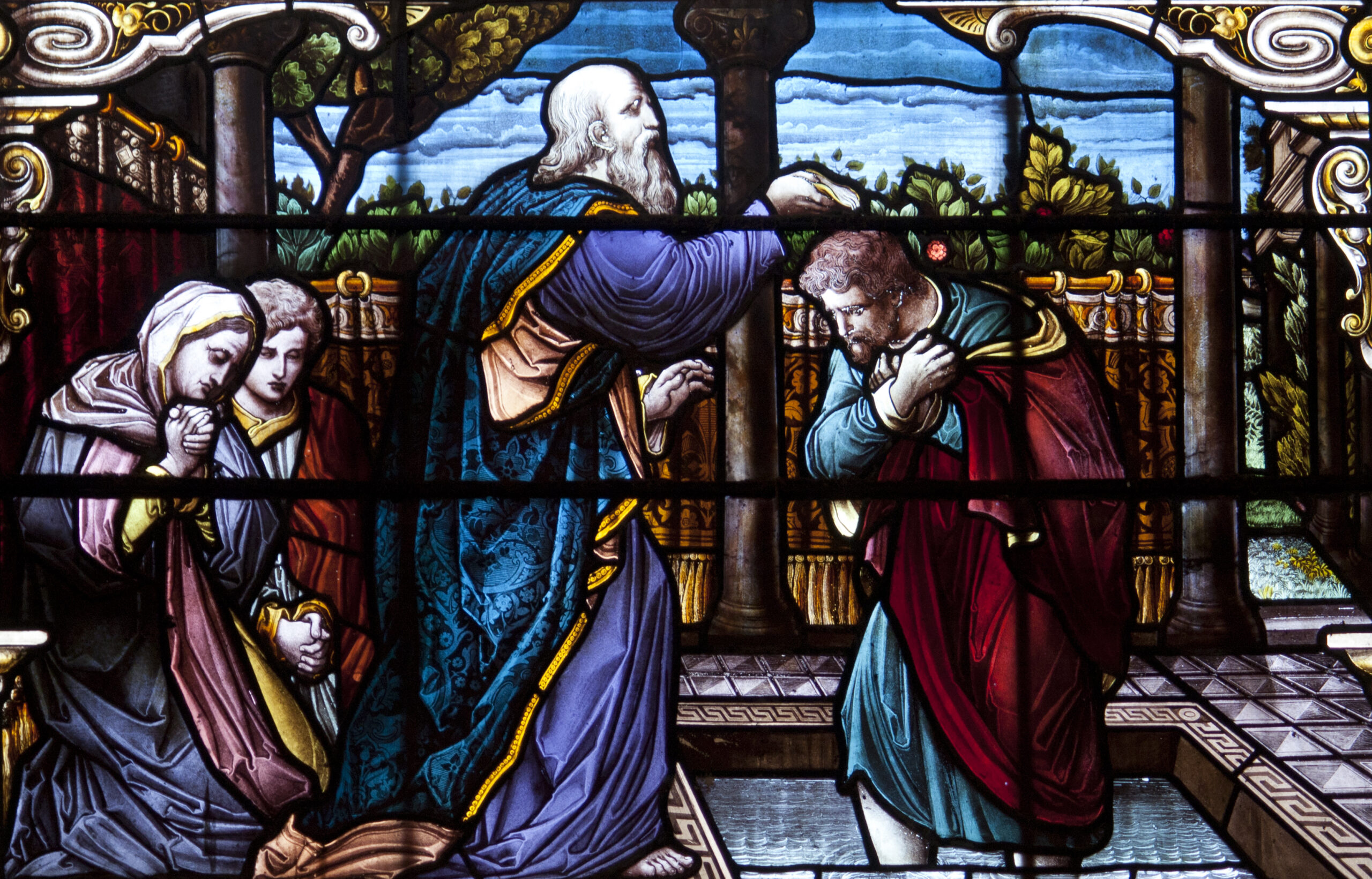

In the Second Letter to the Corinthians, St. Paul wrote, “But we have renounced disgraceful, underhanded ways. We refuse to practise cunning or to tamper with God’s word, but by the open statement of the truth we would commend ourselves to everyone’s conscience in the sight of God.” (2 Cor 4:2–3)
Catholic author Stephen Ray explained: “In that ancient culture as now, merchants would often adulterate their products with inferior substances so as to maximize their profits. In so doing, they diluted their products and cheated their customers. Itinerant teachers and philosophers would often do the same: they were more concerned about their delivery and speaking ability than about the truth and content of their words. Paul is not a peddler who adulterates or cunningly tampers with God’s word; rather he commends himself to every man’s conscience by his open statements of truth and his honest, forthright integrity.”
St. Paul wrote, “For what we proclaim is not ourselves, but Jesus Christ as Lord, with ourselves as your servants for Jesus’ sake.” (2 Cor 4:5)
St. Thomas Aquinas commented: “As if to say: we preach Jesus as Lord, but ourselves as servants, the reason being that we principally seek the praise of Christ and not our own. For a servant is one who exists for the profit of the master. That is why a minister of the Church, who does not seek the honour of God and the welfare of his subjects, is not a true ruler, but a tyrant. For whoever rules well should be as a servant seeking the honour and profit of his subjects.”
St. Paul also wrote, “Though our outer self is wasting away, our inner self is being renewed day by day.” (2 Cor 4:16)
St. Augustine said, “The renewal of humankind, begun in the sacred bath of baptism, proceeds gradually and is accomplished more quickly in some individuals and more slowly in others.”
St. Basil said, “A man who has his own best interest at heart will therefore be especially concerned for his soul and will spare no pains to keep it stainless and true to itself.”
St. Colette said, “If there be a true way that leads to the Everlasting Kingdom, it is most certainly that of suffering, patiently endured.”
St. Paul wrote about heaven, judgment, and new creation in chapter 5 of Second Corinthians: “For in this tent we groan, longing to put on our heavenly dwelling.” (2 Cor 5:2)
St. John Chrysostom said, “We do not want to be delivered from the body but only from the corruption which is in it. Our body is a burden to us, not because it is a body but because it is corruptible and liable to suffering. But when the new life comes, it will take away this corruption — the corruption, I say, not the body itself.”
“For we must all appear before the judgment seat of Christ, so that each one may receive what is due for what he has done in the body, whether good or evil.” (2 Cor 5:10)
St. Fulgentius said, “Therefore, eternal life will be given in the future only to the one to whom forgiveness of sins has been given in this world. Only he will receive forgiveness of sins here who renounces his sins and hastens to the highest and true God with true conversion of heart. For that [judgment] will not be a time of forgiveness but of retribution. There mercy will not justify the sinner, but justice will distinguish the just and the sinner.”
St. Paul wrote, “If anyone is in Christ, he is a new creation.” (2 Cor 5:17)
St. Basil commented: “We find three creations mentioned in the Scripture; the first, the education from nonexistence into existence; the second, the change from worse to better; and the third, the resurrection of the dead. In these you will find the Holy Spirit co-operating with the Father and the Son.… Now, humanity is created a second time through baptism, ‘for if any man is in Christ, he is a new creature.’”
St. Gregory of Nyssa said, “A new creature he called the indwelling of the Holy Spirit in a pure and blameless soul removed from evil and wickedness and shamefulness. For, when the soul hates sin, it closely unites itself with God, as far as it can, in the regimen of virtue; having been transformed in life, it receives the grace of the Spirit to itself, becomes entirely new again and is recreated.”
Your voice matters! Join the conversation by submitting a Letter to the Editor here.
保祿宣傳耶穌基督為主
在格林多後書中,聖保祿寫道:「反而戒絕了一切可恥的隱瞞行為,不以狡猾行事,也不變通天主的道理,只是藉着顯示真理,在天主前將我們自己舉薦於眾人的良心。」(格後4:2)
天主教作家Stephen Ray解釋道:「在那個古代社會中,如同今日一樣,商人常常以次充好,為了追求更大利潤而摻雜劣質材料,從而稀釋商品、欺騙顧客。巡迴傳教的教師和哲學家也常如此:他們在意的是演講技巧,而非真理內容。保祿不是一位以詭計混淆天主聖言的小販;相反地,他以公開宣示真理與坦率誠實的態度,使自己能在每個人的良知前獲得舉薦。」
聖保祿又寫道:「我們不是宣傳我們自己,而是宣傳耶穌基督為主,我們只是因耶穌的緣故作了你們的奴僕。」(格後4:5)聖多瑪斯·阿奎那評論道:「他好像在說:我們宣講耶穌為主,而我們自己是僕人,因為我們首要尋求的是基督的光榮,而不是我們自己的。僕人是為主人的利益而存在的;因此,一位教會的聖職人員若不尋求天主的光榮與信友的福祉,他就不是一位真正的領導者,而是一位暴君。因為凡是善於治理者,應如僕人,尋求他所領導的人的益處與尊榮。」
聖保祿繼續寫道:「縱使我們外在的人日漸損壞,但我們內在的人卻日日更新。」(格後4:16)聖奧斯定說:「人類的更新,在聖洗聖事中開始,然後逐步完成;有些人更新得快,有些人則慢。」聖巴西略說:「一個真正關心自己靈魂的人,會格外努力,使靈魂保持純潔並忠於本性。」聖高萊德(St. Colette)說:「若有一條真正通往永生天國的道路,那最可靠的莫過於忍耐地承受苦難。」
聖保祿在格林多後書第5章中論及天堂、審判與新受造的事。他寫道:「我們在此(地上帳棚式的寓所)歎息,因為我們切望套上那屬天上的住所。」(格後 5:2)金口聖若望說:「我們並不是想從肉身中被解脫,而是想擺脫其中的腐朽。我們的身體成為我們的重擔,不是因為是身體,而是因為是可朽壞的,且會受苦。但當新生命來臨時,將除去這腐朽 – 我說的是腐朽,不是身體本身。」
「因為我們眾人都應出現在基督的審判台前,為使各人藉他肉身所行的,或善或惡,領取相當的報應。」(格後 5:10)聖傅琴蘇(St. Fulgentius)說:「因此,來世的永生只賜予那些在今世獲得罪赦的人。只有那些放棄罪惡,並以真誠悔改的心奔向至高至真的天主的人,才會在今世得蒙赦罪。因為那時候(指審判時)將不是寬恕的時候,而是報應的時候。那裡,慈卑不再可使罪人稱義,公義將辨別義人與罪人。」
聖保祿又說:「所以誰若在基督內,他就是一個新受造物。」(格後5:17)聖巴西略評論道:「聖經中提到三次創造:第一次是由無到有的創造;第二次是從惡轉善的改變;第三次是死人復活。在這些創造中,你都會發現聖神與聖父及聖子一同合作… 。如今,人類藉著聖洗聖事得以第二次創造,因為『誰若在基督內,他就是一個新受造物。』」
尼撒的聖額我略說:「這新受造物,是指在聖神內,在潔淨無瑕的靈魂中,遠離邪惡、罪惡與羞恥。當靈魂憎恨罪惡時,就會盡可能地在德行的生活中與天主緊密結合;生命被轉化,承受聖神的恩寵,整個人更新,重新被創造。」
Your voice matters! Join the conversation by submitting a Letter to the Editor here.







