

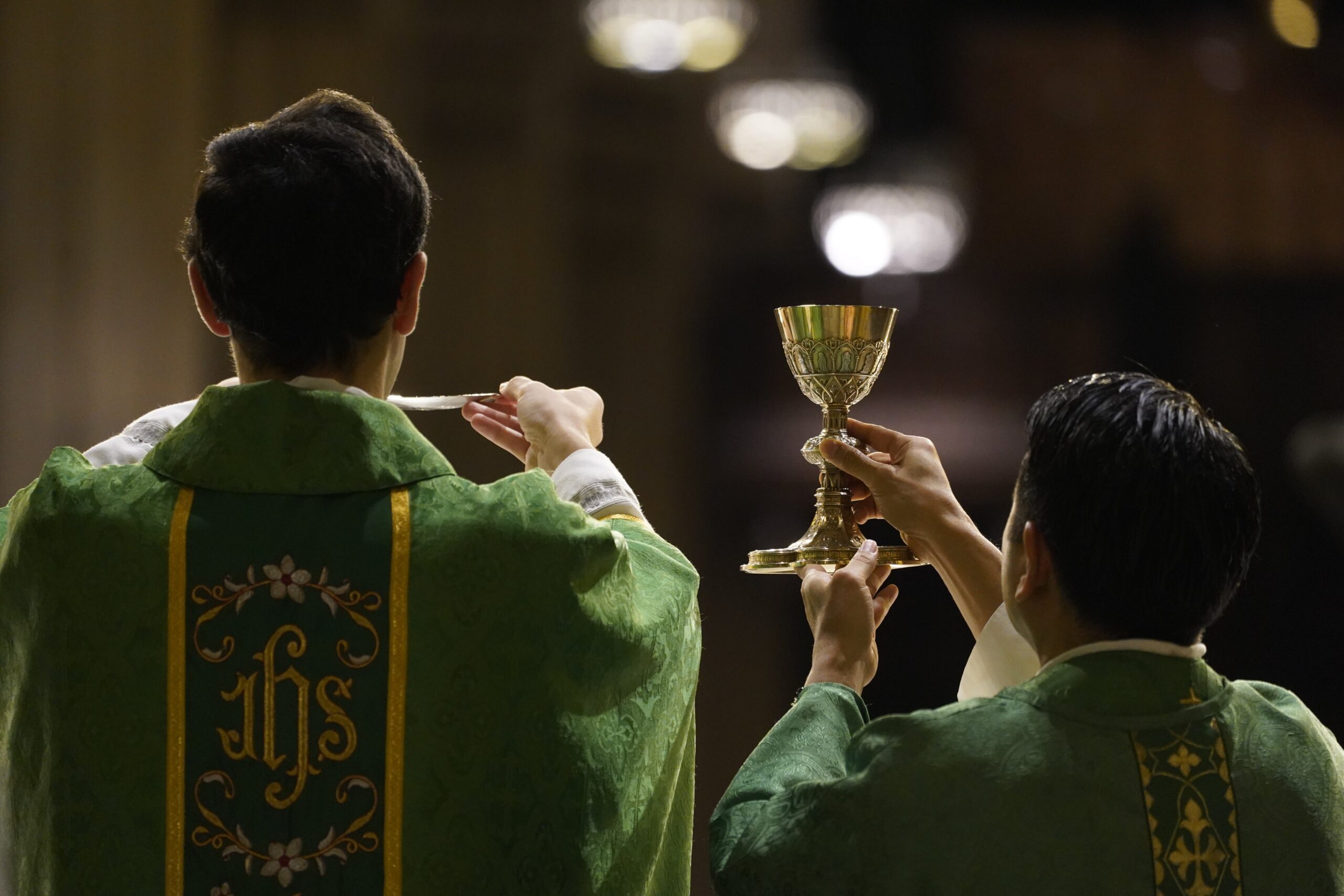

In Chapter 11 of the First Letter to the Corinthians, St. Paul called for appropriate dress in liturgical assembly (11:2–16). Archbishop Averky Taushev (1906–1976) explained the historical context of first-century Corinth:
“Certain women went into pagan temples with heads uncovered for impure reasons, and so an uncovered head in a worship space was generally considered a sign of shamelessness. Loose women were punished by having their hair cut off, which is why the apostle says, ‘For if a woman is not covered, let her also be shorn’ (11:6).”
Father George Montague, S.M., commented:
“It is obvious that cultural norms have changed considerably since Paul called for women to be veiled at the liturgy … no one today would think that the absence of a veil means sexual availability, as it did in Paul’s day. This raises the important distinction between doctrine and discipline. The dogmatic and moral teaching of the Church does not change, but the discipline of the Church has changed with different times and social circumstances.”
Paul rebuked the Corinthians over abuses in the celebration of the Eucharist (11:17–22). St. John Chrysostom explained:
“We must first explain the reason for this rebuke; then the argument will be easier to follow. What is it then? Just as in the days of the three thousand who first believed, all Christians feasted together and possessed everything in common (Acts 2:41–45), so it was when the apostle wrote these words, though not in every detail. Some echo of that early fellowship remained and was passed down to those who came after.
And since some were poor and others rich, even though they did not contribute everything they had for common use, apparently it was their custom to prepare common meals on certain days. Once the worship service was over, after sharing the mysteries, they would all go to the common feast, with the wealthy bringing the food and the poor and penniless as their guests, and all would feast together. But later even this custom was abandoned.
A problem arose because the people were divided and championed different leaders, saying, ‘I belong to this one,’ and ‘I belong to that one,’ the very thing Paul had tried to address at the beginning of the letter (1 Cor 1:12). … The Corinthians were disgracing themselves by turning the Lord’s Supper into a private meal and thus depriving it of its greatest prerogative. The Lord’s Supper ought to be common to all because it is the Master’s, whose property does not belong to one servant or to another but ought to be shared by all together.”
St. Paul and the early Church Fathers understood that the words of Christ (1 Cor 11:24–25) change bread and wine into the body and blood of Christ.
St. Ambrose said:
“Do you wish to know how it is consecrated with heavenly words? Accept what the words are … Before it is consecrated, it is bread; but when Christ’s words have been added, it is the body of Christ. … And before the words of Christ, the chalice is full of wine and water. When the words of Christ have been added, then blood is effected which redeemed the people.”
St. Cyril of Jerusalem said:
“When the Master himself has explicitly said of the bread, ‘This is my body,’ will anyone still dare to doubt? When he himself is our warranty, saying, ‘This is my blood,’ who will ever waver and say it is not his blood? … With perfect confidence, then, we partake as of the body and blood of Christ.”
Your voice matters! Join the conversation by submitting a Letter to the Editor here.
聖保祿捍衛聖體聖事
在格林多前書第11章中,聖保祿勸勉信友在參與禮儀時要有適當的衣著(11:2-16)。總主教阿維爾基解釋了第一世紀格林多的歷史背景:「有些婦女因不純正的目的而不蒙頭進入異教神廟,因此,在敬拜的場所裡,不蒙頭通常被視為放蕩的標誌。放蕩的婦女會被懲罰,剃去頭髮,這就是為什麼宗徒說:『女人若不蒙頭,就讓她剪髮罷!』(11:6)」聖母會喬治蒙塔古神父神父評論道:「很明顯,自保祿要求婦女在禮儀中蒙頭以來,文化規範已經發生了很大變化…。今天,沒有人會認為不戴面紗表示性開放 – 正如保祿時代所理解的那樣。這也顯示出教義與訓誡的重要區別。教會的信理與道德教導不會改變,但教會的訓誡會隨著不同時代和社會狀況而有所調整。」
聖保祿遣責格林多人在舉行聖體聖事時之不恭(11:17-22)。金口聖若望解釋道:「我們首先要明白這番遣責的原因,然後論述會更清晰。到底是什麼原因呢?就像當初三千人初信時(宗 2:41-45),所有的基督徒一起進餐,並共享所有財物,在保祿寫信的時候,雖然細節有所不同,但這種做法仍然存在。這種最初共融的回聲仍然延續至後來的信徒。由於當中有貧有富,即使他們沒有完全將財物共享,但顯然有在特定日子一起準備進餐的習慣。在禮儀結束後,在分享基督的奧蹟之後,他們會一起進餐,富人帶來食物,貧窮者作為客人,大家一同進餐。然而,這個習慣後來卻遭到破壞。問題出現在人們分黨分派,彼此推崇不同的領袖,說:『我是屬於這位的』,或『我是屬於那位的』(格前 1:12),這正是保祿在書信一開始就試圖糾正的問題…。格林多人將主的晚餐變成私人聚餐,使其失去了最崇高的特質。主的晚餐應該是所有人的共融,因為這是屬於主的,不是某個僕人的專屬,而應該由所有人一起共享。」
聖保祿與早期教父們深信基督聖言(11:24-25)使餅與酒變為基督的體血。聖盎博羅削說:「你想知道這是如何藉著天上聖言被祝聖的嗎?請聆聽這些話…。在祝聖前,它只是餅;但當基督聖言被說出後,它就成為基督的身體…。在基督聖言說出前,杯中滿是酒與水;當基督聖言說出,它就成為了救贖人類的寶血。」
耶路撒冷的聖西里爾也教導說:「當主親口說:『這是我的身體』時,還有人敢懷疑嗎?當他親自保證說:『這是我的血』時,誰還會猶豫並說這不是他的血呢?… 因此,我們應懷著完全的信德,領受基督的聖體聖血。」
聖保祿警告信友不要妄領聖體聖事(11:27-32)。耶穌會的John Hardon神父寫道:「妄領基督,就是在明知自己身負未獲赦免的大罪時仍然領受聖體。若有人靈魂上帶著大罪,就不得領受聖體聖事。他受到神律和教律所約束,必須先在修和聖事中獲赦罪。教會教導說:『任何自知犯有大罪的人,即使內心懺悔,仍不得領受聖體,除非他已在告解聖事中獲得赦罪。』」
聖庇護十世也教導說:「聖體聖事前的準備應包括靜思我們即將領受的是誰,以及我們自身的狀況,並以信、望、愛三德、痛悔、朝拜、謙卑、以及渴望領受耶穌基督的心神作準備。」
Your voice matters! Join the conversation by submitting a Letter to the Editor here.







