

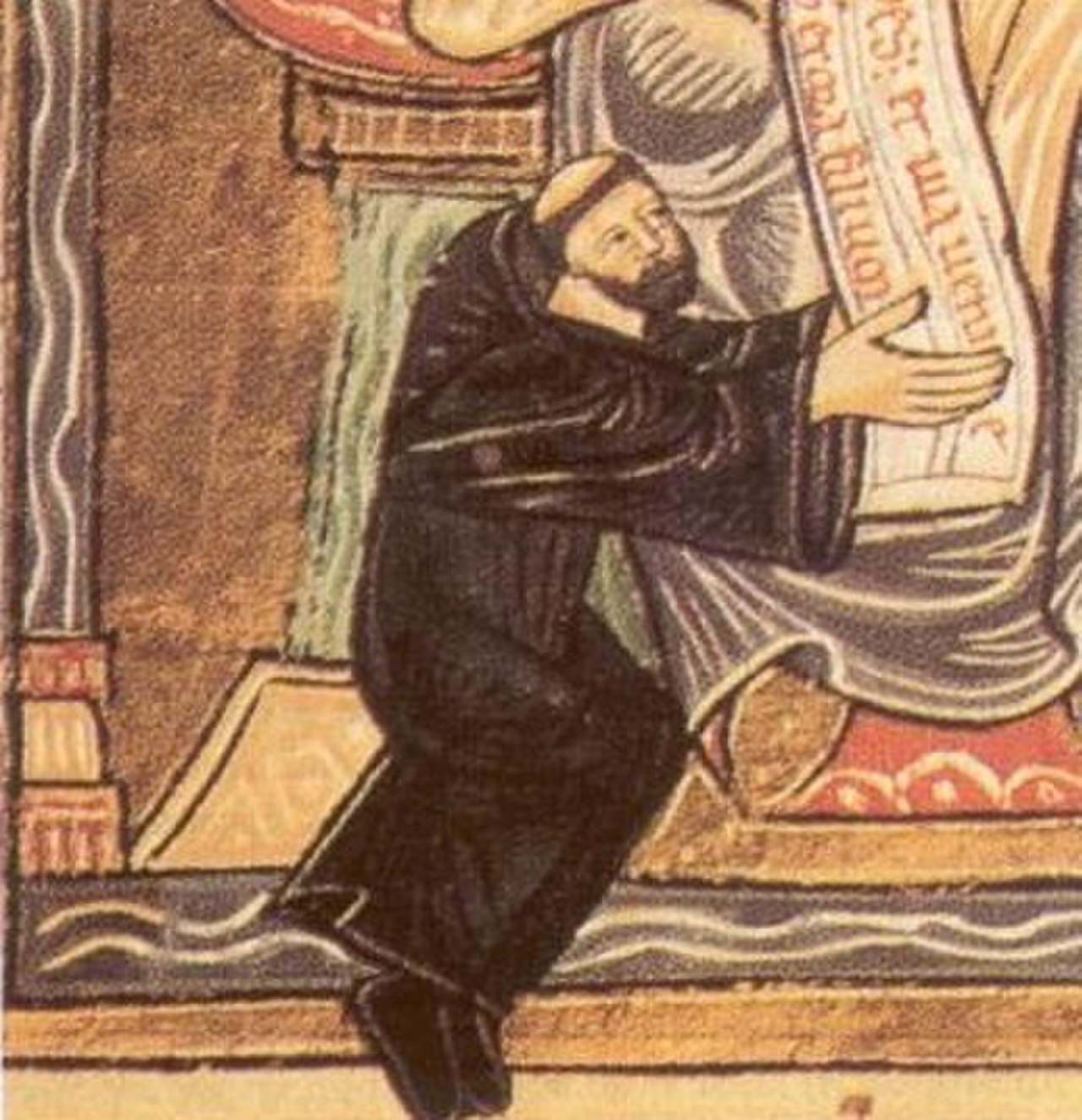

On Christmas Eve in 877, a nobleman of Aquitaine in southwestern France prayed to Our Lady for a son. His prayer was heard and Odo was born around 880. The grateful father consecrated Odo to St. Martin of Tours.
One Christmas Eve when he was about 16, Odo felt a prayer to Our Lady rise spontaneously to his lips: “My Lady, Mother of Mercy, who on this night gave birth to the Saviour, pray for me. May your glorious and unique experience of childbirth, O Most Devout Mother, be my refuge.”
Pope Benedict XVI said, “The name ‘Mother of Mercy,’ with which young Odo then invoked the Virgin, was to be the title by which he always subsequently liked to address Mary. He also called her ‘the one Hope of the world … thanks to whom the gates of Heaven were opened to us.’” In June, 2020, Pope Francis added three new invocations to the Litany of Loreto: “Mother of Mercy,” “Mother of Hope,” and “Solace of Migrants.”
Upon reading the Rule of St. Benedict, Odo was fascinated by the Benedictine ideal. He entered the Benedictine Abbey of Baume, later moving to Cluny and becoming its second abbot in 927.
Father Alban Butler wrote that as Abbot of Cluny, “the saint established there the Rule of St. Benedict in great purity, and endeavoured to carry its observance to the highest perfection. It was his usual saying, that no one can be called a monk who is not a true lover, and strict observer of silence, a condition absolutely necessary for interior solitude and the commerce of a soul with God. Silence and the most perfect practices of humility, obedience, and self-denial, were the chief objects of his reformation.”
Odo’s idea of the monastic life is expressed in his sermon regarding St. Mary of Bethany: “Mary, who, seated at the Lord’s feet, listened attentively to his words, is the symbol of the sweetness of contemplative life; the more its savour is tasted, the more it induces the mind to be detached from visible things and the tumult of the world’s preoccupations.”
The Pope often sent for Odo to act as peacemaker between contending princes, and it was on one of those missions of peace that he became seriously ill in Rome. Feeling that he was nearing his end, Odo asked to be brought back to Tours, where he died on Nov. 18, 942.
Pope Benedict XVI described the Cluniac Reform: “Great importance was given to the Liturgy because the monks of Cluny were convinced that it was participation in the liturgy of Heaven. And the monks felt responsible for interceding at the altar of God for the living and the dead, given large numbers of the faithful were insistently asking them to be remembered in prayer…. To preserve and foster this atmosphere of prayer, the Cluniac Rule emphasized the importance of silence, to which discipline the monks willingly submitted, convinced that the purity of the virtues to which they aspired demanded deep and constant recollection.”
The Monastery of Cluny and the communities dependent upon it were recognized as exempt from the jurisdiction of the local bishops and were directly subject to that of the Roman Pontiff. The abbots were elected without any interference from the civil authorities. Father Augustine Kalberer wrote, “The four holy abbots of Cluny Sts. Odo, Mayeul, Odilo, and Hugh, who between them governed for 175 years and brought their Burgundian abbey to a position of influence never equalled by any other monastery.”
The Cluniac Reform fought the two great abuses that afflicted the Church in that period: simony, that is the acquisition of pastoral offices for money, and immorality among the secular clergy. Pope Benedict XVI said, “The abbots of Cluny with their spiritual authority, the Cluniac monks who became Bishops and some of them even Popes, took the lead in this impressive action of spiritual renewal. And it yielded abundant fruit: celibacy was once again esteemed and practised by priests and more transparent procedures were introduced in the designation of ecclesiastical offices.”
Click here to send us a letter to the editor about this or any other article.
聖奧多強調靜默
877年聖誕節前夕,阿基坦的一位貴族向聖母祈禱,希望得到一個兒子。他的祈禱被聽到,奧多約於880年誕生。感恩的父親將奧多奉獻給都爾的聖馬爾定。
大約16歲時,在聖誕節前夕,奧多感到對聖母的祈禱自發地升到他的嘴唇上:『我的聖母,慈悲之母,在這個夜晚生下了救主,為我祈禱。最虔誠的母親啊,願你光榮而獨特的分娩經歷成為我的避難所。』教宗本篤十六世說:『年輕的奧多隨後用“慈悲之母”這個名字來稱呼童貞女,這是他後來總是喜歡稱呼瑪麗的頭銜。他還稱她為「世界的一個希望……感謝她,天堂的大門為我們敞開了」。2020年6月,教宗方濟各在聖母德叙禱文中增加了三個新的稱謂:『慈悲之母』,『望德之母』和『移民之慰』。
在閱讀聖本篤會規後,奧多被本篤會的理想所吸引。他進入了名士的本篤會修道院。後來他搬到克魯尼,並於927年成為其第二任隱修院院長。
作為克魯尼的院長,奧爾本·巴特勒神父描述說:『聖人在那裡建立了非常純正的聖本篤規則,並努力將其遵守到最高完美。他常說,沒有真愛和嚴守沉默 的人,是不可以被稱為隱修士,嚴守沉默,是要能內心孤獨及靈魂與天主交流的絕對必要條件。沉默和最完美謙卑實踐、順服和棄絕自己,是他改革的主要目標。
奧多對修道院生活的看法在他關於伯達尼的聖瑪利亞的講道中:『瑪利亞坐在主的腳下,專心聆聽他的話,是甘飴的默觀生活的象徵;越是品嘗它的味道,它就越能使心靈去脫離可見的事物和世界關注的騷動。』
教宗經常派奧多在相互競爭的王子之間充當和平締造者,正是在其中一個和平任務中,他在羅馬病重。奧多覺得自己快要走到盡頭了,於是要求被帶回都爾的聖馬爾定,他於942年11月18日在那裡去世。
教皇本篤十六世描述了克魯尼隱修院的改革:『禮儀被非常重視,因為克魯尼的隱修士確信它是參與天上的禮儀。修道士們覺得有責任在天主的祭台前為生者和死者代禱,因為大量的信徒堅持要求在祈禱中記住他們…。為了保持和培養這種祈禱的氛圍,克魯尼隱修院規則強調了沉默的重要性,隱修士們願意服從這種紀律,他們相信他們所渴望的美德的純潔需要深刻而持續的靜靜思。』
克魯尼隱修院及其附屬社區被公認為不受當地主教的管轄,並直接受羅馬教宗的管轄。院長是在不受民政當局干預的情況下選出的。奧古斯丁·卡爾貝勒神父寫道:『克魯尼隱修院的聖奧多,聖馬尤,聖奧迪洛和聖休的四位神聖院長,他們管治了175年,並將他們的修道院帶到了任何其他修道院都無法比擬的影響力地位。』
克魯尼的改革與那個時期困擾教會的兩大虐待行為作鬥爭:。販賣聖職,就是以金錢收購教會職務,和在俗神職人員中的不道德行為。教宗本篤十六世說:『克魯尼的院長及其精神權威,這些克魯尼的隱修士,有些成了主教,其中一些甚至是教宗,在這場令人印象深刻的精神更新行動中發揮了帶頭作用。它結出了豐碩的果實:獨身再次受到神父的尊重和實踐,在委任教會職務處時引入了更透明的程式。』
Click here to send us a letter to the editor about this or any other article.







