

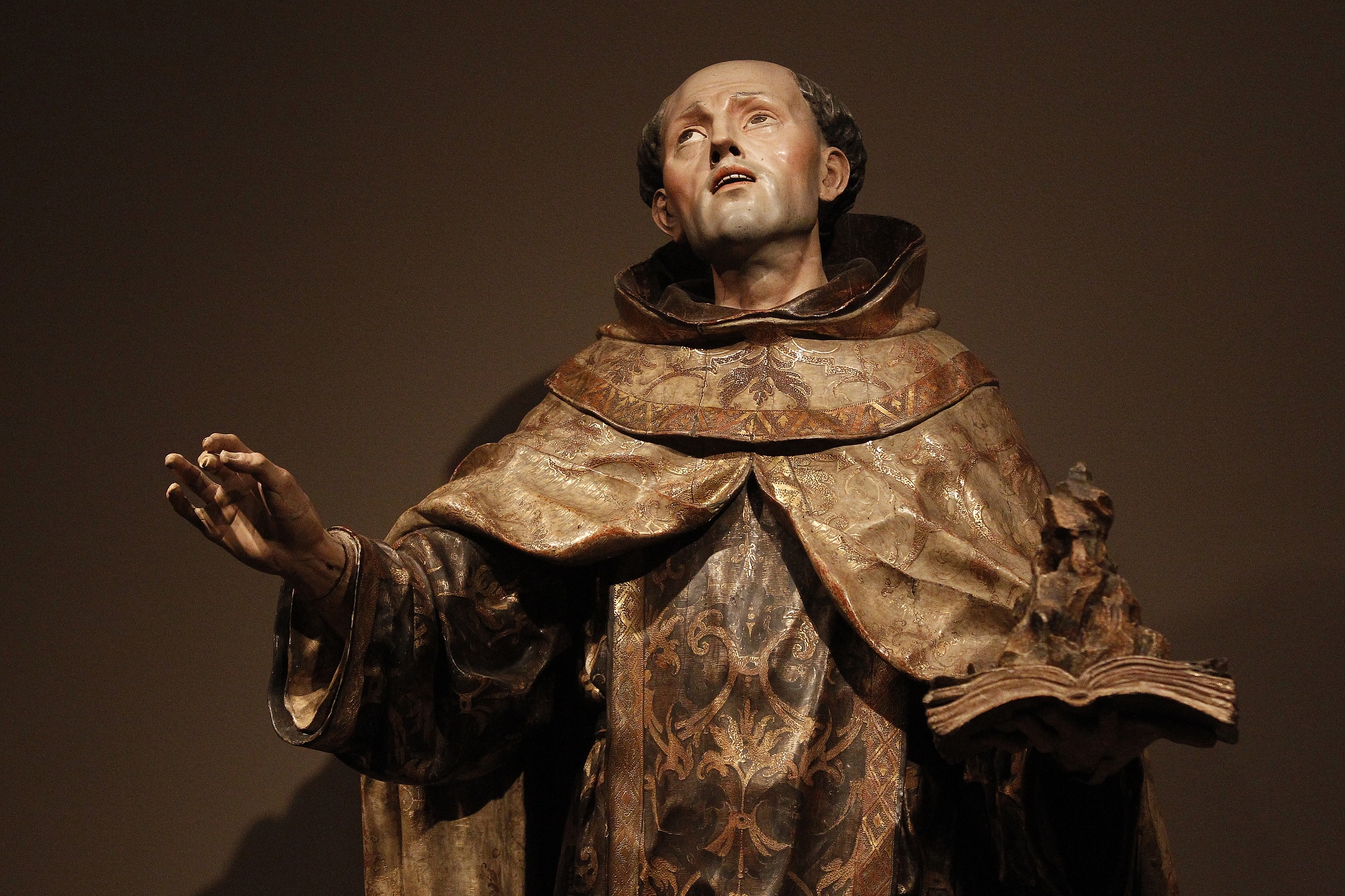

St. John of the Cross was born in 1542 in central Spain. His father died when he was only three years old. When he was nine, John moved to Medina del Campo with his mother and brother.
John served as a nurse in a hospital and then spent three years studying at a Jesuit college. By that time, John realized his religious vocation and began his novitiate with the Carmelites in 1563. He took the religious name Juan de Santo Matía. He studied at the University of Salamanca for three more years and was ordained a priest in 1567.
John celebrated his first Mass in Medina del Campo and met Teresa of Avila, who explained to John her plan of Carmelite reform and urged him to join her. The two saints worked together and the first house of the reformed Carmelites friars was opened on Dec. 28, 1568.
John and his three companions in the new house renewed their religious profession in accordance with the primitive rule. Each of them took a new religious name and from that time onward, John was known as John of the Cross.
John was deeply devoted to the Cross of Christ and he joyfully embraced suffering. Author Father Alban Butler wrote, “In all his employments the austerities which he practised seemed to exceed bounds; and he only slept two or three hours in a night, employing the rest in prayer, in presence of the Blessed Sacrament. He showed always the most sincere and profound humility and even love of abjection, an inimitable fervor and zeal for all the exercises of religion, and an insatiable desire of suffering.
“He used to say: ‘To suffer for the sake of God is the true characteristic of his love, as we see in Christ, and in the martyrs. And persecutions are the means to enter into the depth, or attain to the knowledge of the mystery of the cross, a necessary condition for comprehending the depth of the wisdom of God and of his love.’
“Hearing Christ once say to him: ‘John, what recompense dost thou ask of thy labours?’ He answered: ‘Lord. I ask no other recompense than to suffer and be condemned for thy love.’ At the very name of the cross he fell into an ecstasy in the presence of mother Anne of Jesus.
“Three things he frequently asked of God: First, that he might not pass one day of his life without suffering something. Secondly, that he might not die superior. Thirdly, that he might end his life in humiliation, disgrace, and contempt. The very name of the sufferings of Christ, or sight of a crucifix, threw him into raptures of sweet love, and made him melt in tears. The passion of our Redeemer was the usual subject of his meditations, and he exceedingly recommends the same to others in his writings.”
The Carmelite reform caused John great suffering. He was unjustly accused and was imprisoned in a convent in 1577. During imprisonment, John composed the Spiritual Canticle. John escaped after nine months of imprisonment, and for the remainder of his life he guided monasteries and wrote spiritual treatises. He died in Ubeda, Spain, on Dec. 14, 1591.
John saw detachment from creatures as essential for spiritual growth. He said, “Live in the world as if God and your soul only were in it; so shall your heart be never made captive by any earthly thing.” He also said, “Think nothing else but that God ordains all, and where there is no love, put love, and you will draw out love.”
As John was dying, someone reminded him of all he had suffered for God and of all the good work he had done, but the saint replied: “Father, this is not the time to be thinking of that; it is by the merits of the blood of our Lord Jesus Christ that I hope to be saved.”
Father Gabriel of St. Mary Magdalen (1893-1953) wrote a beautiful book for daily meditation, Divine Intimacy, which is currently reprinted by the Baronius Press. This book explained the interior life in a clear and comprehensive way according to the teachings of the Carmelite mystics. The daily reading of the Divine Intimacy has helped countless souls understanding and applying the profound teachings of St. John of the Cross in ordinary life.
We welcome letters to the editor about articles in The B.C. Catholic.
若望熱情地擁抱十字架
十字聖若望於1542年出生於西班牙中部。他的父親在他三歲時就去世了。九歲時,若望與母親和兄弟一起搬到了麥地那德爾坎波。
若望在一家醫院擔任護士,然後在耶穌會學院學習了三年。那時,若望意識到了他的宗教使命,並於1563年在加爾默羅修院開始初學院的生活。他在薩拉曼卡大學學習了三年,並於1567年晉鐸。
若望在麥地那德爾坎波慶祝了他的第一台彌撒,並遇到了阿維拉的德蘭修女。德蘭修女向若望解釋了她的加爾默羅會改革計劃,並敦促他加入她工作。兩位聖人一起工作,改革的加爾默羅修院的第一所男會院於 1568 年 12 月 28 日開放。
若望和他的三個同伴在新會院裡照原始會規重新了他們的修會聖愿。他們每個人都取了一個新的宗教名字,從那時起,若望被稱為『十字若望』。
若望深深地獻身於基督的十字架,他喜樂地擁抱苦難。奧爾本·巴特勒神父寫道:『在他所有的工作中,他所實行的緊縮似乎超出了界限;他一晚上只睡兩三個小時,其餘的都在聖體面前祈禱。他總是表現出最真誠和最深刻的謙卑,甚至對卑劣的熱愛,對所有宗教活動無與倫比的熱情和熱忱,以及對痛苦的永不滿足的渴望。他常說:「為天主的緣故受苦是他的愛的真正特徵,正如我們在基督和殉道者身上看到的那樣。迫害是進入十字架深處或獲得十字架奧秘知識的方法,是理解天主智慧和祂愛的深度的必要條件。」聽到基督曾經對他說「若望,為你的辛勞你
要求得到什麼補償?」他答說:「主。我不求別的報答,只求為你的愛受苦和被定罪。」在題到十字架時,他在一位修女面前陷入了神魂超拔中。他經常向天主祈求三件事:第一,他一生中沒有一天不能不受苦。第二,他不會在任長上職中死去。第三,使他可以在羞辱、恥辱和蔑視中結束自己的生命。單單提到基督受難,或者耶穌受難像的景象,讓他陷入甜蜜愛情的喜悅之中,讓他熱淚盈眶。 我們的救贖主的苦難是他沉思的常見主題,他在著作中極力向其他人推薦同樣的主題。』
加爾默羅會的改革給若望帶來了巨大的痛苦。他受到不公正的指控,並於1577年被監禁在修道院。在監禁期間,若望創作了靈歌。若望在被監禁九個月後逃脫,在他的餘生中,他指導修院並撰寫了神修專著。他於 1591 年 12 月 14 日在西班牙烏貝達去世。
若望看到了靈修的成長必需跟受造物作分離。他說:『活在世上,好像只有天主和你的靈魂在那裡;所以你的心永遠不會被任何塵世的事情所俘虜。』他還說:『不要考慮其他的,只考慮天主命定一切,在沒有愛的地方,把愛放進去,你就會引出愛來。』
若望臨死時,有人提醒他為天主所受的一切苦難,以及他所做的一切善工,但聖人回答說:『父親,現在不是考慮這些的時候;正是靠著我們主耶穌基督寶血的功德,我希望得救』
聖瑪利亞、瑪達肋納的加卑厄爾神父寫了一本美麗的書供每天默想,神聖的親情(Divine Intimacy),目前由巴羅尼烏斯出版社重印。這本書根據加爾默羅的奧秘教誨,以清晰而全面的方式解釋了內在生命。每天閱讀神聖親情,幫助無數靈魂在日常生活中理解和應用十字聖若望的深刻教誨。
We welcome letters to the editor about articles in The B.C. Catholic.







