

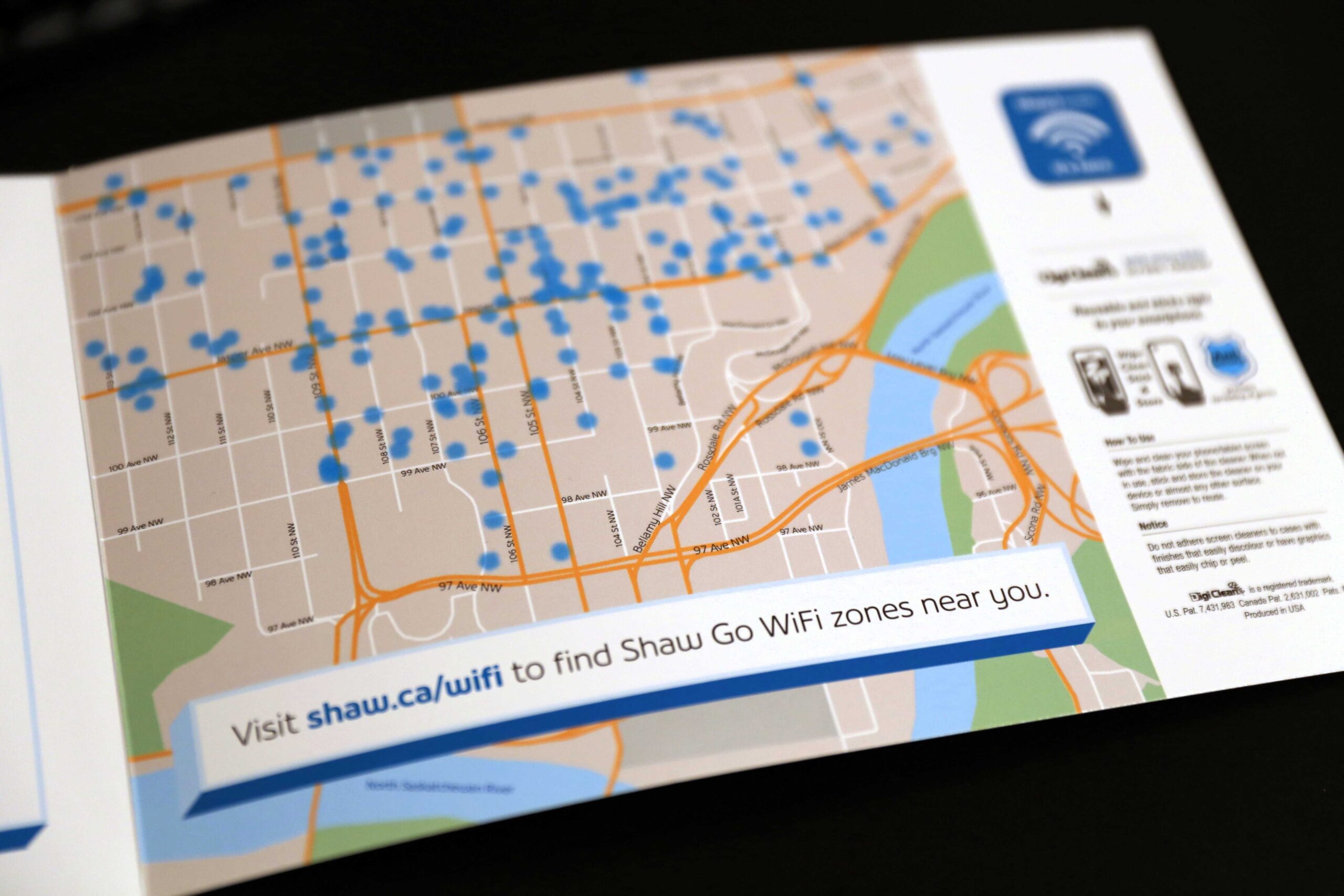

Many of you reading this column, especially here in western Canada, at one time connected to the internet when away from home, through a public Shaw Wi-Fi hotspot. Over roughly two decades, these hotspots, and later on adding in those of communications rival Telus, grew in count into the tens of thousands.
Perhaps you remember some of the names for these hotspot networks. Among them: Shaw Go WiFi, Shaw Open, Shaw Wi-Fi, and variants.
Mobile data was expensive over much of that period, only declining to any significance after the Trudeau government began pressuring the major telcos into lowering rates through somewhat forced competition, only to later allow the takeover of Shaw Communications by eastern rival Rogers Communications.
This takeover, or merger if you prefer, came with a regulatory requirement that Shaw divest its cell phone business, Freedom Mobile. Freedom Mobile was taken over by Quebec-based Videotron, part of the Quebecor conglomerate, and the new owners have essentially made the Freedom brand a national one.
Here’s where it became messy. Freedom Mobile users, under Shaw’s ownership, came to rely on the vast network of Shaw-owned Wi-Fi hotspots for free public internet access. Once Shaw was absorbed into the Rogers domain, those hotspots fell under Rogers ownership. With Freedom spun off to Videotron, such hotspots became somewhat contentious.
Rogers essentially saw the network of hotspots it had acquired as aiding a competitor, Freedom, and in June it served notice it would be shutting down the entire Shaw hotspot network. Rogers ran this banner on its website: “Rogers WiFi Hotspots will no longer be available starting July 21.”
Read that again. Shutting down the entire hotspot network. Not just to Freedom Mobile customers. To everyone, including Rogers’ own customers.
Needless to say Rogers has some explaining to do, and it did that in the release announcing the hotspot network shutdown. The company claims that usage of the free Wi-Fi hotspots has fallen dramatically. It cites no actual numbers though.
Freedom, for its part, doesn’t seem overly concerned. It is focusing on its expanding 5G network and is happy to include data bundles in its mobile phone packages. The company notes its mobile internet service offers gigabit connection speeds whereas the old hotspots were limited to 100 megabits per second.
It should be noted this move by Rogers affects only the corporately-owned public Wi-Fi hotspots. These were often found in parks, community centres, and other popular areas. It should also be noted that rival Telus Communications will be closing its far smaller hotspot network at the end of July.
Is this a dark-day development for internet service in Canada? It’s hard to say. All the mobile service companies tout their data packages prominently in their current advertising programs. Having cell phone packages with 10 gigs of data used to be a big deal. Now it is getting ridiculous seeing up to 200 gigs of data for a monthly plan.
My own plan has had 10 gigs, or more, for at least 7 years. I’m not sure I’ve ever managed to exceed that limit. My local shopping mall, where I’ve occasionally been known to write this column at a coffee shop, used to have excellent Shaw Open Wi-Fi across its entirety. Several years back this service became weaker in terms of signal strength, eventually to the point of being unreliable.
Naturally this mall wanted people to access free internet through its own portal, perhaps to steer users to certain stores or to announce special activities. However I found I couldn’t access this mall’s service on my Chromebook and I have had to resort to using my cell phone as a local Wi-Fi hotspot.
As a Shaw customer you could register up to 10 devices for the service and fully expect them to automatically connect, whenever and wherever you were in range of one of the Shaw Wi-Fi feeders. I, for one, shall miss the days when the Shaw Open service was almost ubiquitous, not to mention, seamless.
Follow me on Twitter/X (@PeterVogel) or on Bluesky (petervogel.bsky.social).
Your voice matters! Join the conversation by submitting a Letter to the Editor here.







